Some Specific Examples of Fly Problems
8.7.1 Some Specific Examples of Fly Problems Midges transmit diseases, including Bluetongue in sheep.
Midges are found where it is wet. They breed in swampy places and are found more often in cool climates.
Midges are tiny (one to three mm long).
Blackflies (five mm long) breed in running water.
Mosquitoes breed in still water. Control is difficult. Drain wet areas where flies breed.
Keep animals away from swampy areas, especially during insect-feeding times in the early morning and late afternoon.
Insect repellents are often used on a daily basis during certain times of the year.
Other insecticides may be used with the advice of a local expert.
Horn flies are found in the Americas and North Africa; buffalo flies are found in Asia and Australia.
Their bites irritate livestock.
They breed in manure, but live mostly on the animal. Thousands may live on a single animal.
Back rubbers for applying insecticide provide good control.
House flies are found worldwide and bush flies are found in Australia.
They cause annoyance and spread diseases.
Control measures include proper handling of manure and use of fly baits. If manure is spread out and dries quickly, the housefly population decreases.
They look like house flies, but they bite the skin and blood oozes out at the site of the bite. Stable flies are very irritating.
Control measures include removing dung and rotting material. Insecticides are not necessary if sanitation is good.
They bite like stable flies, causing pain, and leaving open wounds in the skin.
If present in high numbers, they may make animals weak from blood loss.
They may transmit trypanosomiasis.
Control is very difficult because they are on the animal for only a short time. Repellents may work, but must be applied frequently.
These are really flies without wings. They resemble big lice in the wool of sheep. They bite and suck blood, and the infested sheep scratch and damage their wool.
Dips and sprays provide effective control.
Tsetse flies bite and feed on blood. During the feeding process they transmit trypanosomiasis. See page 275.
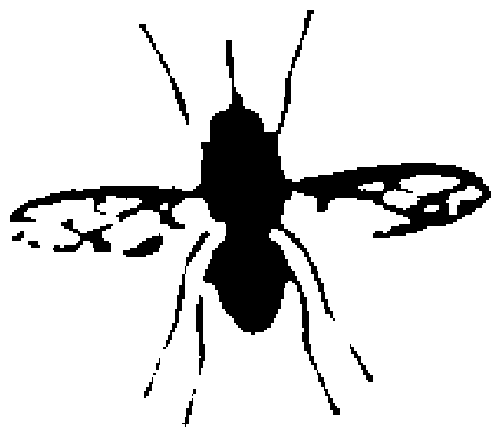
Control is not easy. Where the flies live, most breeds of cattle cannot be kept without expensive control measures. To avoid trypanosomiasis in the presence of the flies, check with the nearest extension agent the possibility of making and using tsetse fly traps. New kinds of traps use small amounts of insecticide and are simple to make.
Tsetse fly Maggots are the larvae stage of flies. When maggots develop and feed in, or on, living animals, this is called myiasis. Maggots can cause serious problems in wounds or where wet manure sticks to the skin of livestock. During fly season, maggot infestations occur in castration wounds, injuries, sore feet from foot and mouth disease, cuts, broken horns, umbilical cords on newborns, under the tail of sheep, and around the anus of animals with diarrhea.
Symptoms and Diagnosis: Adult flies mate and lay their eggs which hatch into larvae (maggots). The larvae crawl further into wounds. Some maggots damage the tissue; others prevent the wound from healing. Some flies lay eggs on, and around, the nose of sheep and goats. These eggs hatch into larvae which then crawl up the nose and into the sinuses or horns. Animals with these larvae may shake their heads, rub their horns against things, sneeze, and move restlessly.
Treatment and Prevention / Control of Myiasis:
This is truly one condition where Note: The change to pitch (12) and font (6) must be converted manually.prevention is better than cure!Note: The change to pitch (12) and font (1) must be converted manually.
Methods of prevention include:
Clip wool short around the tail so that manure does not collect in the wool.
Treat diseases, for example worms, which cause diarrhea and soiling of the wool.
Insecticides with a long-lasting effect can be used to prevent maggots on woolly sheep.
During fly season, all wounds must be watched carefully. Maggot infestations can be prevented by putting insecticide powder around the wounds, and putting insecticide creams, ointments, or home remedies in the wound itself. (Note: Insecticides and home remedies may cause irritation to the tissue, and slow-down the healing process. It is best to keep wounds clean and covered, and to apply repellents around the wound and on the dressing. If this is not possible, then go ahead and apply medicines directly into the wound itself to prevent the development of myiasis.)
Treatment includes:
Clip wool or hair away to expose the maggots.
Clean the wound with soap or antiseptic (e.g. Savlon).
Use a locally available method to kill the maggots or to get them to leave the wound.
Crush mothballs - dissolve them in water and squirt the solution into the wound.
Liquid insecticides - spray, brush or sponge on the places where maggots are seen. Organophosphates like diazinon or chorfenvinphos (Supona) kill the maggots in about half a day.
Turpentine oil, creoline or kerosene can be used. Put on cotton wool or a clean cloth, and put this over the maggot infested wound. Hold in place with a bandage made of a strip of cloth.
Use other locally-made solutions like tobacco solutions or certain crushed leaves.
Remove after two or three hours, pick out dead maggots, clean the wound, and rinse it thoroughly.
Apply a locally available insect repellent around the wound to prevent flies from laying eggs again.
Symptoms / Diagnosis: Screw worm infestations occur in Latin America and Africa when the larvae of screw worm fly hatch from eggs laid on the edge of a wound. The larvae look a bit like a wood screw, and the pointed head goes deep into the flesh. Groups of maggots feed together, burrow deep into the flesh, prevent the wound from healing, and provide a site for infection by bacteria or fungi. Screw worms cause great irritation to an animal.
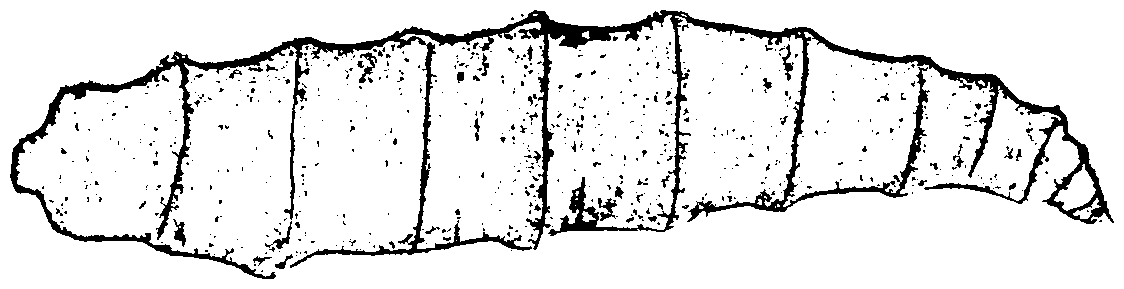
Screw worm larva that burrows into wounds Treatment: The earlier the treatment begins, the less damage will be done. Check other animals in the group to see if there is an early infection.
Clean the wound (use soap or antiseptic).
Apply insecticide powder or creoline deep into the wound, for example Coumaphos wettable powder.
Remove the dead larvae, clean the wound, and apply insecticide grease to prevent re-infestation.
Since most wounds are already infected, also give an antibiotic injection like penicillin or oxytetracycline.
Prevention: In areas with screw worm, use insecticide grease or spray on wounds caused by simple surgical procedures (like castration or dehorning). Make the grease with one part Coumaphos 5% powder to 30 parts Vaseline (or new car oil). Or, use one part lindane to 20 parts Vaseline (or new car oil).


+ mixture of new car oil and insecticide insecticide sprays Note: Ivermectin kills young larvae but is not as effective against the older ones. Direct treatment of infested wounds is the best method to ensure all larvae are killed and removed.
Insecticide made from Tobacco It is possible to make your own solution of tobacco insecticide using the following instructions:
Soak 300 grams of dried tobacco leaves in one liter of water.
Add one tablespoon of salt.
After three hours, use the tobacco leaf as a sponge and rub the liquid over infested areas of the animal’s body. (Ethno veterinary Medicine in Asia, Volume 2: Ruminants. Page 50.)
Symptoms / Diagnosis: Bots are maggots (fly larvae) which live inside the body. Some live attached inside the noses of sheep, others live attached to the stomach of horses. The bot eggs can often be seen as yellow specks on the hair of a horse, particularly its legs.
Sheep nose bots cause sneezing, a thick discharge from the nose, and shaking of the head. The sheep may become thin because they cannot graze normally. Horse bots live attached to the stomach or intestine, and cause few problems.
Treatment / Control Sheep nose bots:
Treat the sheep with ivermectin, or Spray inside the nose with a solution such as chloroform spirit, Dettol, tobacco, or insecticides such as trichlorphon.
Use a syringe without a needle, or a hand-held spray pump. Place the sheep upside down, on its back, and hold the sheep’s head level. Spray the solution into one nostril so that it runs back, deep into the nasal area. Hold the sheep on its back for about one minute, then quickly turn it over, and allow it to get up on its feet. After a minute or two of rest, repeat the treatment in the other nostril.
Horse bots:
Regularly treating horses with trichlorphon, dichlorvos or ivermectin will control bots.
This condition occurs mainly in the Northern Hemisphere. Heel flies lay eggs on the hair of the lower legs, and larvae hatch from the eggs, penetrate the skin, and migrate through the body to sites under the skin.
Symptoms / Diagnosis: These larvae are seen as bumps under the skin along the back, and are called “warbles” or “grubs.” Each bump contains a grub about three centimeters long. Many types of animals can be affected, but warbles are most common in cattle and dogs. Warbles stress cattle and damage the hides.
Treatment and Prevention of Warbles: Migrating larvae can be killed with insecticide spray or pour-on, or ivermectin. However, if big larvae die inside the animal, they can damage the animal’s nerves. It is best to treat larvae before they become big. Treatment at the end of the fly season, after adult flies stop laying eggs, kills larvae before they get big and migrate.
Squeezing the bumps to remove the grubs is effective (and feasible if the number of grubs and animals is small.)
Use famphur (Warbex), fenthion (Tiguvon), or (Ivomec) pour-on or injection. On milk cows, do not use insecticides that enter the milk. Rotenone is effective when brushed on the animal's back, and does not get into the milk of cows.
Symptoms / Lifecycle: The scientific name for this maggot is "Dermatobia hominis." Nuche maggots are larvae that hatch from fly eggs. The fly deposits eggs on mosquitoes, which then deposit the eggs on cattle. The eggs hatch into larvae (or maggots) that burrow into the hide and damage it.
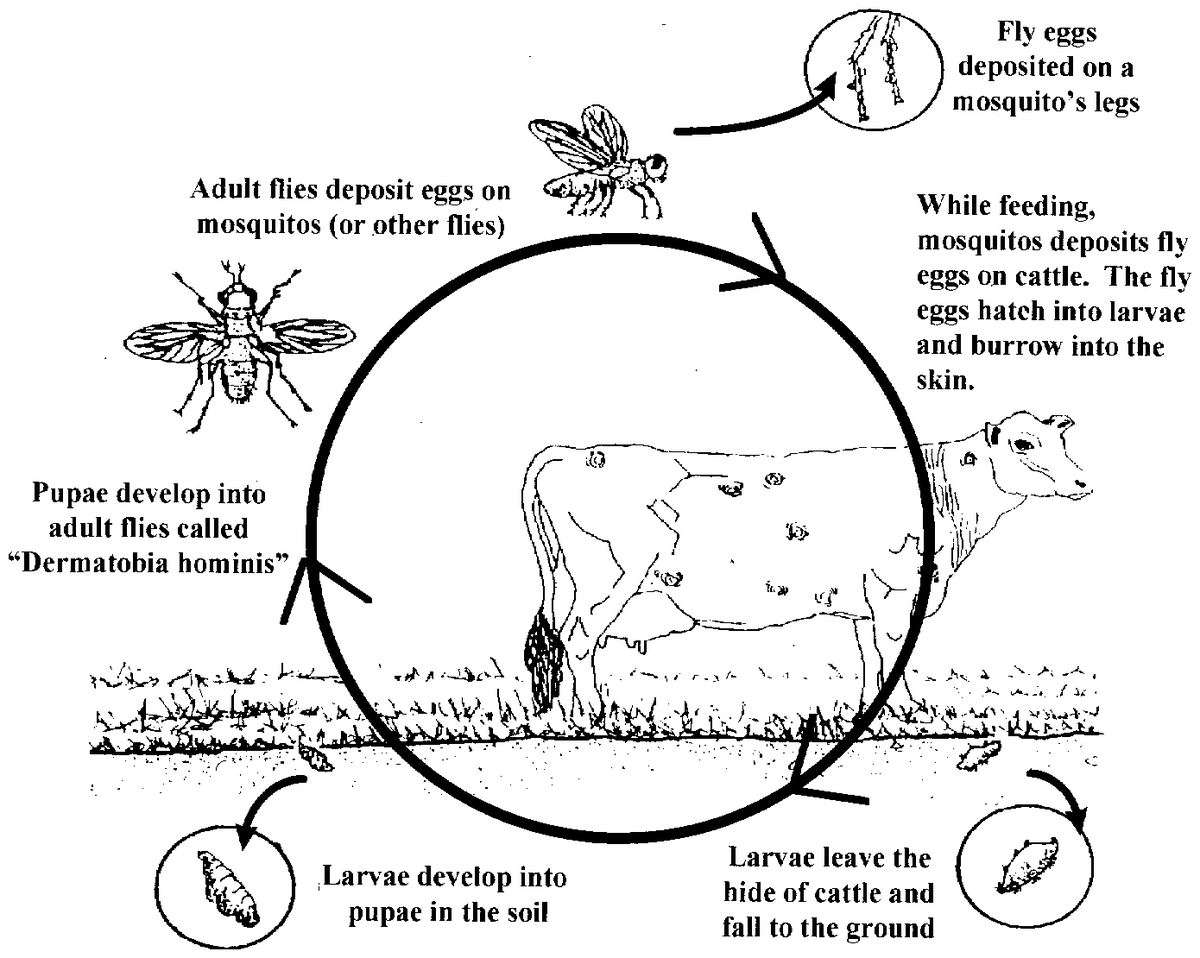
Diagnosis: Affected cattle develop bumps (with little air holes) on their backs, joints and any other area where maggots have burrowed.
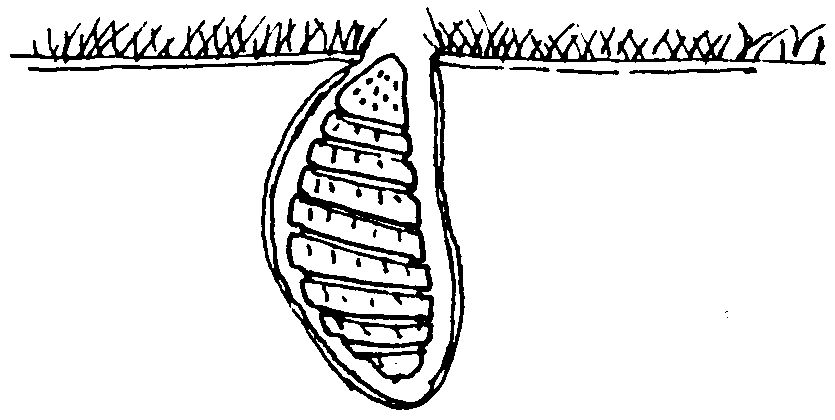
Treatment / Control / Prevention: There are several options for treating nuche maggots. Ask a local agricultural agent about the most effective and affordable product in your area. Options include:
1. Apply insecticide using back-rubbers or dust bags to help prevent nuche maggots.
1. Pour oil (cooking or new car oil) or grease into the air hole to suffocate the maggot. This oil or grease can be mixed with insecticide to make it more effective. For example, mix one part Coumaphos 5% powder to thirty parts grease or oil.
1. Administer ivermectin as an injection or oral paste, according to instructions.