Digestive System
11.0 Digestive System review Any problem that interferes with movement of food through the digestive system, breakdown of food, or absorption of nutrients, will prevent proper use of food by the body. If the problem continues, eventually the animal will become thin and sickly, and suffer from malnutrition. See pages 125, 191.
Digestion is the process of food being broken-down into smaller substances and absorbed from the digestive system into the body.
37 Function of the Digestive System To break-down food into smaller substances which are called nutrients.
To pass nutrients to the blood.
To carry the undigested food to the rectum so it can pass from the body as manure.
In other words, the following must happen:
The food must move properly through the digestive tract;
The various glands and organs must secrete the proper digestive juices (enzymes);
The digestive juices (and sometimes the good microorganisms) must break the food down into small substances called “nutrients”;
The nutrients must be absorbed into the bloodstream.
38 Two major groups of digestive systems for livestock Treatment of digestive problems depends on the type of digestive system an animal has.
Grass-eaters Grass-eaters have digestive systems that are adapted to eating large quantities of grass and other roughages (although they can also eat grains and other feeds). Grass-eaters include cattle, buffalo, sheep, goats, llamas, camels, horses, ponies, and mules.
Non-grass eaters Non-grass eaters can digest some young, tender, green grass and vegetables, but digest mature grasses poorly. They mainly need other kinds of food, such as grains, vegetables, and meat to survive. This group of animals includes pigs, chickens, dogs, cats, and most birds. They have what is called a “simple stomach.”
Beneficial micro-organisms - don’t kill them!
Grass-eaters are able to eat large quantities of rough grass because they have beneficial micro-organisms (bacteria and protozoa) which live in their stomachs and intestines. Grass-eaters that chew their cud are called ruminants. They include sheep, goats, cattle, buffalo, yaks, camels, and llamas. When they chew their cud, they mix the beneficial micro-organisms with the grass they have eaten. Similar micro-organisms also live in the large intestine of horses and rabbits.
Digestive tract of a ruminant These beneficial micro-organisms are responsible for digesting the rough part of grasses and leaves. In addition, they also produce some protein and B-vitamins which help the grass-eaters’ bodies to grow and remain healthy. If the beneficial bacteria and protozoa die, grass-eating animals will not be able to digest their food properly. For instance, if an AHA feeds antibiotics (by mouth) to a grass-eating animal, these beneficial micro-organisms may die, and the animal may get indigestion.
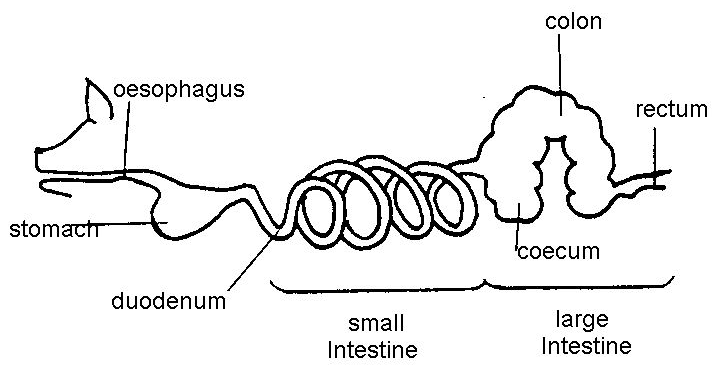
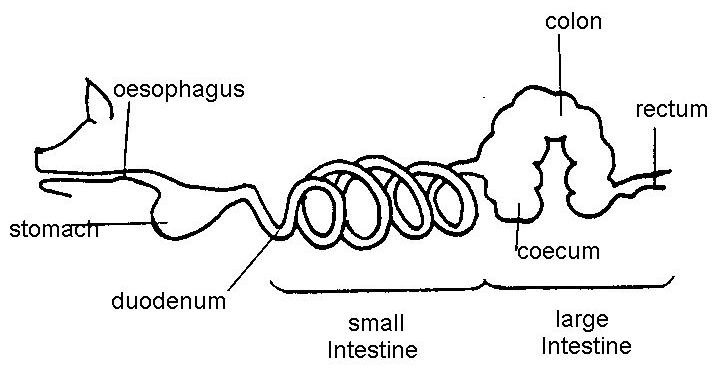
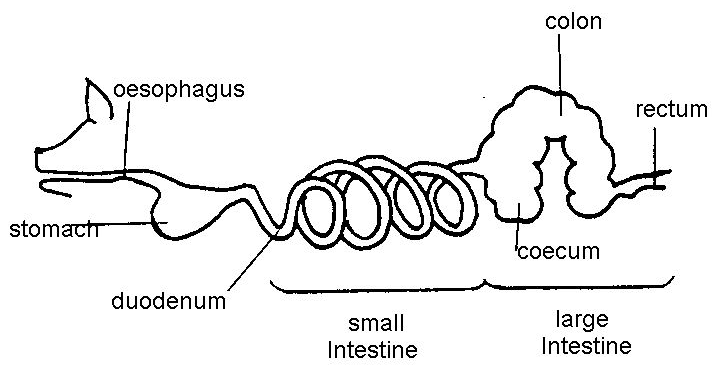
Digestive tract of a non-ruminant
Digestive System Problems