Parasites Inside The Body - "Internal Parasites"
9.0 Parasites Inside The Body - "Internal Parasites"
The problem of internal parasites can devastate a farmer through lost production or dying animals. It is one of the most important and common problems seen by AHA's. The following section provides a simple, practical approach to treating and controlling internal parasites. Chapter 27 provides a more detailed approach. See pages 325-351.
The General Life Cycle of Internal Parasites Although the life cycle of each type of internal parasite varies, most have a life cycle with two stages: an adult, reproductive stage; and an immature, infective stage.
Adult, reproductive phase The adult stage usually occurs inside the body. The adult parasite lays eggs that are then passed out of the body in the feces, urine, or saliva and can infect other animals. These adult parasites can be killed (i.e. treated) with medicines before they lay eggs.
Immature, infective stage The infective stage usually occurs outside the animal's body in the soil, on pastures, or in water. The eggs either change to become "infective eggs" or immature parasites. An animal becomes infected when it takes in food or water contaminated with immature parasites or infective eggs. Some parasites also pass through an "intermediate host" while in the environment. The large roundworm may also infect unborn animals through the mother's bloodstream.
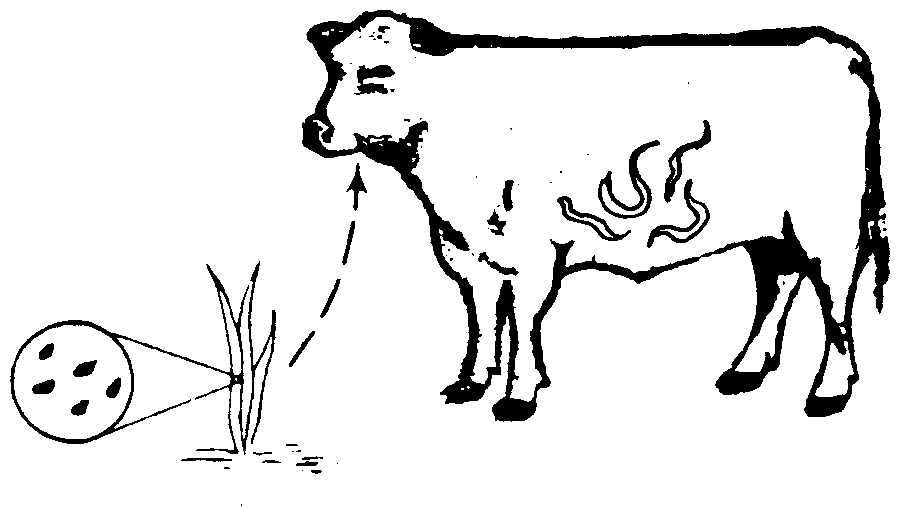
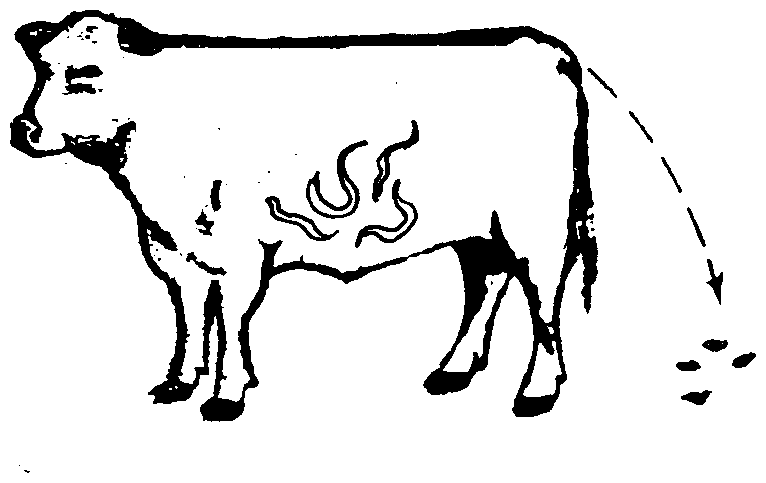
Adult parasites inside the The eggs mature and Another animal eats the animal lay eggs which are become "infective eggs" infective eggs or immature passed in the feces. or immature parasites. parasites while grazing, which then become adult parasites in the animal’s intestines.
35 Four Keys to Treating and Controlling Internal Parasites 1. Recognize the symptoms of internal parasites.
2. Know which internal parasites are common in your area.
3. Know which medicines treat internal parasites common in your area.
4. Know which management practices control internal parasites.