Choosing A Treatment
4.3 CHOOSING A TREATMENT
The treatment chosen depends on several things:
diagnosis number of animals involved medicines available price of treatment value of the animals probability that animals will survive and become productive again ability of the owner or AHA to use the medicines properly ability of the owner to pay preferences of the owner The AHA must explain to the owner the treatment options, price, work involved, and likelihood for recovery. Only then can the owner make the best decision, taking into account the situation and the value of the animal.
It is often impossible to give the best or most complete treatment. For example, the best treatment may require daily injections and be impossible for an owner living far away (unless someone nearby can give the injections). Perhaps another medicine must be chosen. Or, the owner may not have enough money for full treatment. The AHA must use her/his best judgment with each situation.
There may also be certain pressures placed on the AHA. Some farmers expect an AHA to give injections, even if unnecessary! However, some medicines, such as antibiotics, lose their effectiveness when overused or used needlessly! Moreover, medicines cost money and are often in limited supply.
On the other hand, if an injection is not given, the owner may think an AHA is incompetent and destroy her credibility in the community. In these situations, an AHA may try to explain and persuade the owner, and use her best judgment in these situations. Sometimes there is no easy solution.
AHAs should try to attend community meetings and spend time in the community learning the knowledge, attitudes and practices of local livestock owners. By establishing a good relationship with the community, as well as asking, observing and listening, an AHA can learn about the most common diseases and the way these diseases are perceived and treated. Meetings and time spent in the community are worthwhile to establish credibility and community participation in addressing local problems. Once credibility is established, an AHA can teach livestock owners some critical concepts about treating, controlling and preventing animal diseases (including the issue of injections!!).
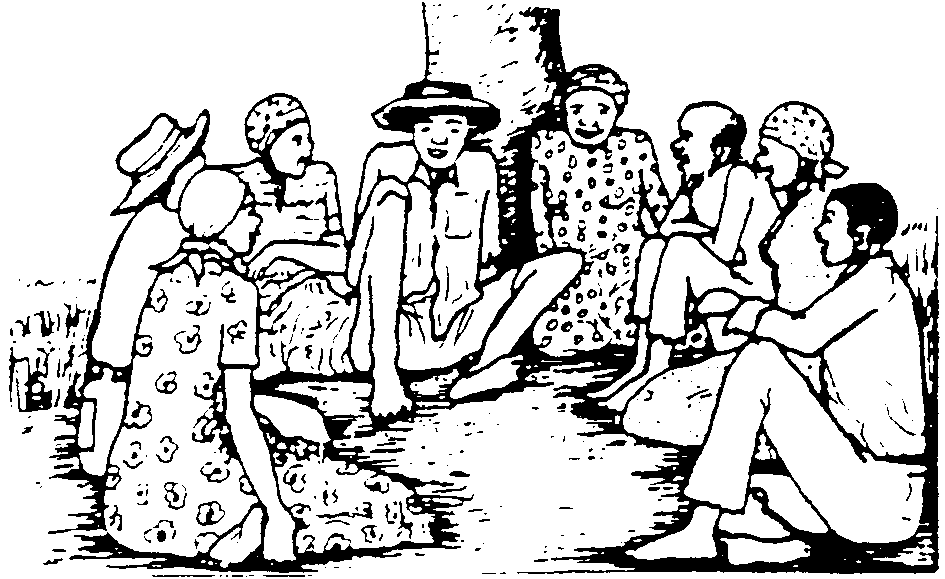
To be effective, an AHA should develop a good relationship with the community.