Small Roundworms in the stomach and intestines
27.5.2 Small Roundworms in the stomach and intestines There are many small roundworms that live in the stomach and intestines.
Life cycle of small roundworms in the stomach and intestines:
1. The adult worms live in the stomach or intestines, and lay eggs.
1. The eggs pass out with the manure and, in warm weather, hatch.
1. The larvae are eaten when the animal is eating contaminated food or water, or sucking on a dirty udder. Animals kept in crowded, dirty, wet conditions get more roundworms.
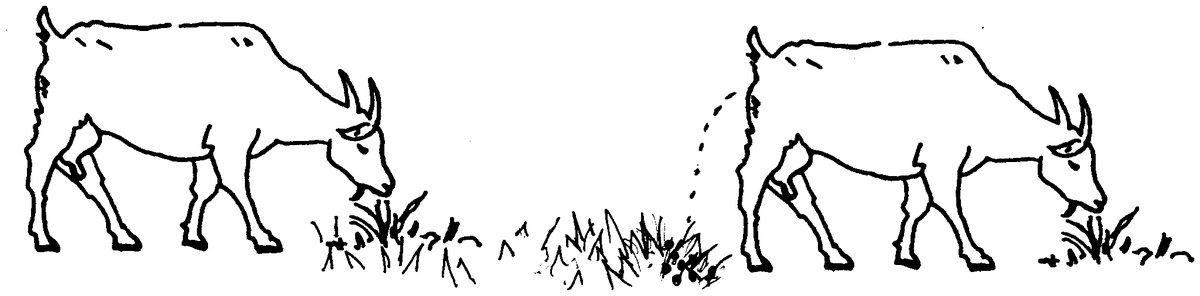
4. The larvae inside the animal’s intestines develop into adults and begin laying eggs.
Symptoms:
Most roundworms suck blood, making an infected animal “anemic” (i.e. thin and watery blood). In anemic animals, the normally pink tissue under the eyelid becomes white. Anemia may result in extra fluid collecting under the lower jaw of the animals and is sometimes called “bottle jaw” or “big-head.” Roundworms may also cause diarrhea and a poor appetite particularly in young animals.
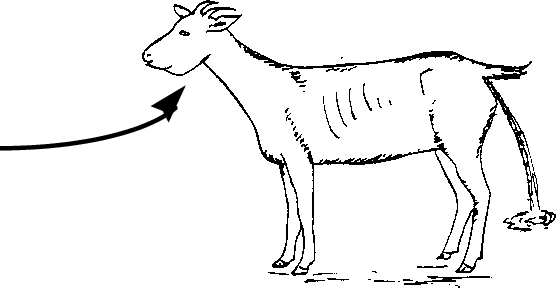
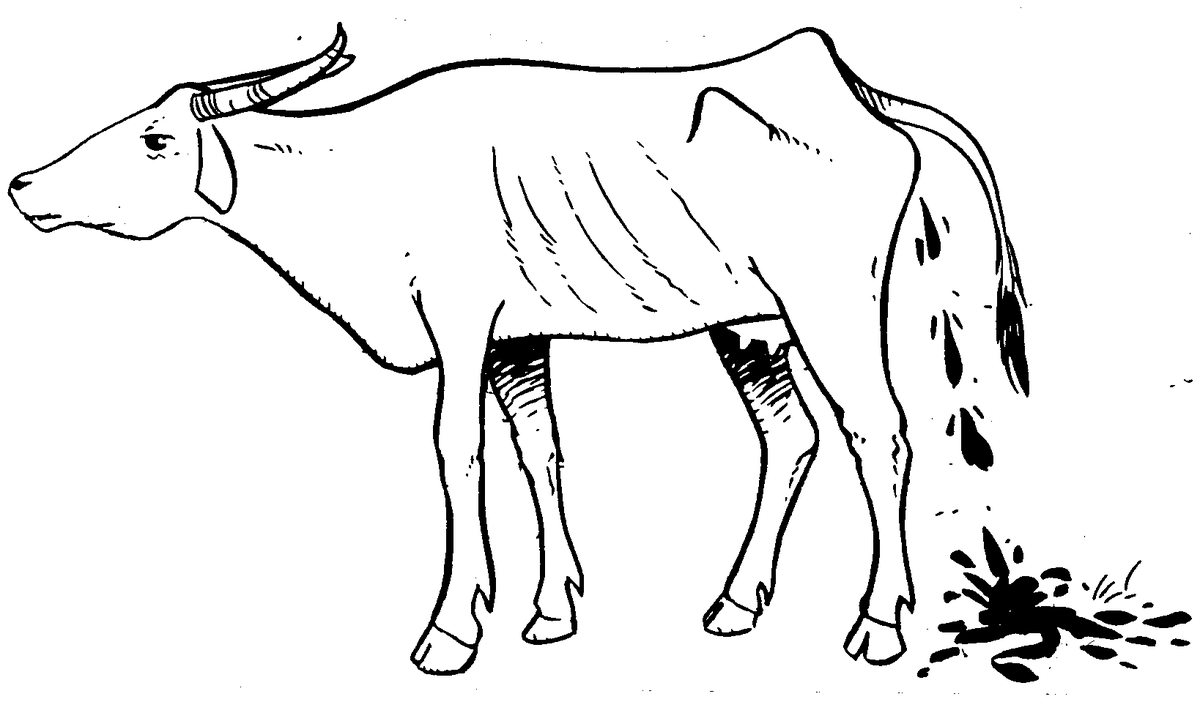
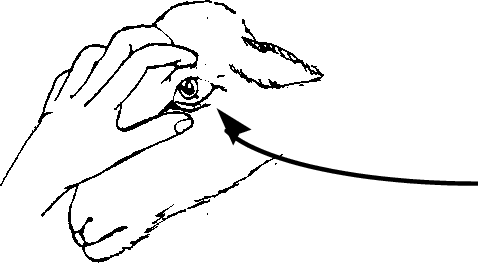
Bottle jaw Diarrhea Pale under the eyelids (anemia)
Diagnosis:
Symptoms: Diagnosis is usually based on symptoms: particularly anemia and diarrhea; a history of not having received parasite medicine recently; and knowledge that small roundworms are a very common problem in livestock kept in dirty, wet conditions and where no pasture rotation is practiced. Response to treatment will confirm the diagnosis.
Necropsy: Small roundworms can also be found in the digestive tract of dead animals, particularly if you wash the stomach contents on a screen.
Laboratory: Using a microscope, small roundworm eggs can often be found in the feces.
Treatment:
You will probably have access to various medicines that treat small roundworms. Read the label and choose the least expensive medicine that is available and known to be effective against small roundworms in your area. Generally, animals should be treated at least every 6 months but the frequency may vary depending upon local conditions. There may be a certain time of year (springtime in most temperate climates) when parasites are most severe; and treatment should be more frequent during this period. Repeated treatment with the same medicines may cause the worms to become resistant to treatment. When this happens, a different medicine should be used.
Control:
Small roundworms can be controlled by:
Good sanitation Keeping feed in mangers where animals cannot defecate.
Keeping water in troughs where animals cannot defecate.
Cleaning pens regularly and leaving them empty to dry, preferably in the sun.
Pasture Rotation Moving animals to a new pen or pasture every few months, and leaving previously grazed pastures free for at least 3 months.
Note: It's best move animals to a new pen or pasture on the same day of treatment against internal parasites.
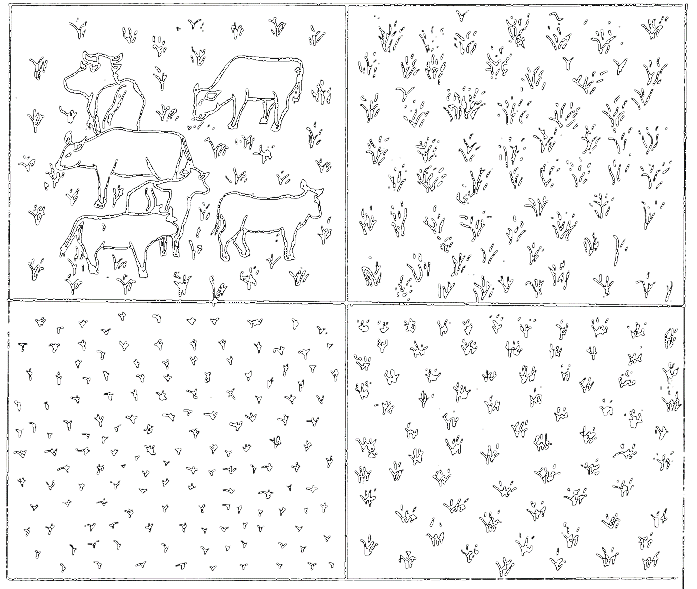
Pasture rotation Animals graze on one pasture for a period of time (e.g. 1 month). They are then moved to a second pasture while the previously grazed pasture is allowed to “rest.” They are then moved to a third pasture and fourth pasture allowing the previously grazed pastures to “rest.” During the rest period, parasites are exposed to sunlight and drying, and they die. Then grazing animals are not exposed to the parasites once they are rotated back onto the pastures.
Examples of Common Small Roundworms
| In the stomach |
|---|
| Haemonchus (large stomach worm or wire worm) is red or red-striped in color, 1-3 centimeters long, and easily seen in the stomach of dead animals. It occurs in almost all ruminant animals. |
| Ostertagia (medium or brown stomach worm) is about 1 centimeter long and brown in color. |
| Trichostrongylus (small stomach worm, bankrupt worm) is the smallest roundworm worm in the stomach (about 0.5 centimeter long). |
| In the small intestines |
| Cooperia (bankrupt worm) is just less than 1 centimeter in length and difficult to see. |
| Ancylostoma, and Bunostomum (hookworm). |
| Ancylostoma is seen in man and meat-eating animals. Bunostomum is found in ruminants. |
| These worms are easily recognized because of their hook-shaped head. The larvae can infect an animal by entering through the skin or mouth. The adults live in the intestine and can rapidly cause severe anemia. |
| Examples of Small Roundworms (continued) |
| Nematodirus (long necked worm) looks like hookworm but causes a lack of appetite and more severe diarrhea than hookworms. |
| In the large intestines: |
| Trichuris (Whipworm) is found in the cecum, and is easily recognized by its long tail. It is usually not harmful. |
| Chabertia (largemouth worm) is 2 centimeters long with a large mouth. It destroys the wall of the intestine and causes bloody diarrhea. |
| Oesophagostomum (nodular worm) is white in color and about 2 centimeters long. The larvae cause small abscesses in the wall of the large and small intestines. These abscesses may break open and cause severe infections and diarrhea. |