Large Roundworms in the Small Intestines
27.5.1 Large Roundworms in the Small Intestines Horses, pigs, chickens, young cattle and buffalo, dogs and cats can have large roundworms, which live in the small intestines. Sheep and goats do not have large roundworms.
Life Cycle of Large Roundworms
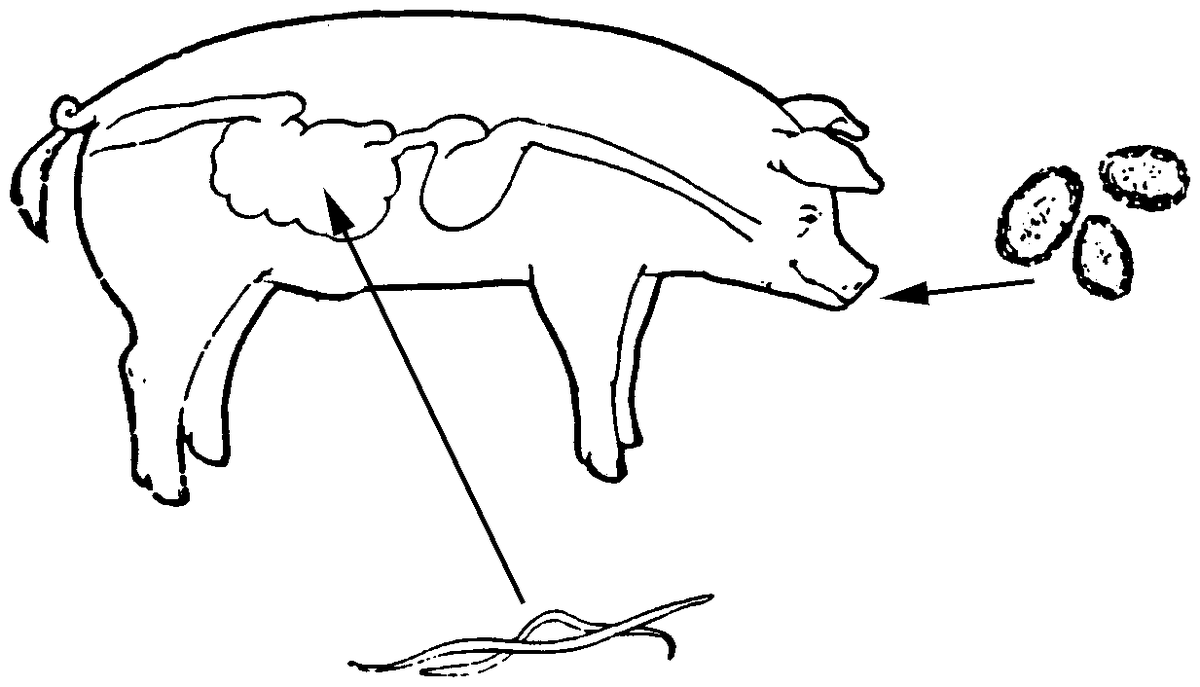
1. The adult worms in the small intestines lay eggs, which are passed in the feces. These eggs must remain in the environment for several weeks and develop to a more mature stage before they can infect another animal. Under certain conditions, the eggs can survive for several years in the environment.
1. The eggs are eaten by another animal and, if at the right stage, hatch into larvae in the small intestine.
1. The larvae pass through the intestinal wall, into the bloodstream and then through various organs such as the liver and lung, damaging each organ through which it passes.
1. Finally, the larvae return to the lungs, are coughed up, and swallowed. They larvae mature to become adults in the small intestines.
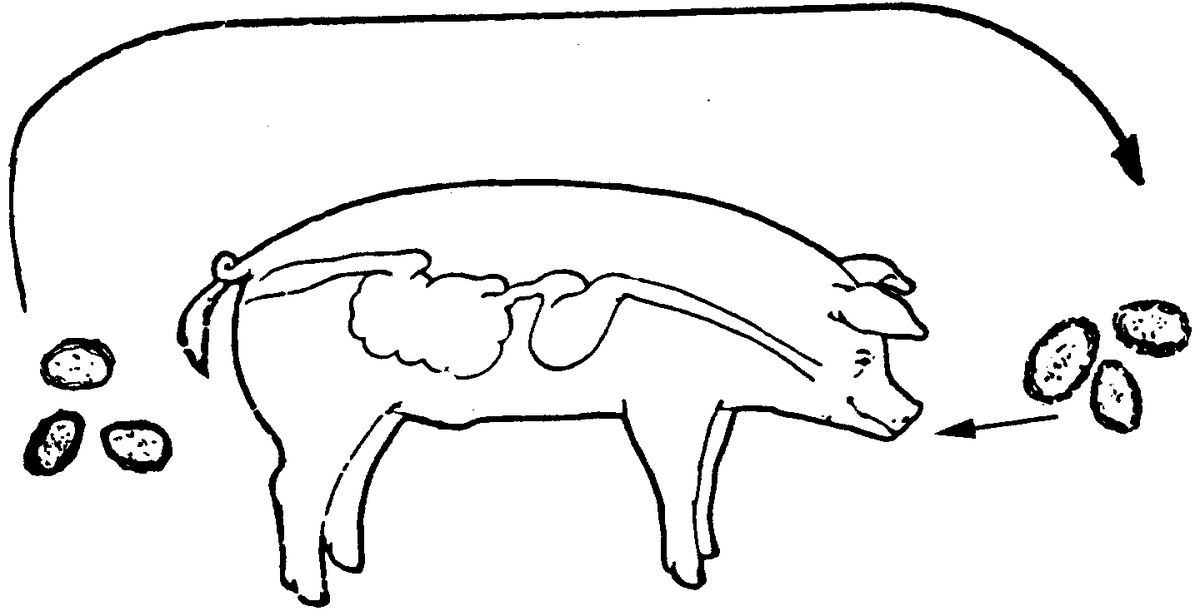
The life cycle takes one to three months.
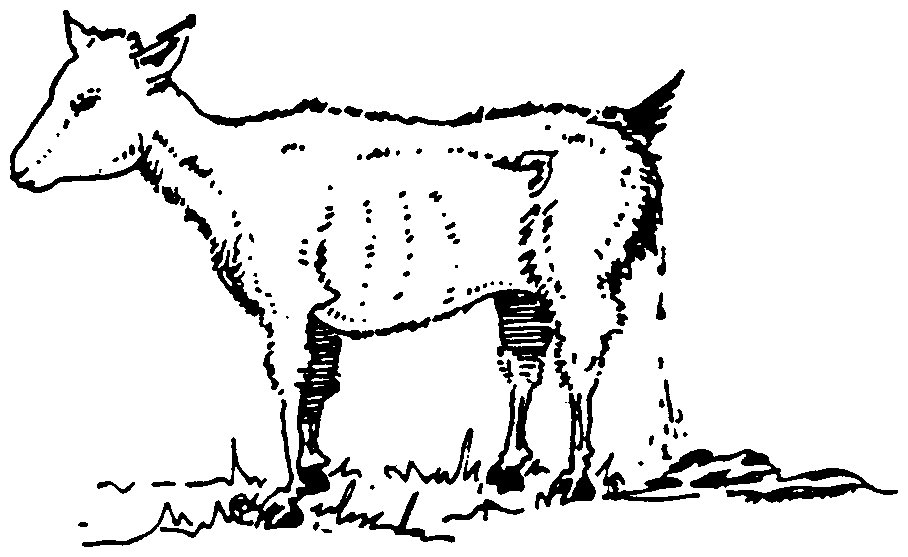
Symptoms Mostly young animals are affected. They have poor growth, appear unhealthy, may cough, and may have diarrhea or constipation as well as a complete blockage of the intestines.
Diagnosis Diagnosis is usually based on symptoms, a history of not having received parasite medicine recently, and knowledge that large roundworms are a problem in your area.
Necropsy: In a dead animal, white spots may be observed on the liver. These spots are scars due to the worms moving through the liver.
Laboratory: Using a microscope, large roundworm eggs might be observed in the feces. However, sometimes the animals may be ill due to the larvae, and no eggs may be observed in the feces.
Treatment The least expensive treatment is piperazine, which is usually available. Other medicines work well on small roundworms but do not work well for large roundworms and are quite expensive. Animals should be wormed regularly every 3-6 months according to the situation.
Control These eggs can survive for months to years in a moist, cool environment. Direct sunlight and certain disinfectants kill the eggs. All animals at risk should be wormed regularly. All new animals should be wormed before they are mixed with the other animals. In addition, pregnant mothers should be wormed to reduce infection in their babies.
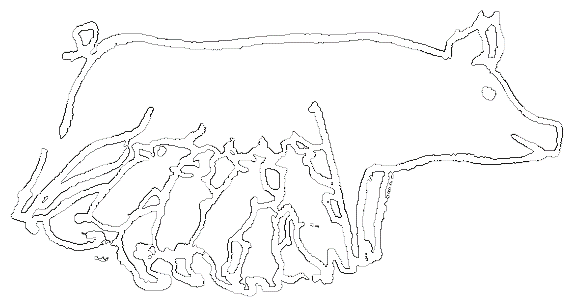
To prevent large roundworm infection in her piglets, a pregnant sow should receive roundworm medicine during the last month before giving birth.
Specifics about Large Roundworms in the Animals They Affect Large Roundworms in Buffalo and Cattle Neoascaris vitulorum is the large roundworm (up to 25 centimeters long) found in cattle and buffalo calves. Adult buffalo and cattle are resistant to Neoascaris but calves may get sick from this large roundworm until about 6 months of age. Calves can become infected before birth.
Note: Some people withhold the first milk called “colostrum” from calves thinking that this will prevent infection with large roundworms. However, this will not prevent infection and is very risky since colostrum protects the newborn from many diseases.
Treatment Give piperazine to calves and repeat the treatment 4 weeks later. Dose according to label.
Control Regular treatment of young, infected animals will control the disease.
Large Roundworms in Sheep and Goats Large roundworms are not normally found in sheep and goats.
Large Roundworms in Pigs Ascaris suum is the large roundworm commonly found in the small intestines of young and adult pigs. The larvae damage the liver and lungs, and make the lungs more susceptible to infections. Unlike the roundworm in cattle and buffalo, Ascaris suum does not infect baby pigs before they are born.
Treatment Piperazine is the least expensive treatment. Dose according to label. Do not wait for a positive fecal exam to treat for Ascaris suum. All animals (young and old) should be treated at least every six months. Pregnant sows should receive piperazine during the month before giving birth. Remember, prevention is better than cure!
Control Eggs can survive for years in moist conditions but will die within several weeks in direct sunlight. A farrowing crate should be left clean, empty and exposed to sunlight for a few weeks before putting a sow into it. Baby pigs and their mothers should be kept separate from other pigs and in a clean, dry environment. Again, pregnant mothers should also be wormed during the month before farrowing.
Large Roundworms Horses Parascaris equorum is the large roundworm of horses. Its life cycle is similar to that of pigs. It is a problem only in young horses, sometimes giving them colic or blocking their intestines.
Treatment Piperazine is the least expensive. Dose according to label. Other medicines may be available which treat roundworms as well as other parasites.
Control Keep mothers and babies in clean pens, and treat foals (baby horses) with medicines against roundworms during their first year of life (beginning at one month of age).
Large Roundworms in Birds Ascaridia galli is the large roundworm of many domestic birds. This worm is smaller than other common large roundworms. Compared to healthy birds, young birds with lowered resistance, due to illness or a nutritional deficiency, are more likely to get ill from this worm.
Treatment Treat all chickens at least every 6 months depending upon the severity of the problem. Dose according to label.
Control/Prevention Good sanitation and regular worming can control this problem.
Large Roundworms in Dogs Toxacara canis is the large roundworm of dogs and is of public health importance. Its life cycle is similar to that of the large roundworm in cattle and buffalo. Puppies suffer most and can be infected before they are born. Children in contact with puppies can become infected with Toxacara canis and may suffer from damage to their liver, brain, lungs and eyes.
Treatment Piperazine is the most inexpensive treatment although other medicines are effective as well (e.g. thiabendazole, pyrantel pamoate, mebendazole). Dose according to label.
Control To prevent the passing of eggs in the feces (and possible infection of humans), puppies and their mothers should be treated when the puppy is two weeks old and then every three weeks until the puppy is three months old. Treatment should continue on a regular basis (e.g. every 3-6 months) depending on the severity of the problem.