Lungworms
27.5.3 Lungworms Lungworms are a problem mostly in young animals. They develop in the small air passages of the lungs and damage the tissue, resulting in poor growth of the animal. This damage can also lead to pneumonia. The following list indicates the scientific name of various lungworms and the animals they affect:
Dictyocaulus (cattle, sheep and goats)
Protostrongylus (sheep and goats)
Meullerius (sheep and goats)
Metastrongylus (pigs)
Aelurostrongylus (cats)
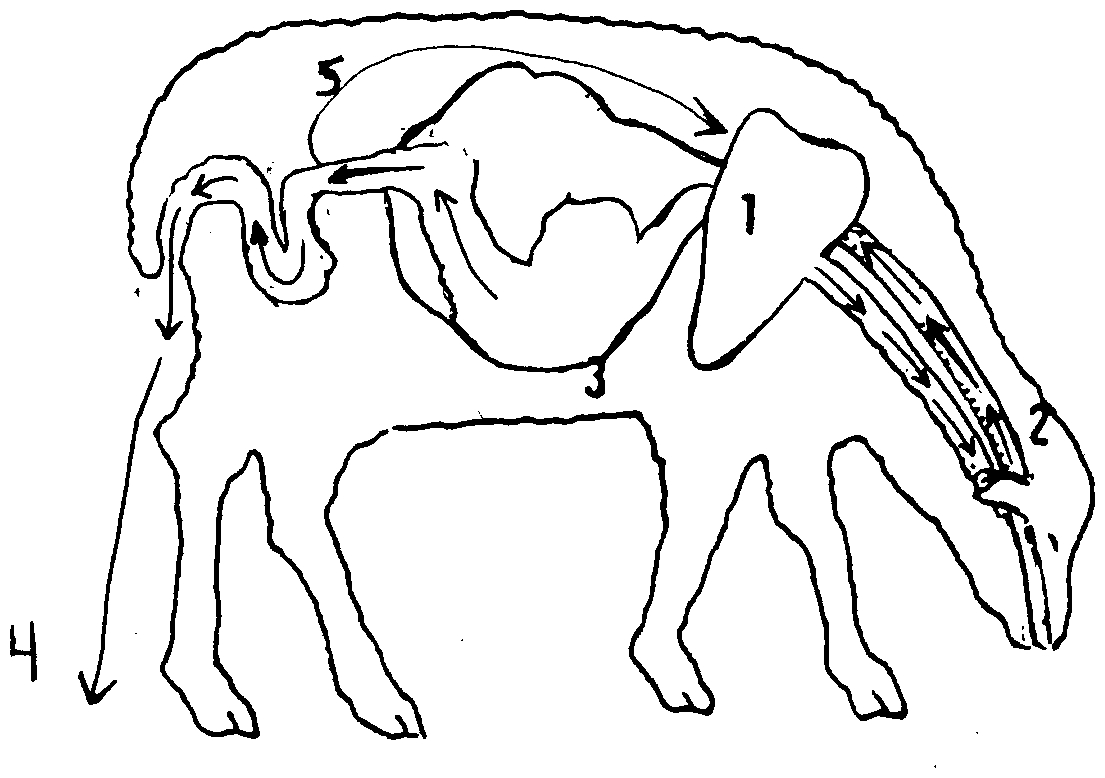
Life cycle of lungworms:
1. Although the life cycle varies depending upon the type of lungworm, in general, the adult lungworms live in the lungs and lay eggs.
1. The eggs are then coughed up and then swallowed.
1. With some types of lungworms, the eggs hatch into larvae while in the intestines and then pass out with the manure, contaminating the ground or forage. The larvae pass through various stages in the environment. With other types of lungworms, the eggs themselves pass out of the animal in the manure and hatch into larvae. The larvae are then eaten by “intermediate hosts” such as earthworms, slugs or snails.
1. Grazing animals are infected when they eat the larvae in the environment (for some types of roundworms) or when they eat intermediate hosts (for other types of larvae).
1. The larvae then move from the intestines to the lungs.
Symptoms:
Lungworms may cause coughing, difficult breathing, and poor weight gain. Lungworms also make an animal more susceptible to pneumonia caused by other organisms (i.e. bacteria or viruses).
Diagnosis:
Symptoms: Lungworms can be diagnosed on the basis of general symptoms, knowledge that lungworms are a problem in your area, and response to treatment.
Necropsy: In dead animals, lungworms can be observed in the lungs. The worms are white and up to 8 centimeters in length.
Laboratory: Using a microscope, lungworm eggs can be observed in the feces if specimens are prepared using a special technique (called “Baerman” technique).
Treatment:
Common roundworm medicines, such as tetramisole, thiabendole and albendazole, are effective against lungworms (check the label). Use that which is available, least expensive, and known to be effective in your area. Always follow label instructions.
Control:
Treat for lungworms at least every 6 months. The frequency depends on the severity of the problem in your area. In some countries, a lungworm vaccine is also available. Information about it can usually be obtained from your ministry of agriculture. Adult animals may recover without treatment.