Infectious Diseases Affecting the Stomach and Intestines:
11.6.1 Infectious Diseases Affecting the Stomach and Intestines:
Enterotoxemia / Pulpy Kidney / 6- Month Disease This is an infectious disease caused by a bacteria Clostridium perfringens. This disease mostly affects sheep, goats, pigs and horses. Young animals seem to be more often affected. These bacteria live in soil, manure and the intestines of ruminants and produce toxins (poisons) that normally cause no problems. However, when an animal eats a lot of rich food (milk, rich pasture or different grains), the bacteria may reproduce quickly and make a lot of toxin which gets into the blood and makes the animal very sick.
Symptoms: Often the animal is found dead before symptoms are even noticed. Sometimes, the animal may breathe rapidly, stagger, and convulse, as well as have a fever, diarrhea (sometimes with blood), and/or bloat. Death can follow shortly. When the dead animal is cut open, parts of the intestines may be filled with a reddish, watery diarrhea. The kidney may also look soft and rotten.
Diagnosis: Diagnosis is usually based on the symptoms and history. In some countries, special lab tests can also be done to confirm the diagnosis. There is usually a history of eating a lot of rich food. The problem is more common in “improved breeds” which might be given better quality feed. In pigs, the disease occurs during the first few weeks of life. It can also occur in young lambs 2-10 months of age, particularly when the new green grass is just coming out. This is why it is called 6- months disease, because it happens twice a year.
Treatment/Control: Treatment of sick animals is very difficult. Often, no matter what is done, the animals die. Piglets can be given 1 cc of penicillin in the mouth, once daily for 3 days. Mildly ill animals can be treated with magnesium sulfate and stomach stimulants. Control is very difficult unless a vaccine is available. In many countries, a vaccine is available that is given to pregnant mothers (especially goats) and also to young animals at about 1 month of age. It usually must be repeated (follow the instructions on the vaccine package).
If milking goats are fed so that they give lots of milk, their babies may be more susceptible to this disease.
Rinderpest This is a very infectious disease caused by a virus. It is the one of most feared diseases in the world because it is highly fatal. Cattle, buffalo, pigs and other animals with split hooves can get this disease.
In some countries, the disease was controlled for many years by vaccination. However, the disease resurged when the vaccination stopped.
The virus is spread in the feces, in the saliva and in the breath of sick animals. Although it affects several systems in the body, it seems to mostly affect the digestive system.
Symptoms: The animal begins showing symptoms within 3-15 days of contact with the virus (i.e. an incubation period of 3-15 days). Symptoms include high fever, discharge from the eyes and nose, lack of appetite, followed by diarrhea, dehydration, labored breathing and often death. Small red wounds develop on the lips, nose, mouth and tongue which can become infected (and make the breath smell bad).
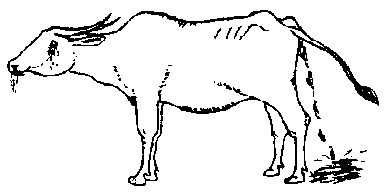
Diagnosis:
When a dead animal is examined, the abomasum is very red and has many wounds (ulcers) on it. The mouth, pharynx, and vagina may also have wounds in them and have a bad smell to them. The liver and spleen may be swollen.
Treatment/Control: Treatment of sick animals does not work. Most sick animals simply die. If they do recover, then they have immunity for the rest of their lives. In areas where Rinderpest occurs, all young animals reaching 6 months of age should be regularly vaccinated. The vaccine should give animals immunity for the rest of their lives. In areas where no vaccination has been done, young animals will not receive Rinderpest antibodies from their mothers' colostrum. Therefore, these young animals should be vaccinated along with the other animals, even before they reach 6 months of age.
Anthrax Anthrax is an acute infectious disease that can affect almost all mammals. It is caused by a bacteria, Bacillus anthracis. It usually causes death in cattle, buffalo, sheep and goats. However, affected pigs and horses become sick but often do not die. Animals get anthrax from the soil or from eating blood or bone products from infected animals (e.g. blood meal). Once the blood from an infected animal mixes with the soil, the soil is contaminated, and the bacteria (spores) can live there for years. Anthrax is a public health disease. It spreads easily to humans when they handle the meat, blood or wool of infected animals. See page 95.
Symptoms: Sometimes the animals die so quickly that no symptoms are seen. However, the dead animal may have black blood coming out of its nose, mouth or anus. If the animal has not yet died, it may have a high fever, difficult and rapid breathing, a swollen throat, and black blood around mouth or throat. If pigs in an area seem to develop swollen throats for no apparent reason, and then often recover, suspect anthrax.
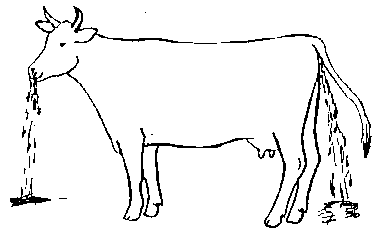
Anthrax is sometimes hard to distinguish from HS.
Cow with anthrax; bloody nasal discharge and bloody diarrhea Diagnosis: Based on the symptoms. It is also possible to make a thin blood smear. Stain the smear with several drops of new methylene blue, and examine it with a good microscope (the microscope must have a good light). Then, the AHA can see the bacillus with the capsules or spores.
Caution! Once the blood is exposed to air, anthrax spores develop. A person who inhales these spores may develop anthrax in the lungs. Persons handling the meat or blood of an infected animal may also develop anthrax. If you suspect an animal has died of anthrax, avoid cutting it open since you will contaminate the soil indefinitely and risk getting anthrax yourself.
Treatment: If the animal is just breathing hard, treat it with tetracycline, just like pneumonia. For pigs with swollen throats, treat with tetracycline or penicillin.
Prevention: Vaccines are available in many countries. Carefully follow the instructions on the package insert to know how to care for and administer the vaccine.
Caution: Vaccinating against anthrax during an anthrax outbreak is risky for an AHA. Animals that are already incubating the organism at the time of vaccination may still get sick from anthrax and die. The owner may then believe that the vaccine killed the animal and request some repayment for the loss of the animal. Try to vaccinate the animals in the area before an outbreak begins. This is often difficult. Some farmers tend to wait until they hear of an anthrax problem and then want to vaccinate during an outbreak.
Swine Fever This is a viral pig disease also called Hog Cholera. It is a very dangerous, rapidly contagious disease. It affects the whole body but is put in this section because it causes diarrhea also.
Symptoms: Symptoms begin with a fever, then progress into diarrhea and weakness. The pigs may also develop a discharge from the eyes and nose; and become weak and wobbly in the hind legs. Most pigs die within a week, although a few may recover.
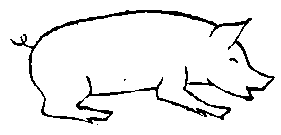
Sow with hog cholera (high fever resulting in open-mouth breathing).
Diagnosis: A tentative diagnosis is based on the history and symptoms, and confirmed by post mortem specimens and observations. During the post mortem exam, small ulcers can often be seen in the large intestine near where it joins the small intestine. Usually the history will indicate that most pigs in an area are becoming rapidly and seriously ill.
Treatment: None.
Prevention/Control: Check with veterinarians or the Ministry of Agriculture for available vaccine. In most countries, this disease must be reported immediately to the district veterinarian. All sick pigs should be strictly isolated. People from the outside should not go near them because this disease can be spread on food, on clothes, and even by birds.
Liver Disease Liver Disease is difficult because it usually happens along with other problems. However, it can be considered as part of the digestive tract.
Symptoms: Animals suffering from Acute Liver Disease get quite ill and quit eating. This is seen more often in humans and dogs than livestock or horses. Liver disease in livestock is usually chronic and may result in permanent liver damage. Chronic liver disease is most often due to liver flukes, immature larvae of large roundworms, or eating poisonous plants. An animal with liver disease may also have a swollen throat.
Diagnosis: An animal with liver disease may have “jaundice” resulting in yellow coloring under its eyelids, on the whites of its eyes and on its gums. Diarrhea may also be present. If the animal has already died, the liver may be hard and crumble easily.
Treatment: Liver damage is usually permanent. However, the extent of the damage is difficult to know. The AHA should treat the animal for liver flukes (if it is a known problem in the area) and other parasites. Some liver fluke medicines may affect the liver (especially CTC). Learn which liver fluke medicines are available in your area and try to use those which do not affect the liver.
Control/Prevention: Treat regularly for parasites Systems of the Body and Associated Veterinary Problems