Diarrhea
11.5.1 Diarrhea This is a complex problem with many causes. The most common cause of diarrhea in livestock in developing countries is related to internal parasites. Parasites can damage the liver as well the lining of the stomach and intestines.
53 Problems associated with diarrhea Acute Diarrhea -> Dehydration Chronic Diarrhea -> Malnutrition The main problem associated with acute diarrhea is dehydration. The main problem associated with chronic diarrhea is malnutrition.
Dehydration occurs when too much water leaves the body and the body’s cells cannot work properly, nor can the blood move properly. Any animals with acute diarrhea (including people) should be checked for dehydration and given plenty of fluids. See page 55. Even animals with chronic diarrhea should have lots of fresh water to drink.
54Treatment of Diarrhea (General)
1. Fluids are the most important treatment. Many animals can be saved by simply giving enough water to drink.
2. Parasite medicines 3. Kaolin or similar medicines to slow down the diarrhea.
4. Antibiotics (if animal has a fever also).
Acute Diarrhea
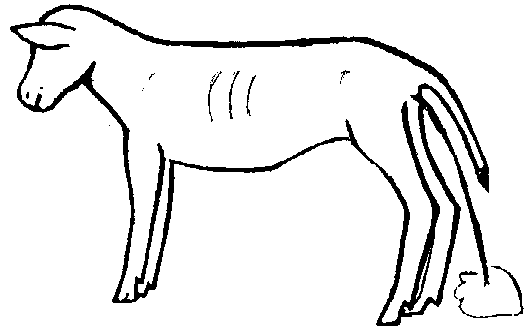
Background: Livestock usually get acute diarrhea from:
- A sudden change in diet.
- Eating food or water that contains bacteria or viruses.
- Eating foods that are difficult to digest.
- Eating poison or dangerous plants.
- Certain parasites (coccidiosis).
- (Rarely) by drinking too much milk, other rich food, or colostrum.
Young goats and sheep that are left home during the day while the mothers graze commonly get diarrhea. This happens because they become thirsty and hungry, and then drink dirty water or eat old food.
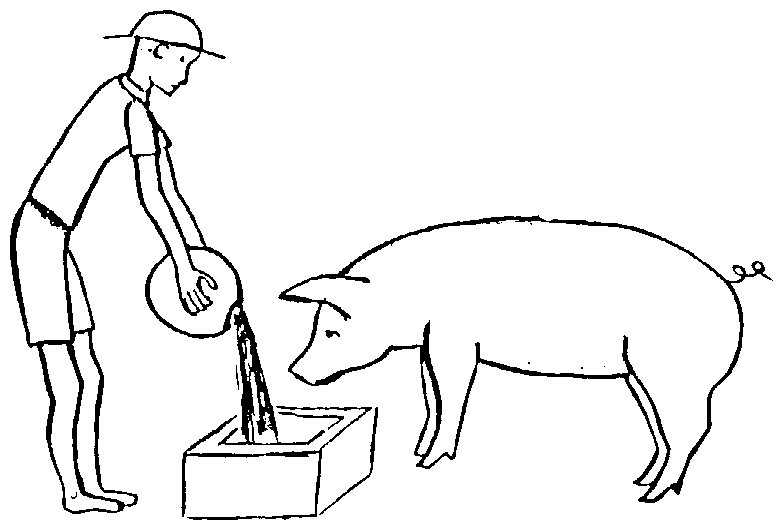
Pigs can get diarrhea after being fed rotten food.
Symptoms: The animal gets diarrhea and may have a fever. Sometimes (but not always) there may be blood in the diarrhea. The animal may act sick and quit eating.
Diagnosis: The AHA must decide whether this diarrhea is simply due to a change in food, or whether it is an infectious diarrhea. This is based on the history (what did the animal eat); whether or not there is a fever; whether or not the animal appears really sick.
1. If the animal acts sick and has a fever, the diarrhea is probably caused by bacteria or viruses. Exception: Newborn or very young animals (e.g. pigs, calves, lambs, kids, foals) often become cold and listless when they have diarrhea, and the cause is usually a bacterium or virus (or both).
2. If the diarrhea has red blood in it, suspect coccidiosis. This is seen especially in young cattle, in young sheep and goats, in chickens and in rabbits. See page 297.
3. The animal may not act sick and may not have a fever. This diarrhea is probably due to a change in feed or too much rich feed.
Treatment:
1. Fluids. (See page 105) Even very sick baby animals can be saved with fluids given by mouth. Its best to give small amounts of fluid frequently until the animal starts to make urine normally again.
1. Kaolin and similar medicines may help stop the diarrhea.
1. Antibiotics. These are important to give to the animals which have diarrhea and fever at the same time. Sulfadimidine is effective, cheap and easily available. (It may also work against coccidiosis.)
Caution: Feeding antibiotics by mouth to adult grass-eating animals may kill the good micro-organisms in their stomach resulting in indigestion. Therefore, only feed antibiotics by mouth if the grass-eating animal has severe diarrhea and a high fever. See page 189.
1. Coccidia Medicine: See page 298.
Control/Prevention: The most important factor is sanitation. Animals should always have clean, fresh water to drink. The food should be fresh, and it should not be fed from the floor.
Chronic Diarrhea Background: The most common reason for chronic diarrhea is parasites.
Symptoms: The animal has diarrhea; and may have had problems with loose stools for a long time. Sometimes the diarrhea occurs every day; and sometimes it is intermittent.
Diagnosis: Diagnosis is usually based on symptoms and history. When taking the history, verify when the animal last received parasite medicine and how frequently it has been given. Also, ask about the duration of the diarrhea. If it has been going on for months, the internal organs may already be permanently damaged. Then the animal may never get well, no matter how it is treated. At that time, it is important to warn the owner and ask them why they did not come earlier. (Remind them of the need to treat their other animals regularly for parasites.)
Treatment: Water is the most important treatment. Specific treatment depends on what parasites are most common in the area, the species of the animal, and the age of the animal. See Chapter 9 for details on treatment of parasites.
Control/Prevention: See section on internal parasites. The most important thing to remember is simply: Prevention is better than Cure.
Bloody Diarrhea / Dysentery By definition, diarrhea with blood in it is called dysentery.
Chronic dysentery is often due to parasites.
Symptoms and Diagnosis: The animal has a history of chronic diarrhea with blood in it. Often the animal has not been fed parasite medicine regularly.
Treatment: Treat the animal for the most likely parasite, according to its age and how it is kept.
Acute dysentery may be due to:
- Parasites (especially coccidia).
- Bacteria and viruses (bad food).
- Poisons or poisonous plants.
Symptoms: The animal gets diarrhea which contains blood. The animal may have a fever, be lethargic and quit eating. If the animal has dark, bloody things that look like intestines in its diarrhea, it is very serious.
Diagnosis: The diagnosis is based on symptoms and a good history. Find out whether the animal may have eaten poison, or some poisonous plant. In addition, take the temperature and examine the diarrhea.
Treatment: The same as other types of acute diarrhea - except that it is more serious and should usually be treated with antibiotics. If the animal is young, be sure to treat it with coccidiosis medicine. Also, give fluids and kaolin.
Control/Prevention: Sanitation is important! Shepherds should be extra diligent during the rainy, wet season. Animals must not be allowed to graze fodder that may be dangerous to them.