Blocked Esophagus (“Choke”)
11.3.2 Blocked Esophagus (“Choke”)
As the food is swallowed, it passes down the esophagus (the food-pipe) on the left side of the neck, and into the stomach. Sometimes the food becomes stuck in the esophagus and will not pass on to the stomach. The technical name for this is an “esophageal obstruction”, or “choke.”
Symptoms: The animal will quit eating and often saliva will run from its mouth. Ruminant animals will begin to bloat rapidly, and the animal may shake its head and act agitated because it cannot swallow. Sometimes, the food may be seen, or felt, as a lump in the esophagus on the left side of the neck. Choke may occur when an animal eats a whole piece of fruit or vegetable (such as a mango, avocado, or potato).
Diagnosis: Take a good history and rule-out rabies as a possibility. Try to feel the lump of food under the skin on the left side of the neck. Try to pass a stomach tube down the esophagus. If the tube stops abruptly before reaching the stomach, something is probably blocking the esophagus.
Treatment: Massage the lump by hand or with a smooth stick, or try to push it down the esophagus with a stomach tube.
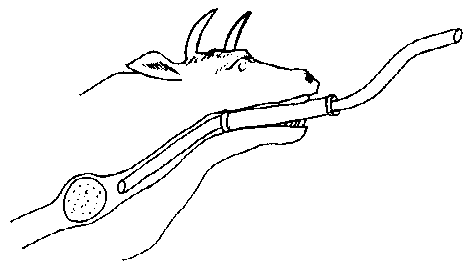
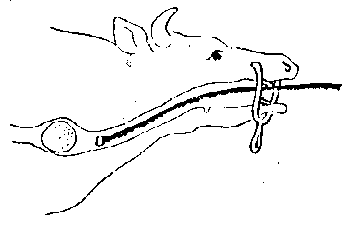
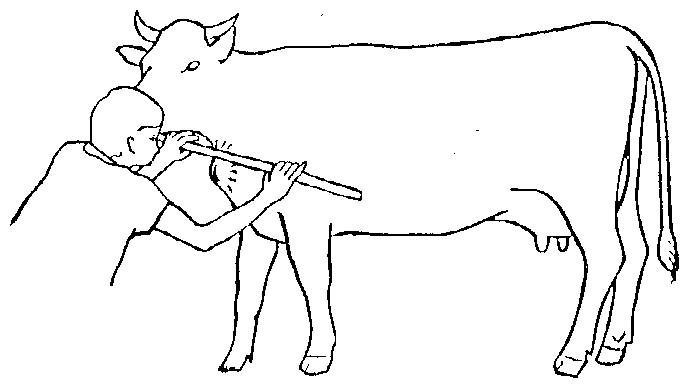
If this is unsuccessful, your only choice is to wait and, in the meantime, treat the animal’s other symptoms (such as bloat). Hopefully, the lump will pass to the stomach on its own.
Prevention: It is best to prevent this problem by:
avoiding those feeds that may cause choke;
cooking things like potatoes before feeding them; and not grazing in areas where they may eat avocados, mangos or other things that could cause choke.