The Practical Steps
9.5 THE Practical Steps
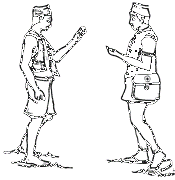
1. Take a complete history and examine the animals. Be sure to ask the owner about the animal's nutrition and whether it has been treated for any parasites in the last 1-3 months. Be sure to also examine the animal for external parasites.
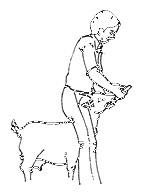
1. If the animal has not been treated for internal parasites in the past 1-3 months, treat it. Based on the most common parasites in your area, choose the most appropriate and least expensive medicine available.
3. Treat the animals for any other problems found during the history or examination.
Caution: Always follow label instructions. Remember to use the proper medicines on pregnant animals as some medicines may cause abortions.
Important note: Imported animals may have less resistance to the local parasites and diseases, and may require parasite treatment more often as well as extra efforts in controlling parasites.
Another important note: Animals suffering from internal parasites often have external parasites as well. Be sure to check and, if necessary, treat for both.
Simple Rules for Treating Internal Parasites A True Story In Nepal, a veterinarian conducted parasite surveys, talked with farmers and examined dead animals. He learned that liver flukes are a problem in grazing animals and large roundworms a problem in calves. He developed simple rules about treating animals in the hilly areas of Nepal for internal parasites that cost little, worked well, and required no microscope.
Simple Rules for Treating Internal Parasites in the Hilly Areas of Nepal 1. For adult sheep, goats, cattle, and buffalo that graze regularly: First treat for liver fluke. If the animals are still doing poorly after several weeks, treat for small roundworms also. The best method, if affordable, is to treat for both liver fluke and small roundworms at the same time. Treat the animals every 6-12 months depending on the severity of the parasite problem.
2. For adult sheep, goats, cattle, and buffalo that are kept mainly in a pen: First treat for small roundworms. If the animals are still doing poorly after several weeks, treat for liver flukes also. The best method, if affordable, is to treat for both liver fluke and small roundworms at the same time. Treat the animals every 6-12 months depending on the severity of the parasite problem.
3. For baby buffalo and baby cattle (calves): Treat for large roundworms sometime during their first four months and repeat the treatment four weeks later. As they get older and begin to eat grass, they can be treated the same as adults (i.e. according to rules 1 and 2).
4. For young sheep and goats: Treat for small roundworms and tapeworms every 6 months or even more frequently depending upon the severity of the parasite problem. At one year of age, they can be treated the same as adults (according to rules 1 and 2).
5. For pigs: Treat for roundworms every 6 months. In addition, treat pregnant sows 5-10 days before giving birth (e.g. before putting her in a farrowing crate) and baby pigs at weaning and 4 weeks after weaning.
6. For horses: Treat for small and large roundworms every 6 months or more frequently depending upon the severity of the parasite problem. Begin treating young horses by one month of age and every 3 months until they are 1-year-old.
7. For chickens: Treat for large and small roundworms as well as tapeworms, depending upon what you see in the intestines when killing chickens for meat. The most common worm is usually the large roundworm.
8. For all animals with bloody diarrhea: Treat for coccidia.
Note: If a reliable laboratory technician is available, it is best to do a fecal exam when an animal does not respond to treatment the first time.
When the Simple Approach Does Not Work:
If an animal suffering from internal parasites is treated correctly, at least some improvement in its condition should be apparent within a month of treatment. If there is no improvement, the AHA should consider the following possibilities:
Was the medicine spilled?

Did the animal spit the medicine out before swallowing?
Was the medicine mixed improperly?
Was the medicine out-of-date?
Were the animal's internal organs already permanently damaged by the parasite before the medicine was fed (i.e. how long had it been sick before it was treated?)?
Does the medicine label indicate that it is effective against the parasite involved?
Has the medicine been used for a long period of time in the area, making the parasite resistant to it?
Is the animal getting enough food to eat?
Does the animal have bad teeth, an infection or some other problem in its mouth?
Is the animal suffering from some other condition besides internal parasites?
If there is no obvious reason why the medicine failed, then try one of the following approaches:
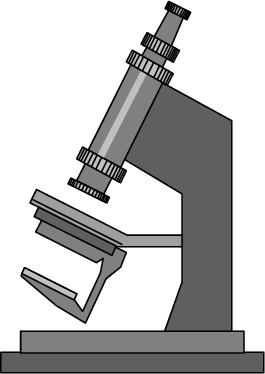
1. Take a specimen of fresh manure to the nearest laboratory to have it examined by a knowledgeable person using a microscope to identify any parasites or eggs.
If the specimen is examined properly and no parasites are found, have another specimen examined. If it remains negative, then the animal's internal organs may already be damaged and the animal may never recover. If the examination shows that parasites are still present, then the medicine may not have worked either due to improper selection or resistance of the parasite to the medicine. In this case, a different medicine should be used.
1. If it is not possible to have a fecal specimen examined, then try using a different medicine and see if the animal responds. Be sure to follow the label instructions carefully. If the animal still does not respond, then its internal organs may be damaged.
Systems of the Body and Associated Veterinary Problems