Pulse
3.3.2 Pulse "Pulse rate" or "heart rate" is the number of heart beats per minute. "Pulse" also refers to the quality of the heartbeat. Is it strong or weak? Regular or irregular? To measure the pulse rate, place your fingertips against an artery and count the number of pulsations per minute. With practice you can determine whether the pulse is regular and strong. Try to measure the pulse rate when the animal is calm and resting.
A rapid pulse may result from fear, exercise, pain, heart problems, overheating, and from an elevated body temperature.
A weak, irregular pulse is a bad sign, indicating that the heart is not effectively moving blood through the body, or the animal is in "shock," or close to death.
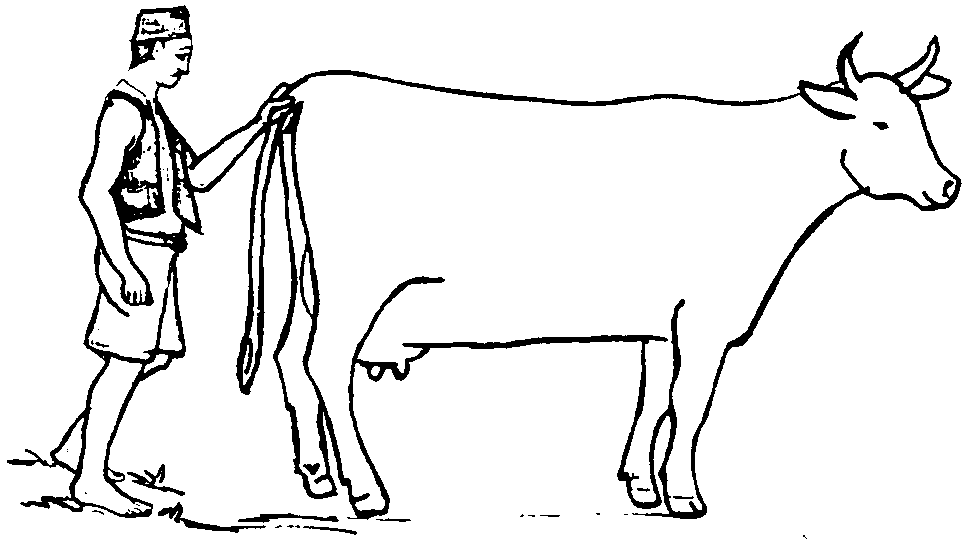
In cattle, buffalo and yak, grasp the tail near the rectum, placing the fingertips in the groove on the underside to feel the pulse.
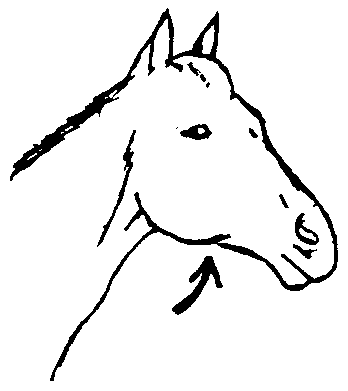
For horses, burros, mules, sheep, and goats, the pulse can be counted by feeling the facial artery on the inside of the lower jaw.
Table 2: Average Pulse and Respiration Rates in Cool Weather
| Animal | Respiration Rate | Pulse Rate / Minute |
|---|---|---|
| Man / Woman | 12 | 70 |
| Calf (few days old) | 56 | 125 |
| Calf (6 months old) | 30 | 96 |
| Cattle (up to 1 year) | 27 | 91 |
| Cattle (adult) | 16 | 50 |
| Buffalo (calf 6 months) | 28 | - |
| Buffalo (adult) | 12 | 45 |
| Horse | 10-12 | 44 |
| Goat / Sheep (adult) | 15 | 75 |
| Goat / Sheep (young) | 20 | 110 |
| Piglet (2 weeks) | 25 | 138 |
| Pig (12-14 weeks) | 18 | 112 |
| Pig (Adult) | 15 | 65-85 |
| Rabbit | 55 | 130 |
| Bird (varies considerably) | 12-40 | 100-200 |