Coccidia
27.8 Coccidia Coccidia are an important cause of disease, particularly in young livestock. Animals most severely affected are sheep, goats, cattle, buffalo, pigs, rabbits and poultry. Generally, each animal species has its own type of coccidia, except for sheep and goats, which can share the same type. Coccidia damage the lining of the small and large intestines. Infection with coccidia is more likely if animals are crowded, or if sanitation is poor.
Life cycle:
1. The adult coccidia live in the intestine and lay eggs (oocysts) which pass out in the feces.
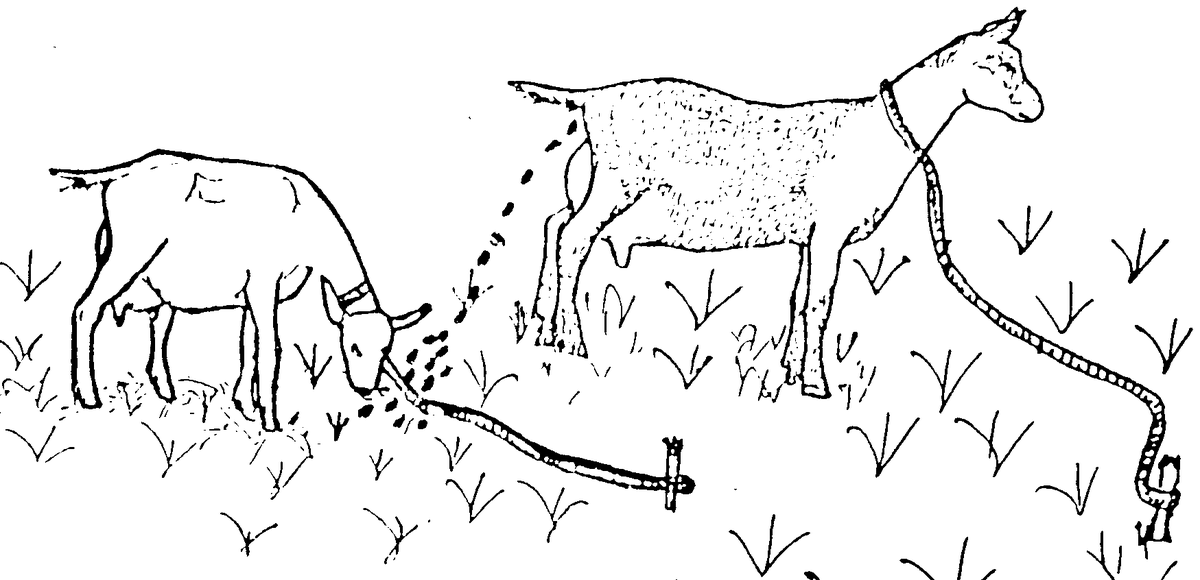
2. If the moisture and temperature is correct, the oocysts change form and become “infective.” 3. The infective eggs are eaten and become adults in the intestines.
Symptoms:
Diarrhea, which is often bloody, and weight loss are the most common symptoms. Animals that do not die from the effects of diarrhea, may develop resistance to that particular species of coccidia. However the resistance may diminish over time if the animal is not re-exposed to coccidia. In rabbits, coccidia attack the liver and may cause rapid death.
Diagnosis:
Symptoms: Coccidia can be diagnosed on the basis of general symptoms, knowledge that coccidia is a problem in your area, and response to treatment.
Necropsy: The lining of the intestines is bloody. In rabbits, white spots may be seen in the liver.
Laboratory: Using a microscope, oocysts may be observed in the feces. However, infected animals may have a negative fecal exam.
Treatment:
There are several drugs that treat coccidia such as “sulfa drugs” and amprolium. Use the least expensive product that is available and known to be effective in your area. Carefully follow the label instructions.
Animals weakened by coccidiosis need a clean, dry, protected pen, as well as access to clean water and fresh food to recover more rapidly.
Control:
The eggs can survive for a long time in dirty, moist environments. Therefore, good sanitation is important in the control of coccidia.
Pens: Pens for young animals should be kept clean and dry, and should not be overcrowded. Periodically, pens should be cleaned, disinfected and left empty (preferably in the sun) for several days. Strong disinfectant and even extreme heat (using a torch) are sometimes needed to rid an animal pen of coccidia eggs.
Pastures: Practicing pasture rotation, and avoiding overstocking of pastures can help control coccidia of grazing animals. Also, coccidia eggs do not survive well if exposed to drying and sunlight.
There are some products such as amprolium and monensin that can be put in the feed or water to prevent coccidia. Monensin is often put in the feed of chickens to prevent coccidia (however, it is very toxic for horses!).
Trypanosomes: See Page 275.
Babesiosis: See Urinary System / Red Water, page 245.