Management of the dip tank
26.7.5 Management of the dip tank
| Dip solution can be TOXIC if mixed incorrectly! |
It is extremely important that the correct amount of dip concentrate be mixed with the correct amount of water. This is important for two reasons:
If there is too much acaricide for the amount of water, the solution may be toxic and animals might be poisoned.
If there is not enough acaricide for the amount of water, the solution will not kill the ticks and the whole dipping process will be a waste of time, money and energy.
How is this done?
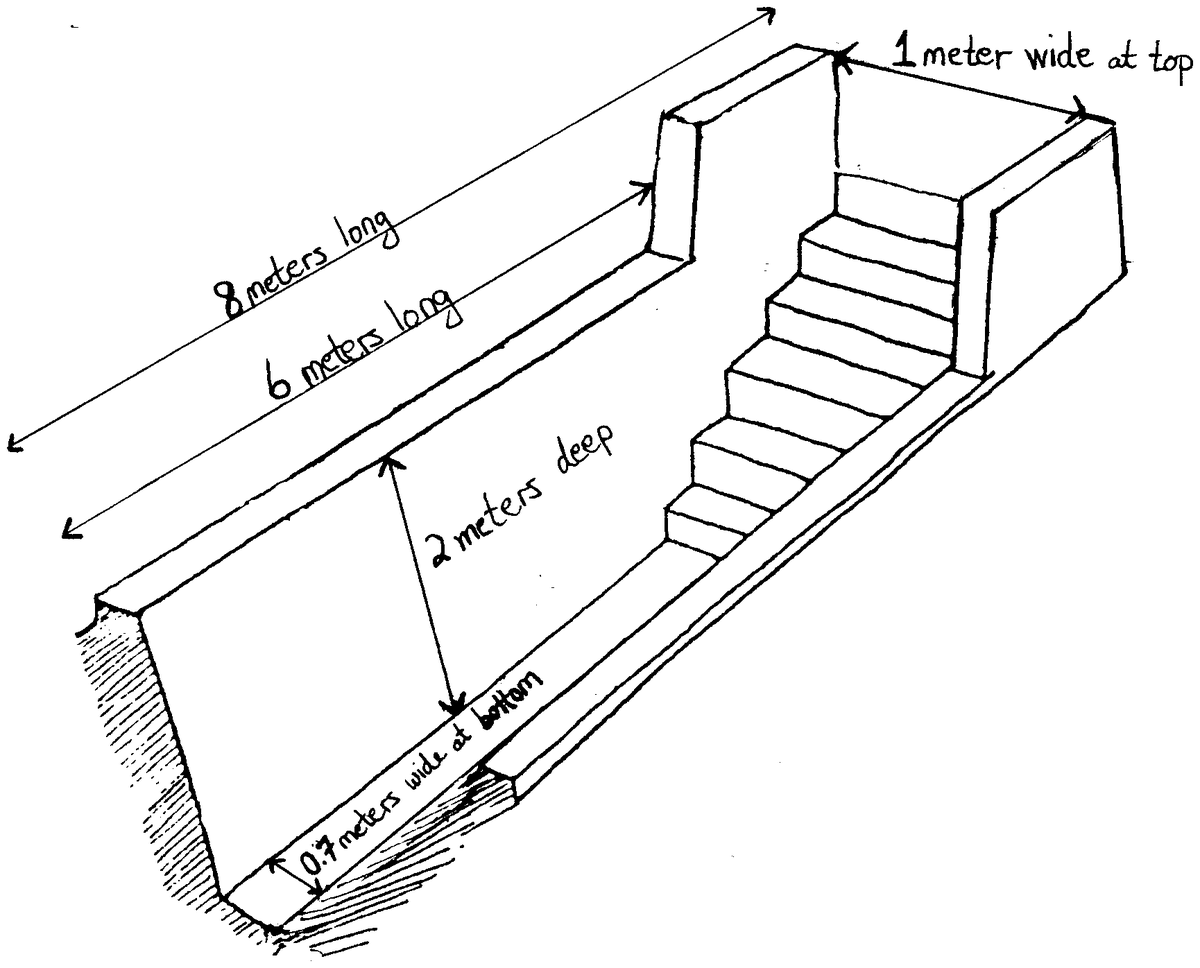
1. Verify the approximate volume of the dip.
Remember: volume = length x width x height Because this tank is an abnormal shape, it is easiest to:
assume an average width of 0.85 meters (1 meter + 0.7 meter)
assume that the exit ramp occupies half the volume for 2 meters Example: Volume = length x width x height Volume = 6.0 meters x 0.85 meters x 2 meters = 10.2 meters3 (body of the tank)
2 _________
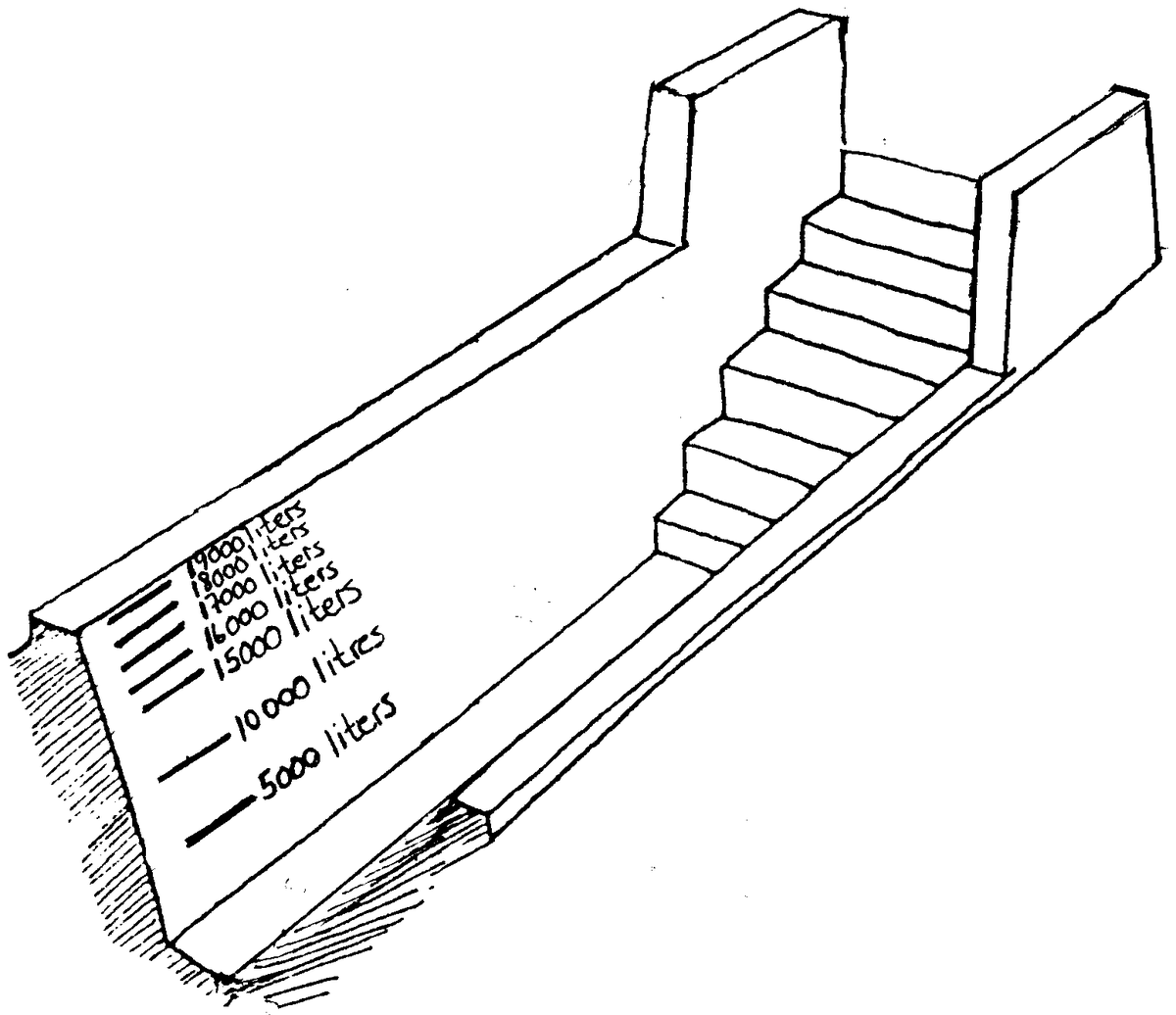
2. Permanently mark the volume level for every 5000 liters on the side of the tank or on a measuring stick. The last 5000 liters to normal dipping levels should be indicated more precisely with marks every 500 to 1000 liters. In areas where flooding is a problem, 500 liter marks should be indicated from above the normal dipping level to overflow levels.
3. Clean the tank of debris.
4. Select and purchase a suitable dip concentrate based on those which are known to be effective in your area, availability, cost, and environmental safety.
5. Read and follow carefully the instructions for mixing and use.
6. Fill the tank with the correct amount of water.
7. Add the correct amount of dip concentrate. Spread it evenly over the surface of the bath water and stir it until well mixed.
8. Maintain a register of the date and number of cattle dipped, the date and amount of dip concentrate used for partial replenishment, the date of complete drainage and refilling, the name of dip concentrate used each time, and any other important observations or problems.