Most Common Mineral Deficiencies
25.5.4 Most Common Mineral Deficiencies Calcium & Phosphorus Deficiency Calcium and phosphorus are important for bones and teeth and for proper functioning of muscles and nerves. They are especially important in the diet of pregnant, lactating and growing animals. Since milk is a good source of calcium and phosphorus, nursing animals rarely experience deficiencies of these minerals. Calcium and phosphorous are usually discussed together because the ratio of the two minerals in a diet is important.
Calcium Deficiency: Calcium deficiency is found most often in pigs or chickens fed only cereal grains. These grains are high in phosphorous but low in calcium. Sows with this deficiency “dog sit” (their back legs do not work), and sometimes can't stand up at all. Calcium deficiency in chickens causes difficulty or inability to walk, soft bones, big joints, poor growth, ruffled feathers, and production of eggs with soft shells. Rarely calcium deficiency can occur as an acute paralysis in high producing dairy cows around the time of calving.
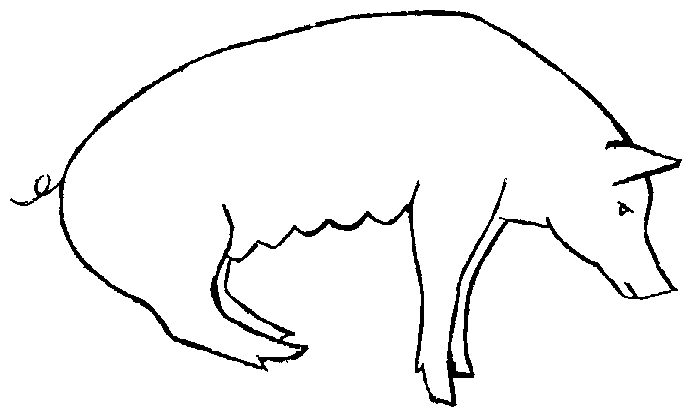
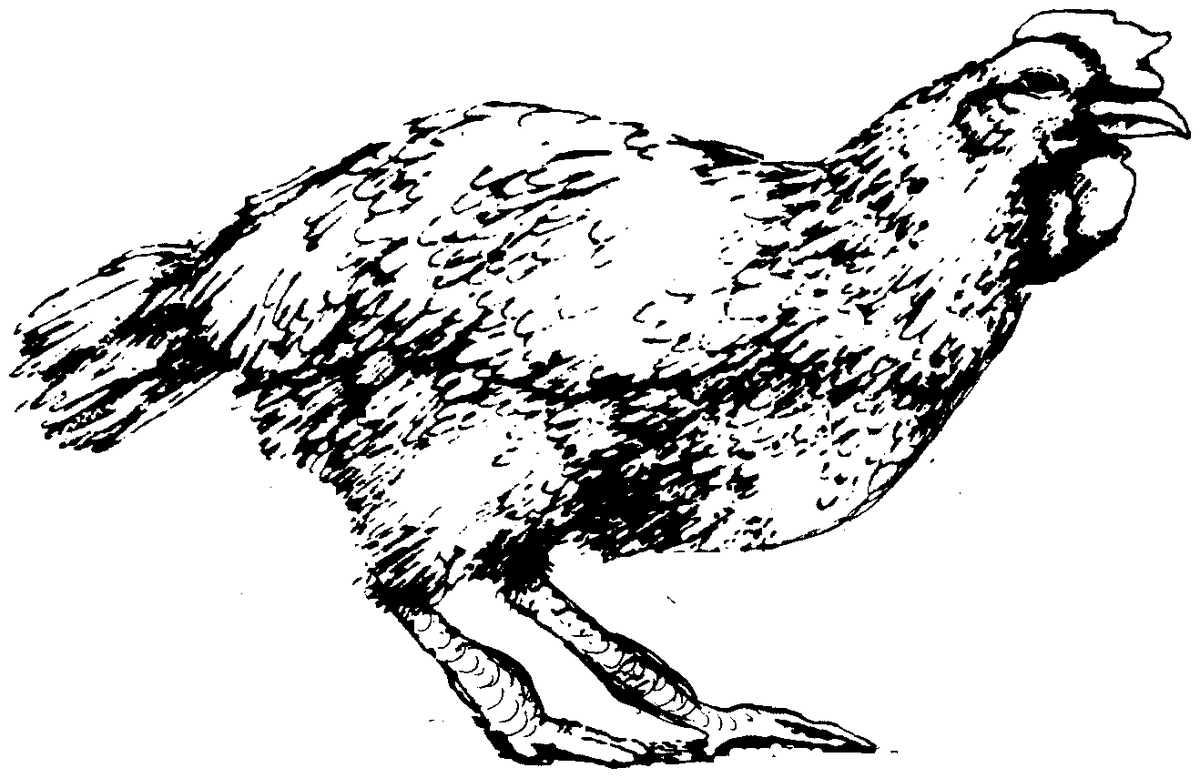
Hen with weak legs and swollen joints due to calcium deficiency Sow with paralyzed hind legs due to calcium deficiency Phosphorus deficiency is seen more often. Many tropical soils are deficient in phosphorus. Phosphorus deficiency is usually a chronic problem.
Symptoms / Diagnosis 1. Loss of appetite 2. Weakness and paralysis in the hind legs, reproductive failure, and poor milk production 3. Chewing of wood, bones and other things in an effort to find phosphorous 4. Lameness, and in young animals, sore and swollen joints (called, “rickets”)
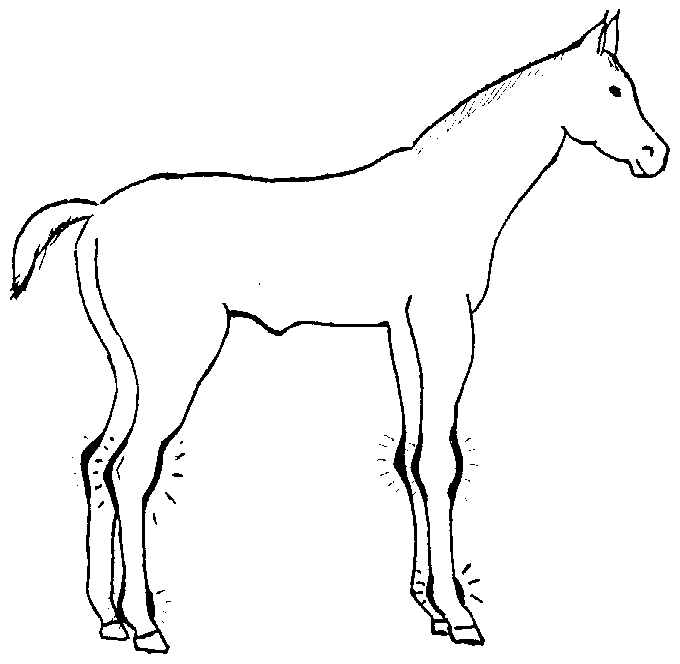
Treatment of Calcium/Phosphorus Deficiency Phosphorus deficiency is treated by feeding mineral mixtures that contain phosphorus. Dicalcium phosphate and de-fluorinated rock phosphate are good sources of phosphorus.
Salt Deficiency All livestock and people regularly need salt in their diet. Salt is made up of two main minerals, sodium and chloride. Salt is necessary for muscles and nerves to work properly.
Salt Deficiency may occur when animals work hard and sweat extensively, or when animals do not have enough salt in their diets.
Symptoms/Diagnosis: Salt deficient animals are very hungry for salt, and will chew and lick various objects in an effort to find it. They lose their appetite, become thin, and shiver and shake. Eventually they will die.
Treatment of Salt Deficiency can easily be accomplished by using mineral mixes, or by allowing animals to eat plain salt. An animal is very unlikely to eat too much salt if adequate water is always available.
Iodine Deficiency A small amount of iodine is needed in an animal’s diet for normal development. It is especially important in the diet of pregnant females.
Iodine deficiency seems to occur only in certain areas. The Ministry of Health or Agriculture may know where the iodine deficient areas in your country are, and may have established a prevention program (at least for people).
Symptoms/Diagnosis 1. Goiters: If the people in an area have large lumps on the sides of their necks (goiters), then the area is probably deficient in iodine.
2. Pregnant female animal’s that are iodine deficient often give birth to weak or dead babies. If the dead baby is cut open, the thyroid gland may appear red and enlarged.
Treatment of Iodine Deficiency In iodine deficient areas, it may be possible to buy salt with iodine added to it (called “iodized salt”); or one can feed “trace-mineralized salt.” If iodized salt is unavailable, and if baby animals appear to be iodine deficient, add potassium iodide to regular salt at a rate of 2.2 grams of potassium iodide per 10 kg of salt Magnesium Deficiency Magnesium, like calcium, is needed for proper functioning of muscles and nerves.
Magnesium deficiency is most often seen in high producing ewes, goats and cows when they change from mature forage to lush green pasture. It is commonly called “grass tetany” or “grass staggers.”
Symptoms/Diagnosis Some animals are found suddenly dead with no previous symptoms. Other animals may act strange and nervous for several days, then suddenly fall down, convulse, and die within hours. The convulsions involve shaking of the body and frantic movements of the legs.
Treatment Give calcium/magnesium in the vein with a preparation made for this purpose. Follow the label instructions carefully. This IV medicine must be given slowly while monitoring the animal’s heartbeat. If the heartbeat becomes erratic, stop the IV until the heartbeat is normal again, then continue giving it even more slowly. Animals that are not gravely ill can receive an injection of calcium/magnesium under the skin (sub-cutaneous).
Prevention Include magnesium in the mineral mix, or fertilize pastures with magnesium.
SIGNS OF THE MOST COMMON VITAMIN DEFICIENCIES
| Vitamin A deficiency |
|---|
| - blindness, cloudy eyes, excess tearing |
| - tilted head |
| - uncoordinated, staggering, fainting |
| - infertility |
| - deformed hooves & rough skin or hair |
| - animals born malformed, without eyes, blind, weak or dead |
| - respiratory disease & diarrhea |
| Vitamin B deficiency |
| (Vitamin B deficiencies are rare in ruminants & horses, but occur in chickens & pigs.) |
| Biotin |
| -In pigs: foot sores, small litters |
| -In chickens: ruffled feathers, deformed legs, crusty skin on the feet, & around the beak & eyes. |
| Choline |
| -In pigs: uncoordinated behavior, abnormal shoulders |
| Niacin |
| -In pigs: diarrhea, weight loss, rough skin and hair |
| Pantothenic Acid |
| -In pigs: “goose-stepping” and bloody diarrhea |
| -In chickens: thickened feet pads, ragged or missing feathers, eyelids sticking together, scabs around the mouth |
| Riboflavin |
| -In pigs: poor growth, infertility, no appetite, rough skin, or piglets born dead |
| -In chickens: paralysis with curled toes |
| Thiamin |
| -In ruminants which have been fed grain or silage: circling and / or blindness |
| Vitamin C deficiency |
| -Does not occur except in guinea pigs |
| Vitamin D deficiency |
| -Very rare if livestock are exposed to sunlight and/or eat forage |
| -In chickens: weak bones and eggs with soft shells |
| Vitamin E deficiency |
| -muscle stiffness, weak or dead newborn |
| -high number of cows with retained placentas (normally 5% or less have retained placentas) |
| -staggering in chickens |
| -sudden death in fast growing pigs |
| Vitamin K deficiency |
| -very rare; occasionally seen in animals grazing on sweet clover, causes failure of the blood to clot and excessive bleeding |
Vitamin A deficiency Vitamin A deficiency is the most common vitamin deficiency of livestock. This vitamin is necessary for normal bones, reproduction, disease protection and sight. Normally, vitamin A is found in young, green fresh forages, or foods that are yellow or orange in color, such as various fruits and vegetables. There is little vitamin A in old forages. Feed that has been stored for a long period of time, particularly in hot weather, may lose vitamin A.
Symptoms/Diagnosis: Vitamin A deficient animals often have eye problems. They might not see at night, or their eyes may form tears, become cloudy, or become completely blind. They may also be infertile or have diarrhea, respiratory problems, deformed hooves, dry skin and hair. Animals born from mothers that are deficient in Vitamin A may be eyeless, blind, malformed, weak or dead. Vitamin A deficient pigs may have a tilted head. Cattle may stagger and faint.
Treatment of Vitamin A Deficiency: The long-term treatment is to feed fresh, young, green forage or fruits and vegetables that have normal yellow-green color. For example, overripe fruit or vegetables can be fed to livestock. For severely affected animals, a single injection of vitamin A at ~2000 IU/100 pounds (45 kg) is effective as a short-term solution.
Vitamin B deficiency Vitamin B deficiencies are rare in grass-eating animals because the micro-organisms in their digestive tract make these vitamins. Vitamin B injections may be useful to stimulate appetites in animals not eating. However, the underlying problem must still be identified and treated. Ruminants eating silage may suffer from thiamin deficiency resulting in circling and blindness. These animals should receive an injection of thiamin. In pigs and chickens, vitamin B deficiencies can occur especially if they are receiving a single source of feed lacking these vitamins. It is less likely if they are fed a variety of food. The animal's feed or water can be supplemented with vitamin B sources to treat and prevent this problem.
Vitamin E deficiency Vitamin E is normally found in most natural feeds. However, old hay, straw and cereal grains may be deficient in vitamin E. Feeds that are stored for a long period of time may lose their vitamin E. The functions of vitamin E, and selenium (a mineral), are closely related to each other and are often discussed together.
Symptoms/Diagnosis: Vitamin E deficiency affects the muscles of young, nursing animals. The muscles develop white-colored areas and cannot function properly, making the animal stiff and unable to stand. Sometimes, the heart muscle of baby animals does not work properly and the baby may be born weak or die suddenly.
Treatment of Vitamin E Deficiency: Short-term treatment requires several daily injections of a combination of vitamin E and Selenium. The dose written on the label must be followed carefully. In addition, and for long-term treatment, foods rich in vitamin E should be fed. High-quality green grass is a good source of vitamin E.
| Remember: Vitamin injections are never a long-term solution for a poor diet! |