Post Mortem Examinations
23.2 Post Mortem Examinations A post mortem, also called a “necropsy”, is the examination and dissection of an animal after it dies. The purpose of the post mortem is to try to determine the cause of death. During a necropsy, samples might be taken for the laboratory.
Caution: First of all, remember that an animal may have died from a zoonotic disease (a disease that can spread to humans). Wear plastic or rubber gloves (or plastic bags) on your hands when performing a necropsy, particularly when brucellosis or rabies is suspected.
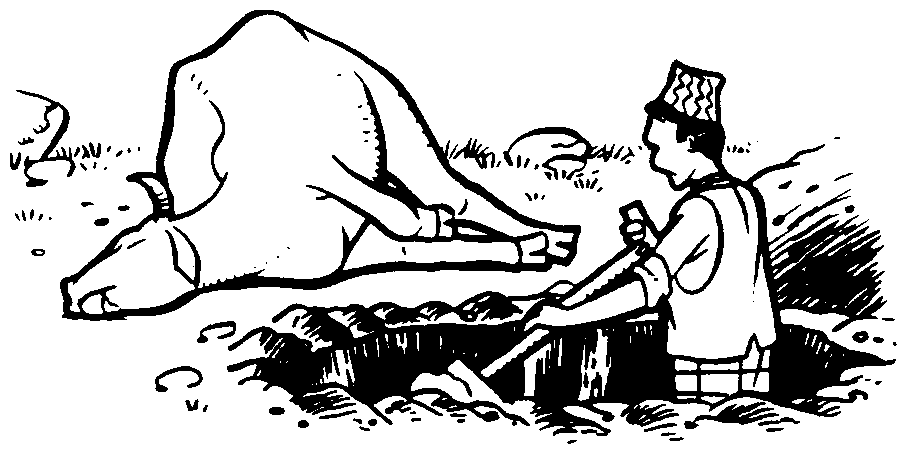
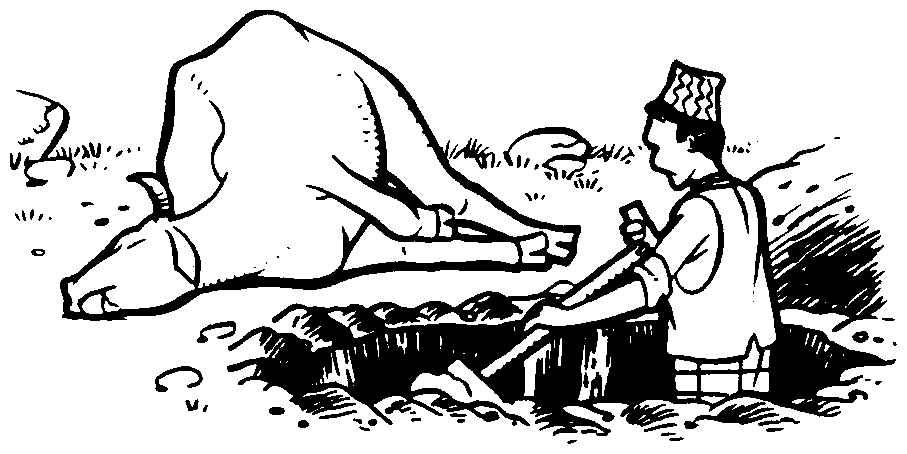
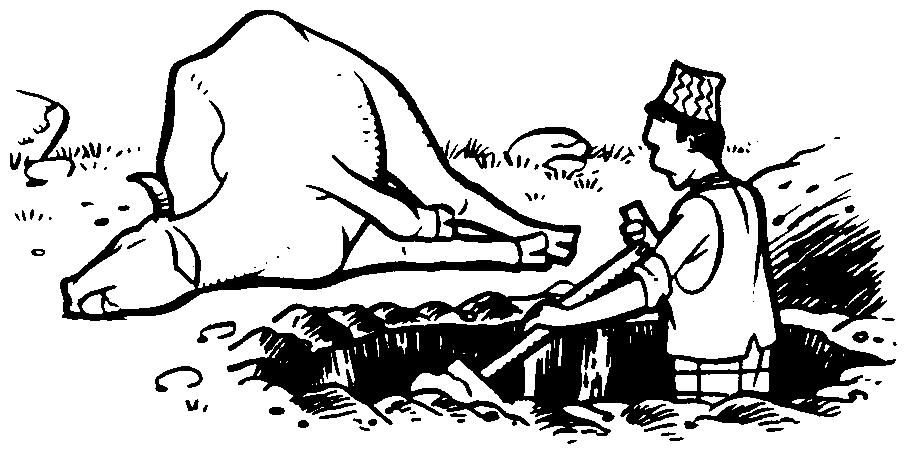
If anthrax is suspected (e.g. the animal suddenly died and had black blood coming from its mouth), do not perform a post mortem! Instead, bury the animal at least 1 meter deep. Blood contaminated with anthrax that has been exposed to air will cause the anthrax organism to form spores that will indefinitely contaminate the soil. Anthrax spores in the soil will pose a risk to people and other animals in the future.