Paralysis
17.5.0 PARALYSIS
For an animal to move its body parts, the muscles must be working properly. In addition, the nerves which go to its muscles must also be working properly.
Paralysis is the term used when an animal cannot move a certain part of its body. It is often caused by damage to the nerves.
Symptoms/Diagnosis:
1. Paralysis due to injury: Sometimes just one leg is paralyzed, but more often both hind legs are paralyzed and the animal cannot get up. This is often due to an accident where the animal has fallen and damaged the spinal cord. Or, it may be due to nerve damage in the legs during delivery.
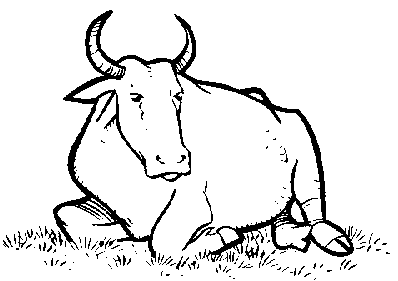
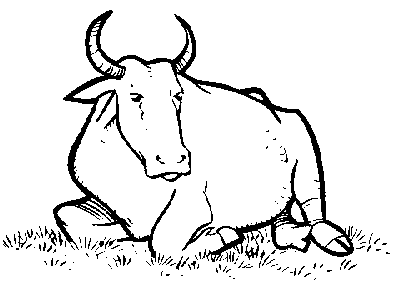
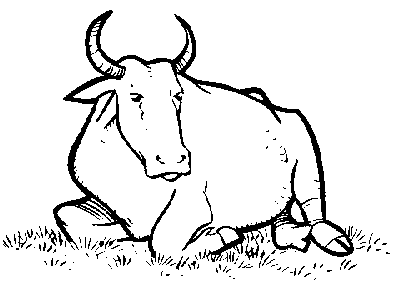
Note: Heavy animals that cannot stand up for some reason, may suffer permanent damage to nerves or muscles that are crushed by its own body weight (especially if lying on a hard surface like concrete).
2. Paralysis due to nutritional deficiencies:
a. Acute: This can be due to calcium deficiency at the time of calving (See page 270); or magnesium deficiency when eating lush grass (See pages 272, 310).
b. Chronic: A thin, malnourished animal may simply get thinner and weaker. Eventually it becomes unable to walk or move.
3. Paralysis following unknown causes: Sometimes, it is impossible to determine the reason for the paralysis.
Treatment: For all conditions, the treatment is basically the same (See page 148, “downer cow”). If the backbone is damaged, there is no treatment. The AHA can only give good supportive care, pain killers/anti-inflammatory medicines (like aspirin) when the animal seems uncomfortable. Wait several weeks to see if the animal improves on its own.
Systems of the Body and Associated Veterinary Problems