Tetanus (Lockjaw)
17.4.2 Tetanus (Lockjaw)
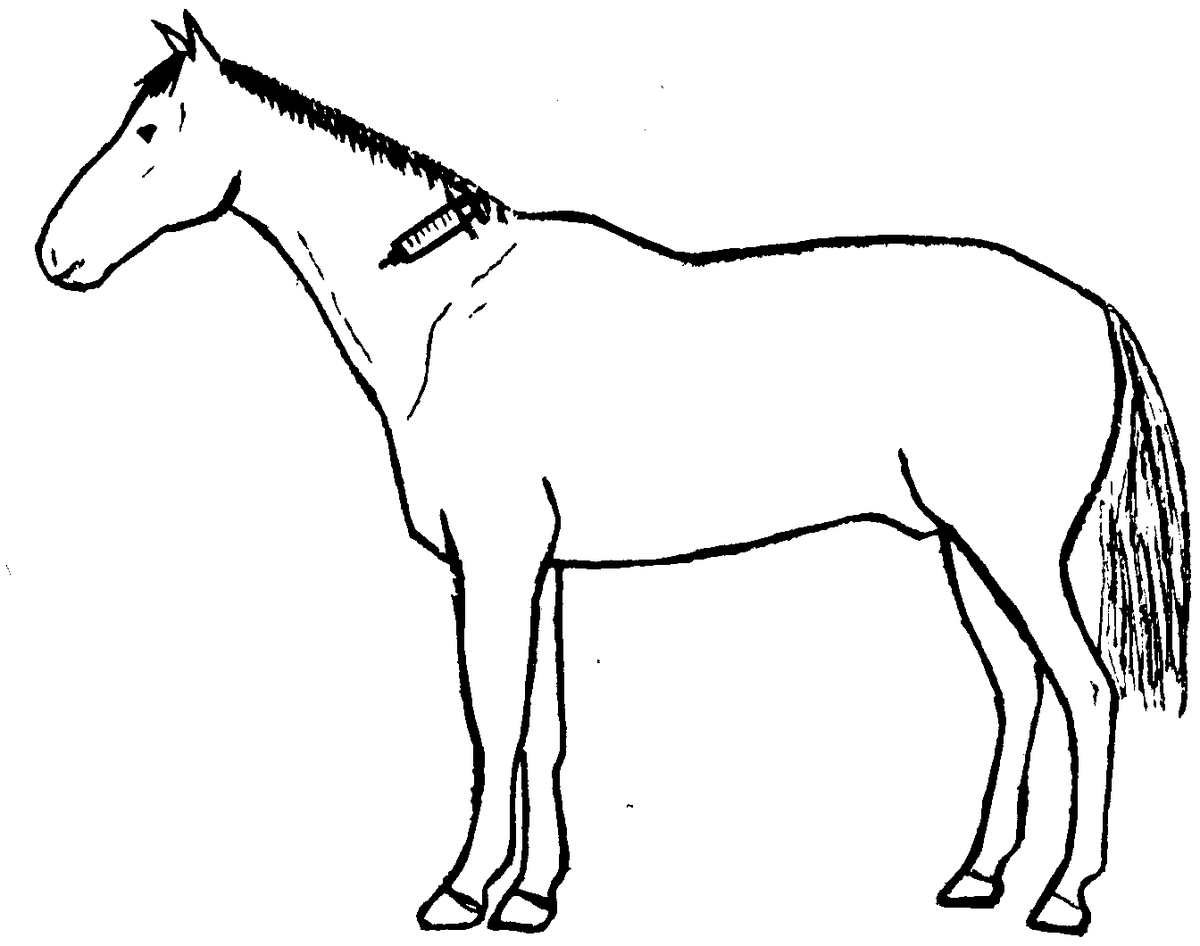
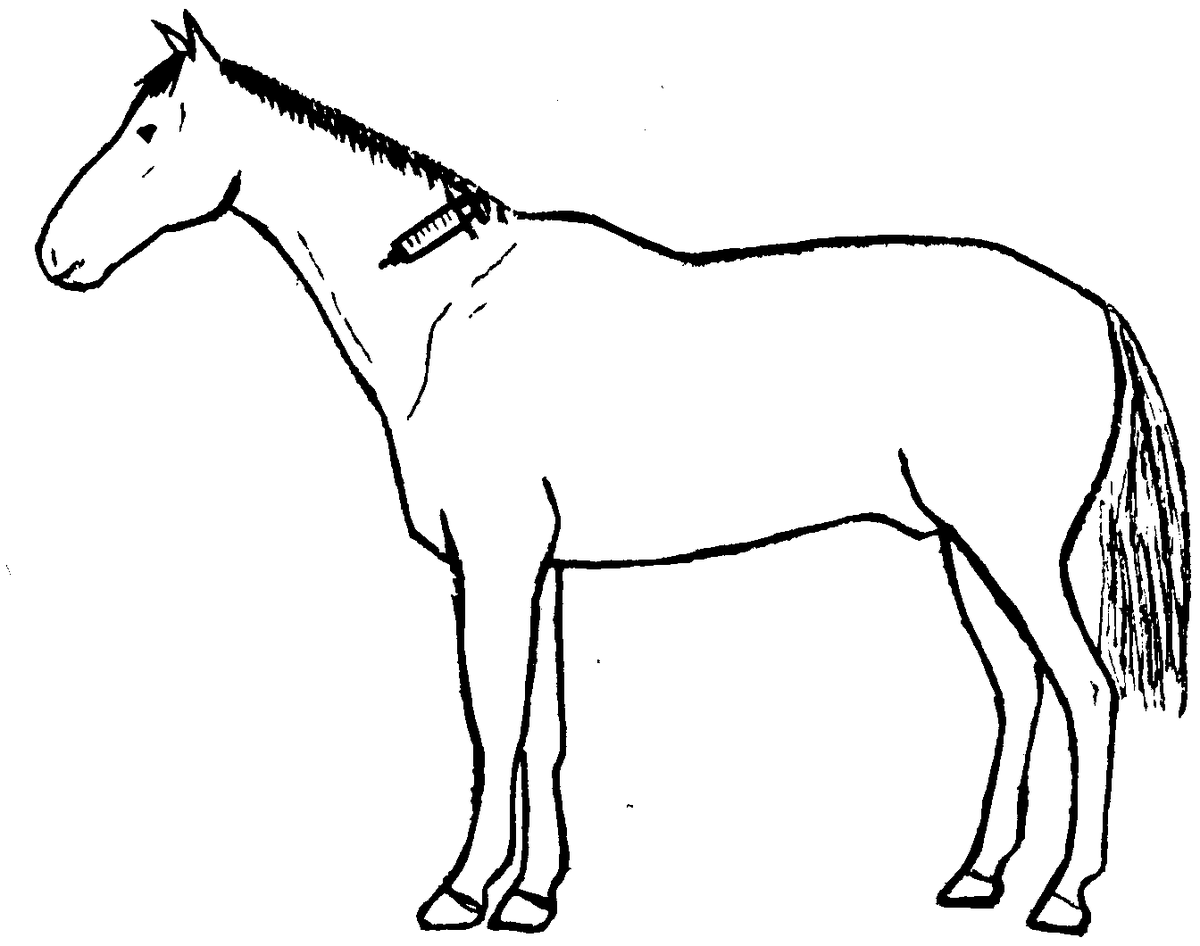
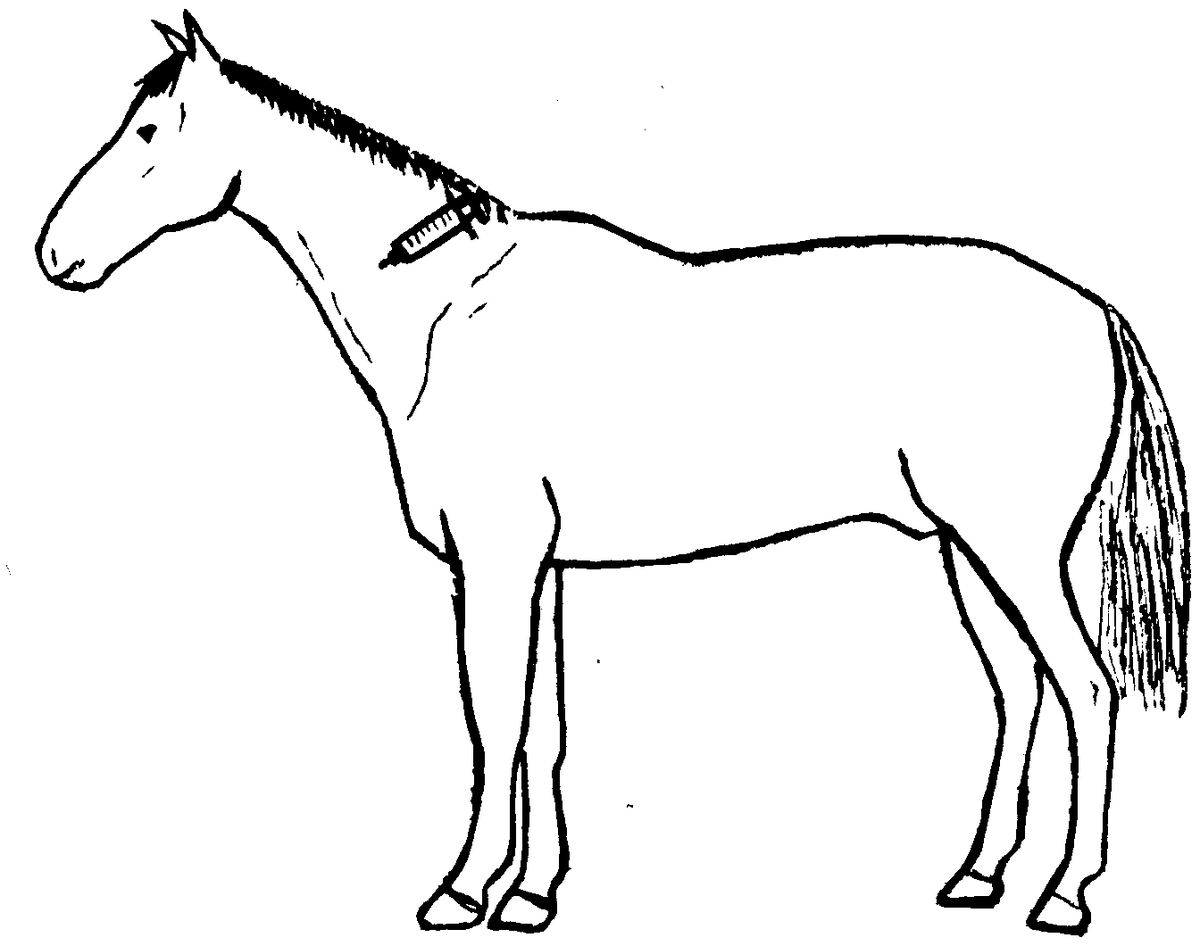
This is an infectious disease found throughout the world. It is caused by a bacteria, Clostridium tetani, which grows in wounds or other places that have no access to air. The bacteria are found in the feces of people and animals, as well as in the soil.
If these bacteria enter into deep wounds, uteruses, umbilical cords, or castration wounds where there is no air, they multiply and produce a “toxin” (poison). The toxin travels throughout the body and affects the nerves.
Horses are very sensitive to this disease. Cattle, sheep, goats, and pigs get it sometimes. People can get this disease if the tetanus organism enters a wound or the uterus. Newborn babies can get this disease if the umbilical cord is handled in a dirty manner and the mother of the newborn was not vaccinated with tetanus vaccine (called Tetanus Toxoid).
Symptoms: Symptoms start about one week after the bacteria enters the body. Sometimes no wound is seen.
1. Lack of appetite.
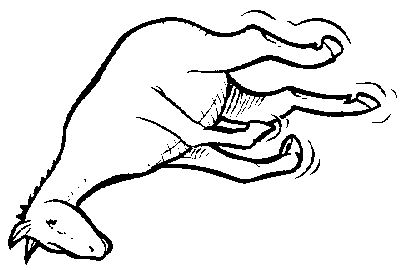
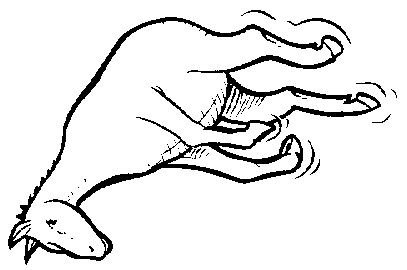
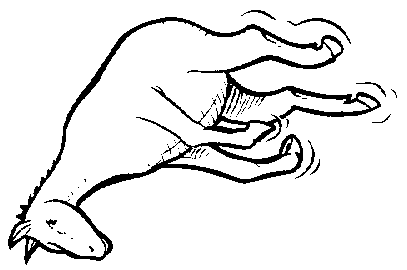
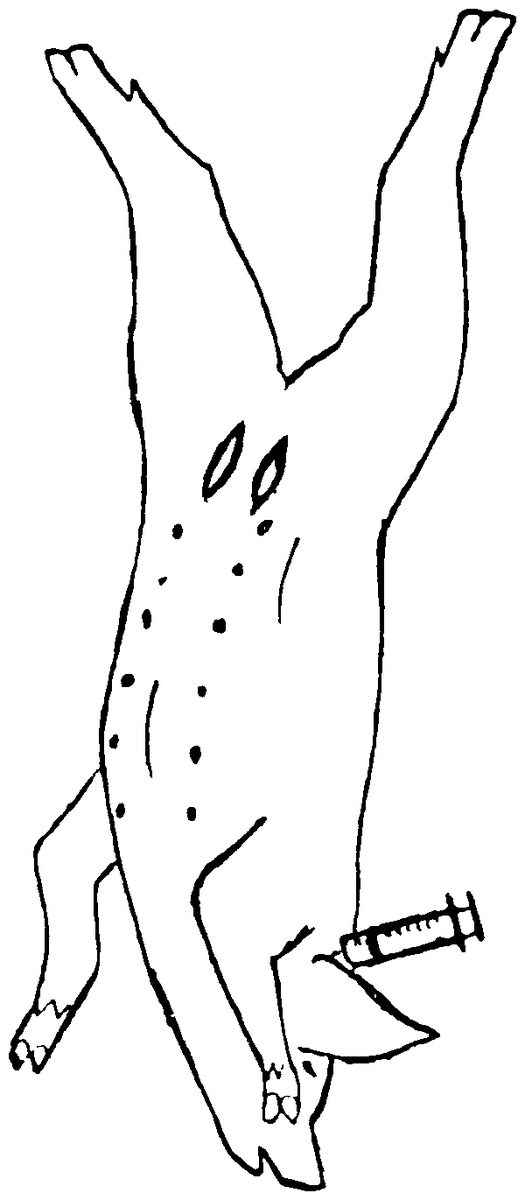
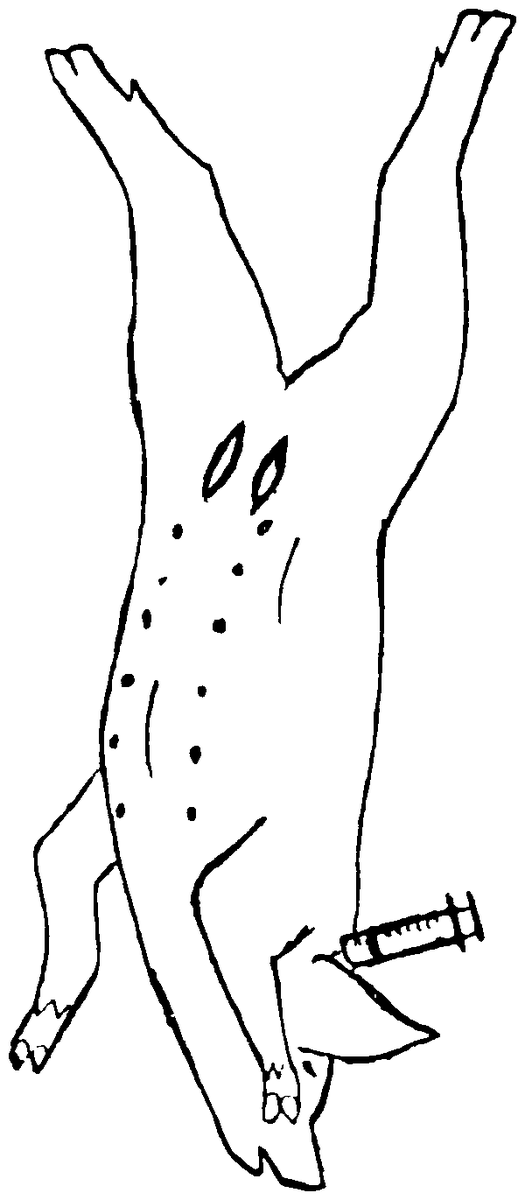
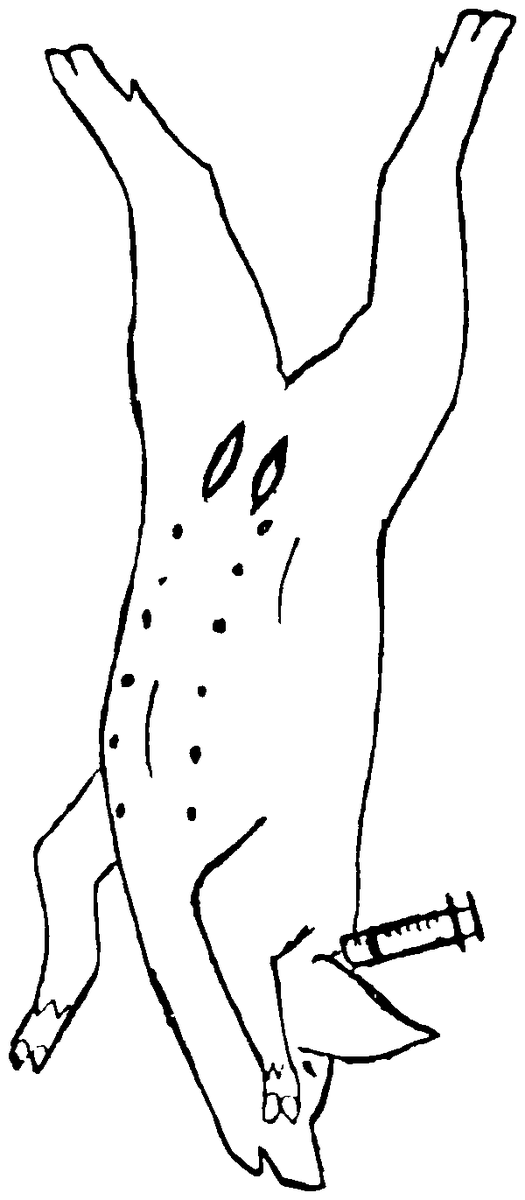
1. Stiffness of muscles in tail, ears, jaws, neck and legs. In pigs, the ears and tail will stand straight up.
1. Third eyelid comes out over the eyeball. (It looks like a red cover coming from the inner edge of the eye.)
1. Convulsions or tremors, particularly in response to loud noises.
1. Infected wound(s), umbilical cord or uterus.
1. Death due to starvation, lack of water or suffocation because the breathing muscles are affected.
Diagnosis: Based on symptoms.
Treatment:
1. Thoroughly clean and disinfect any wound.
2. Give large doses of penicillin IM or SC; and put antibiotics (especially penicillin) in the wound.
3. In some countries an anti-toxin is available to inactivate the toxin (that remains in the body even after the tetanus organism is dead). However, the dose needed to treat a large animal with anti-toxin usually makes treatment unfeasible.
4. Provide clean food and water. Help the animal to eat and drink if necessary.
Control/Prevention: Tetanus is difficult to treat; but it can be prevented.
1. Tetanus Toxoid Vaccination: In some countries, all horses are vaccinated with Tetanus Toxoid. In developing countries, this is usually available for pregnant women; but is often unavailable to give to livestock or horses. If available, give according to the instructions on the label.
2. When castrating, be clean and careful. If tetanus is a big problem in your area, give horses and pigs long-acting penicillin injections when castrating them.