Strange, Aggressive, Excited or Crazy Animal
17.1 STRANGE, Aggressive, Excited or Crazy Animal 63Be careful! An animal with a nervous system problem may be more likely to cause injury to people or other animals.
Several different problems will cause an animal to act strange or crazy. If rabies is a problem in an area, then it must always be considered as a possible diagnosis. However, not every animal that acts strange has rabies. In some parts of the world, rabies is very rare or not found at all. Sometimes it is tricky to deal with the situation of a strange-acting animal, because not only is the diagnosis difficult, but the animal may be dangerous, and there may be panic in the community about the situation.
64 Problems That Cause Animals to Act Strange or Crazy - Rabies!
- Poisons (plants or some kinds of insecticides)
- Bone or other object caught in the throat making swallowing difficult - Liver failure due to liver fluke or other cause - Low blood sugar / ketosis (cattle)
- Salt poisoning in pigs - Grass tetany - Milk fever - Vitamin A deficiency - Pseudo-rabies What to do?
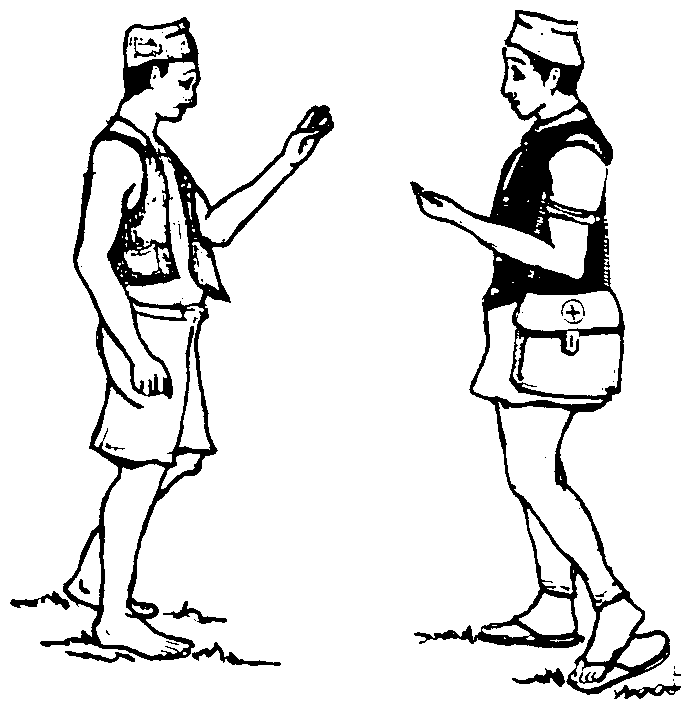
1. Take a proper history. Be sure to ask the following questions:
Was the animal bitten recently (also look for bite wounds)?
Was the animal recently injured (look for signs of any injury)?
Were, or are there any other animals in the area with similar symptoms (if so, examine them also)?
Was a known rabid animal in the area recently?
How long has the animal had these symptoms?
Was there any known contact with insecticides, poisons or poisonous plants (ask where the animal has been housed or grazed in the past month, and go check the area)?
If pigs are affected, ask whether there was any shortage of water? (Is there salt in the feed?)
What kind of food has the animal received in the past three months?
Did the animal recently give birth? Is it lactating now?
When was the animal last treated with deworming medicine?
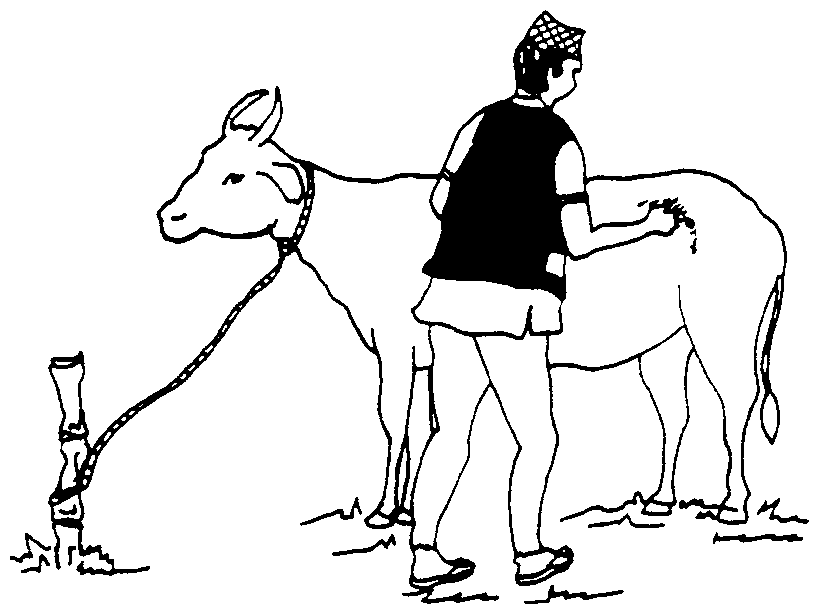
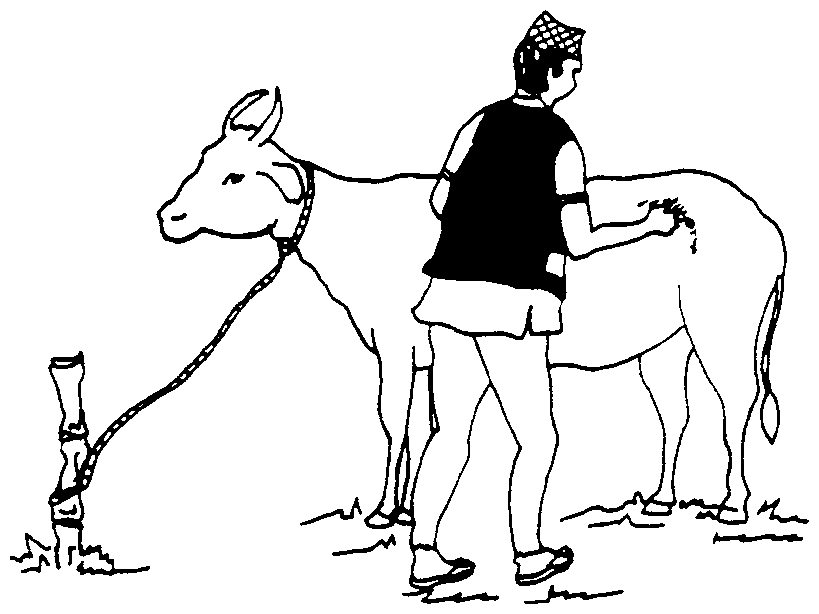
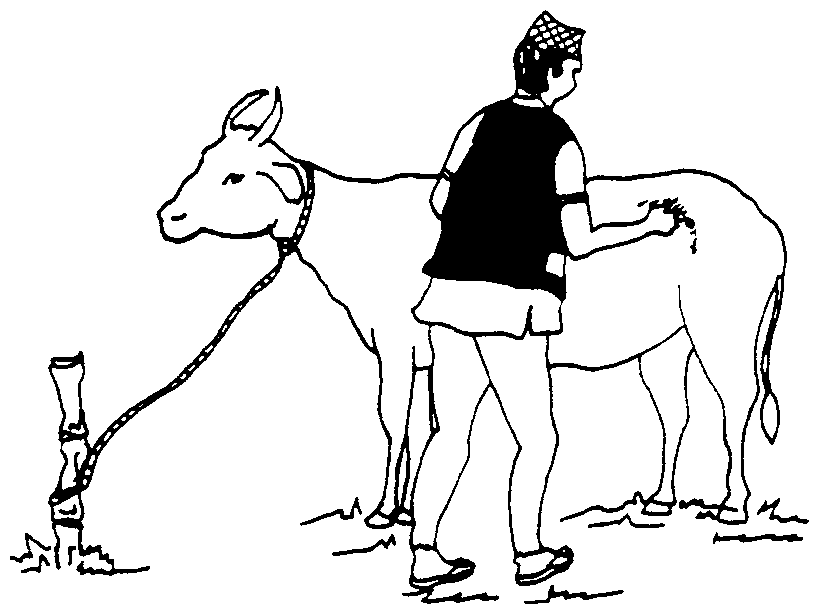
2. Thoroughly examine the animal.
If there is any chance that the animal may have rabies, wear plastic gloves (or plastic sacks) on the hands when examining the animal.
Note: If any people in the area have been bitten by a strange acting animal, inform the nearest medical officer.