Lumps and Bumps
14.8 Lumps and Bumps (Abscesses, Hernias, Seroma or Cyst, Hematoma, Cancerous Growths)
Sometimes an animal will be seen with a large bump on its side or on its belly near the umbilicus; or there may be smaller bumps within the muscle itself. These lumps and bumps may be due to one of the following which are often difficult to distinguish:
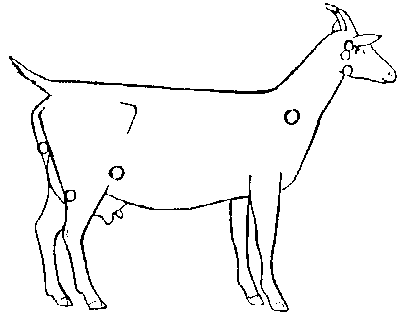
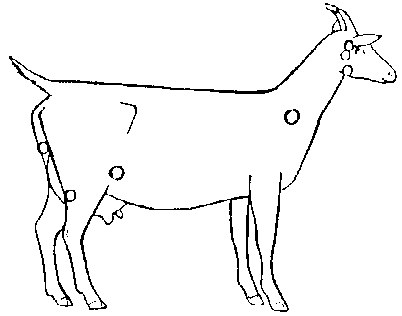
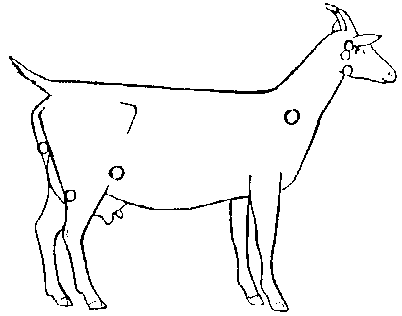
1. Abscess- an abscess is simply a pocket of pus. This is usually the result of a small wound which later becomes infected. Sometimes the wound is so small that it goes unnoticed until an abscess forms. Abscesses can be a problem particularly in goat herds. It is advisable to avoid buying goats from a herd with abscess problems.
Circles indicate common places for abscesses in goats 2. Hernia- hernia is the term used when one part of the body pushes through a muscle and into another part of the body.
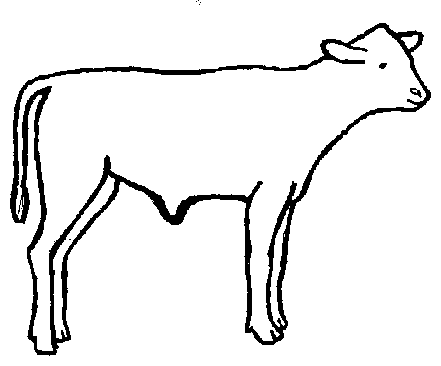
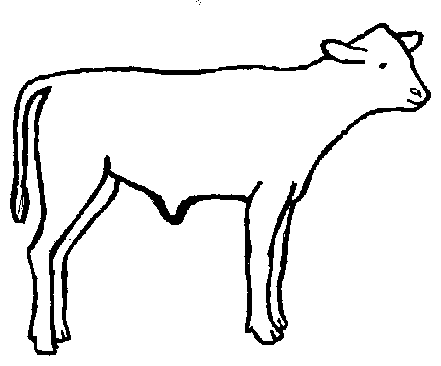
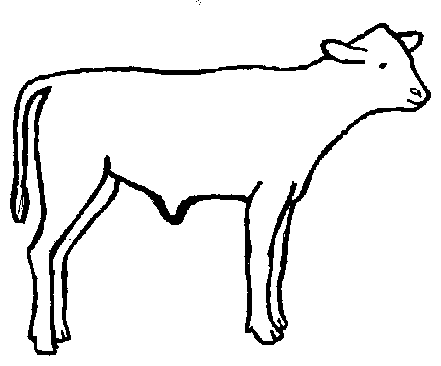
For example, if an animal is hit on its side, the muscle can tear. Then the intestines from inside the belly protrude through the muscle tear resulting in a bump under the skin.
The belly, at the umbilicus, is a common place for a hernia to occur. Normally, after a baby is born and the umbilical cord is no longer needed, the surrounding muscles close around it. However, sometimes a small hole remains and the intestines protrude through the hole. This is called an “umbilical hernia.”
Umbilical hernia
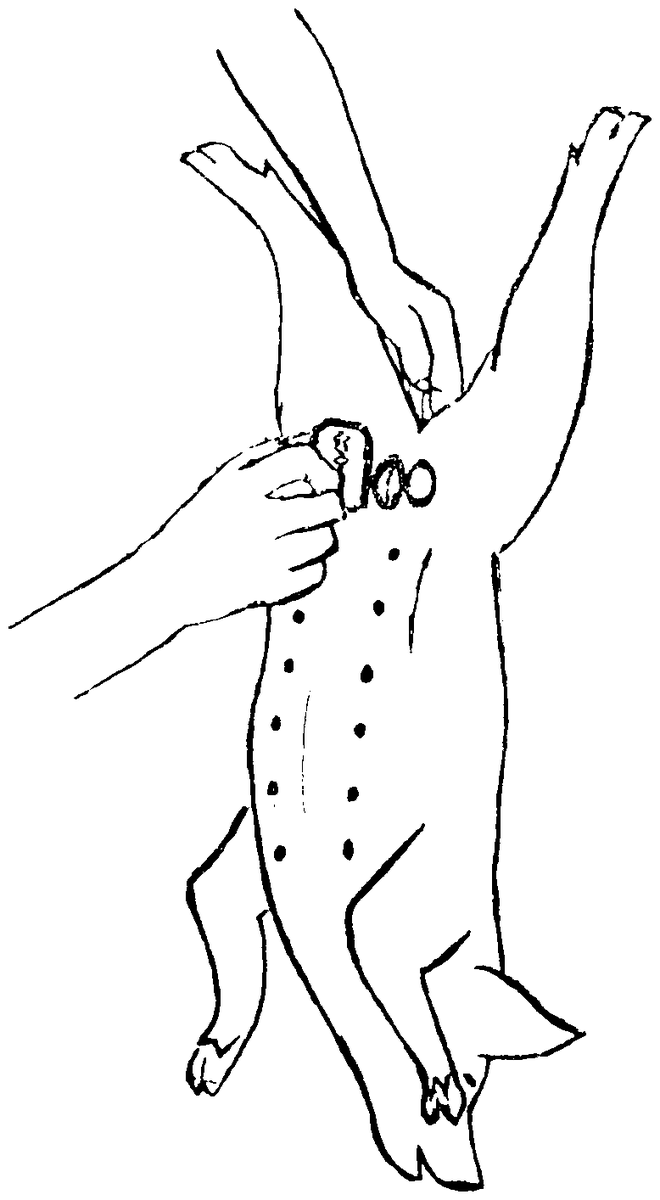
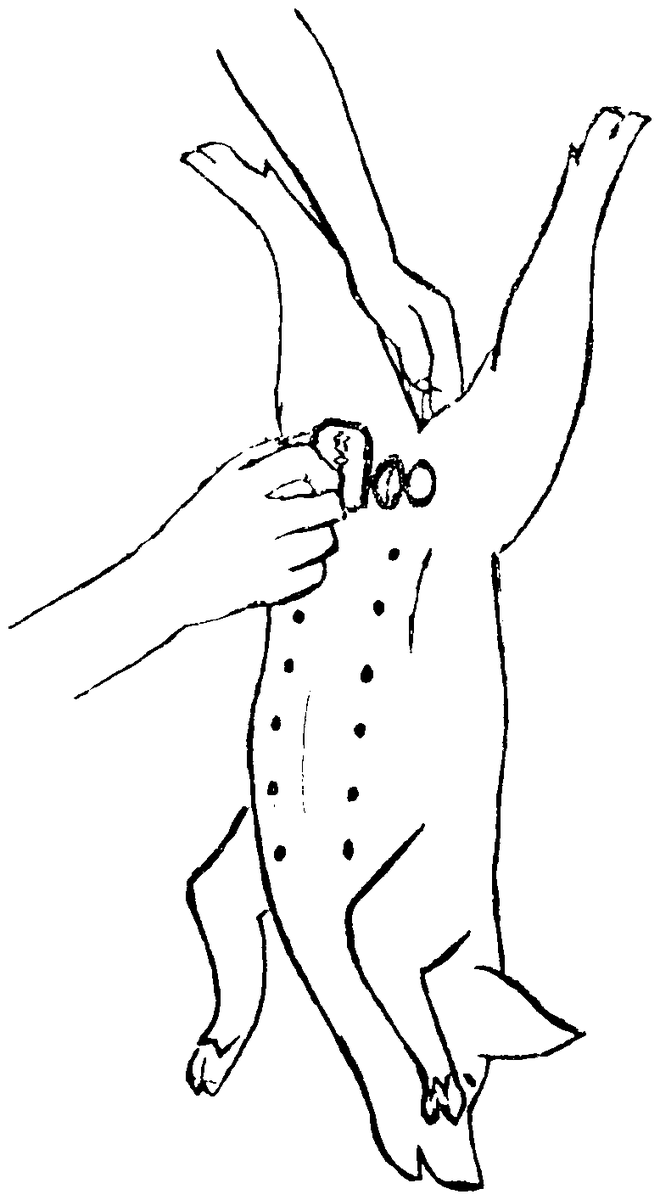
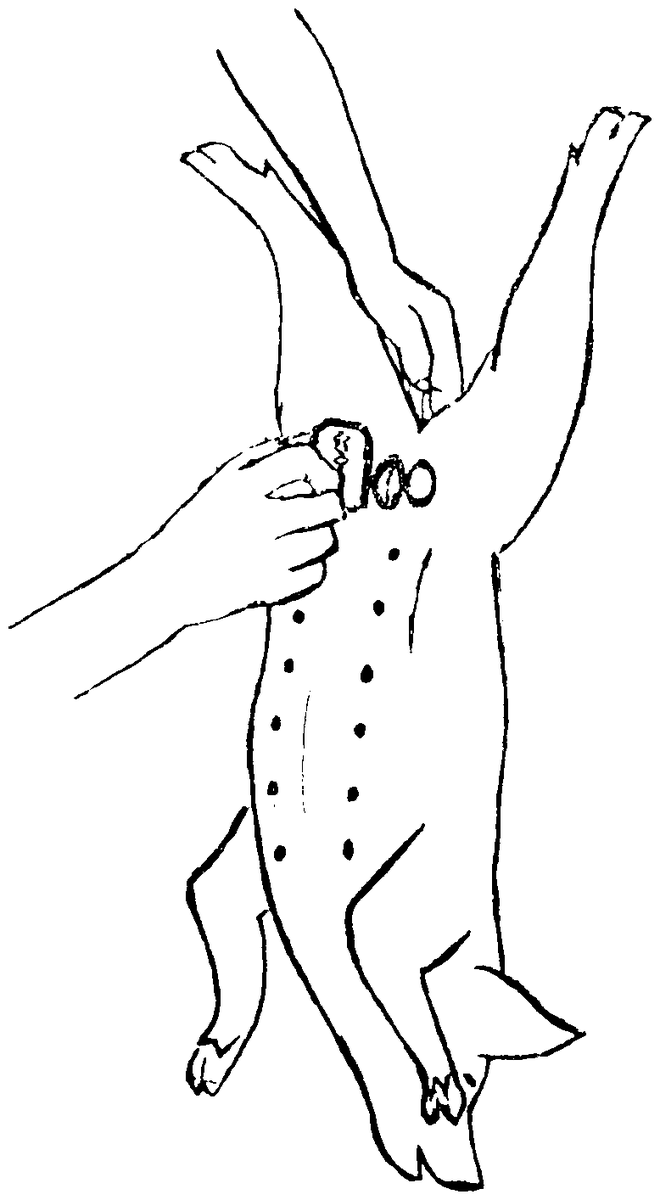
Hernias also occur in the scrotum of male animals, called a scrotal hernia. That is, the intestines push their way through a hole in the body wall into the scrotum of the animal. This can cause problems during castration, especially in pigs. If the scrotum is cut open in an animal with a scrotal hernia, the intestines might be cut by mistake. For this reason, it is important to always feel the testicle carefully before beginning a castration.
Hernias are dangerous because if the intestines or the stomach get stuck in the hole, they may be damaged permanently and can even cause death.
3. Seroma or Cysts - A seroma or cyst is like an abscess, but instead of being filled with pus, it is filled with a watery fluid.
4. Hematoma - A hematoma is like an abscess, but instead is filled with blood. These usually happen as the result of injury and the rupture of a blood vessel.
5. Cancerous growth- Cancer is a complex disease that happens when cells in the body begin to multiply abnormally. Sometimes these cells grow together in the same place and form a large bump in the skin or in the muscles. These lumps of cancer tissue are called “tumors.” There is no good treatment for most types of cancer unless the bump can be surgically removed. Sometimes the cancer cells spread throughout the body which eventually results in death.
“Bovine Leukemia” is an example of a cancer in cattle that spreads throughout the body. It is caused by a virus which grows in the lymph nodes and causes them to enlarge. These enlarged lymph nodes can be seen and felt under the skin. There is no treatment.
Venereal tumors in dogs are another example of cancerous growth. This tumor is spread during breeding. The tumor begins as a small growth that eventually develops into a large, red mass. In some countries, these tumors are surgically removed.
Examination and treatment of lumps:
Take a careful history: When an animal has a lump, take a careful history to try to distinguish a hernia from other causes of lumps. If the animal has fallen or been hit, yet there is no wound, then it might be a hernia.
Examine the animal: Feel carefully for a break in the muscles around the edge of the lump. Also try to reduce the lump (i.e. push the contents of the lump back inside the body). If you can feel a hole in the muscles and/or you can reduce the lump, then it is probably a hernia.
Check for heat (inflammation): If you cannot push the lump back inside, feel the swelling carefully for excess heat (i.e. inflammation). If it is hot, then it might be an abscess (although old abscesses are not often hot).
Prepare to insert a needle: Shave the hair over the bump. Then, clean it with soap and water and disinfectant solution.
To identify the liquid in the lump, insert a sterile needle through the skin and into the lump: If watery, clear fluid comes out of the needle hub, then the lump may be a cyst or an abscess that is not ready to be cut open (because there is no pus yet). If blood comes out, the lump may be a hematoma which will usually disappear over time and does not need to be cut open.
Apply hot compresses for 3-4 days: If it is an abscess, the hot compresses will help it to “mature” (i.e. develop pus). After 3 or 4 days, try the same procedure of cleaning the area and inserting a needle to check the liquid.



If pus, cut open the abscess: Once you detect pus, then you can assume that the lump is an abscess. An abscess should be cut open at its lowest point and as widely as possible to maximize drainage. The better the drainage, the faster it will heal. Do not bother to use a local anesthetic before cutting, but instead cut as rapidly as possible. Press around the abscess to remove all pus; then rinse the inside of the abscess thoroughly with clean water or disinfectant solution.
Cut an abscess at its lowest point to maximize drainage Keep the cut abscess open and draining: Once an abscess is cut open, keep it open and draining for several days. Flush the abscess with clean water or disinfectant daily for several days to remove the pus. If the abscess begins to close early and trap some pus inside, insert a thin piece of cloth or cotton gauze soaked in disinfectant. It will keep the incision open and draining.

Protect against maggots or screwworm: Apply a spray, ointment or powder to protect against maggot or screwworm infestation.