Diseases of the Muscles
13.1.3 Diseases of the Muscles There are many diseases caused by the bacteria Clostridium. Two of these diseases, called Blackquarter (Blackleg) and Malignant Edema, are closely related and have similar symptoms.
Blackquarter (BQ) (Blackleg)
This is an acute, infectious disease that is quite common in some geographic locations. It is seen mostly in cattle. However, a similar disease is also seen in buffalo, sheep and, very rarely, in pigs.
The bacteria that causes this disease (Clostridium chauvoei (feseri)) is found in the intestines of animals and in the soil. This bacteria forms a protective shell (spore) that allows it to survive for a long time in the soil. The bacteria pass through the wall of the intestine and enter the blood, and then travel to the muscles where they can cause the disease. These bacteria can also enter through wounds in the skin.
This disease is seen mostly in young cattle between 6 months and 2 years of age. It is also seen in sheep, usually after shearing.
Symptoms:
Lameness – usually one of the first symptoms.
Rapid onset; sometimes sudden death (i.e. within 1-2 days).
Grunting due to pain.
Swelling – possibly of one leg, neck, back, or on the side.
High temperature.
Rapid breathing.
No movement of the rumen.
The skin of the affected area becomes dark and dry. Air (gas) collects in the muscles and under the skin. When the swelling is pressed a crackling sound is often heard due to the air and gas.
Diagnosis: A blood smear from the muscle swelling should be made and examined by the district veterinarian. (This blood smear will help to distinguish BQ from anthrax.)
Do not do a post-mortem in case it is Anthrax. However, if you do cut into a muscle affected by BQ, it will appear black and dry, and will smell bad.
Control and Prevention:
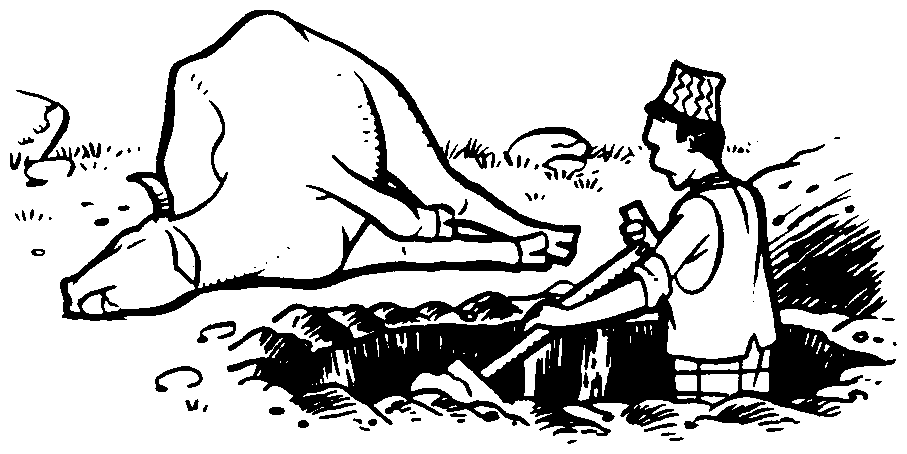
Bury dead animals more than one-meter-deep to prevent the jackals and wild dogs from digging them up. If possible, a layer of lime should be put directly on the body before it is covered with soil and stones.
In areas where BQ is found, all cattle between the ages of 6 months and 3 years should be vaccinated. If at all possible, sheep should also be vaccinated.
Treatment:
Penicillin and other antibiotics like Tetracycline can be used in high doses to save some animals if they are treated early, but most animals die even with treatment.
Malignant Edema This is an acute, infectious disease, difficult to distinguish from Blackquarter. Malignant edema is most common in cattle and sheep but, unlike Blackquarter, it can also be seen in pigs and horses.
The bacteria, Clostridium septicum is found in the intestines of animals and in the soil. It forms spores that can live in the soil for a long time. The bacteria usually enter the body through wounds caused by accidents, tail docking, castrations, and unclean vaccinations. Similarly, the uterus can become infected if the person assisting with the delivery has dirty hands or arms.
Symptoms: Similar to Blackquarter except that less air (gas) collects under the skin. Instead the swellings may contain more jell-like fluid.
Diagnosis: Same as for Blackquarter.
Control and Prevention:
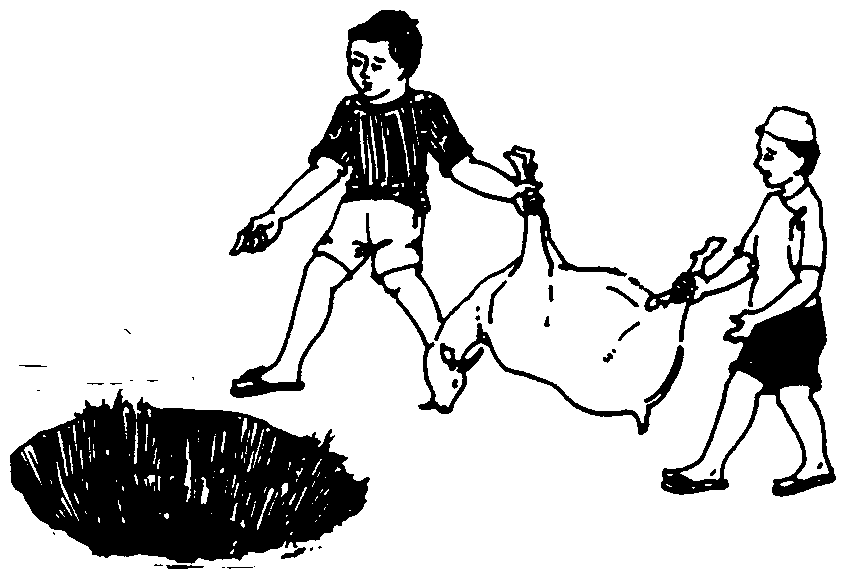
Bury dead animals as with Blackquarter.

In an area where BQ/Malignant Edema is found, all animals, especially sheep, should be vaccinated.
All deliveries, castrations and vaccinations should be done in a clean manner.
Treatment:
Penicillin and other antibiotics like Tetracycline can be used in high doses to save animals if they are treated early. Most animals die even with treatment Tetanus (Lockjaw)
Tetanus is an acute, infectious disease found throughout the world. It is caused by a bacteria, Clostridium tetani, which often starts growing in deep wounds. The bacteria make a kind of poison, called a toxin. This toxin travels throughout the body and affects the nerves. Then the muscles do not work properly, but instead become stiff and go into spasms. For a complete discussion of tetanus, see page 258 (Nervous System).
Systems of the Body and Associated Veterinary Problems