Tuberculosis (TB)
12.4.10 Tuberculosis (TB)
This is a chronic, infectious disease found in most species of animals, and in people. Because it can be spread between livestock and humans, it is called a “Public Health Disease.” TB is caused by a bacteria called Mycobacteria. There are three main kinds of these bacteria: the bovine kind (cattle and buffalo), the human kind, and the bird kind. Livestock and humans can become infected with all three kinds.
People and animals with TB in their lungs usually develop a chronic cough, become thin, and slowly die. TB organisms can also live in other parts of the body including the digestive system, the reproductive system, and the udder. The symptoms may vary depending upon the part of the body affected. In cattle, the organism tends to settle in the lungs, whereas in poultry, it goes to the intestinal tract.
In many countries, no one really knows how many livestock have TB. In other countries, the problem is well documented in both people and animals.
Spread of disease:
1. By air: Infection is usually spread by breathing in drops of saliva when a sick animal (or person) coughs. This is a big problem in cold countries where cattle are kept in closed barns for many months during cold weather. If there is not good ventilation in the barn, the cattle will be more likely to breathe contaminated air.
1. By food or water: Occasionally infection can take place by eating food which has the bacteria in it. For instance, drinking the milk from infected cows may infect pigs, calves and people. When an infected animal drinks, the saliva from its mouth may contaminate the water. Another animal that drinks from the same water source may become infected.
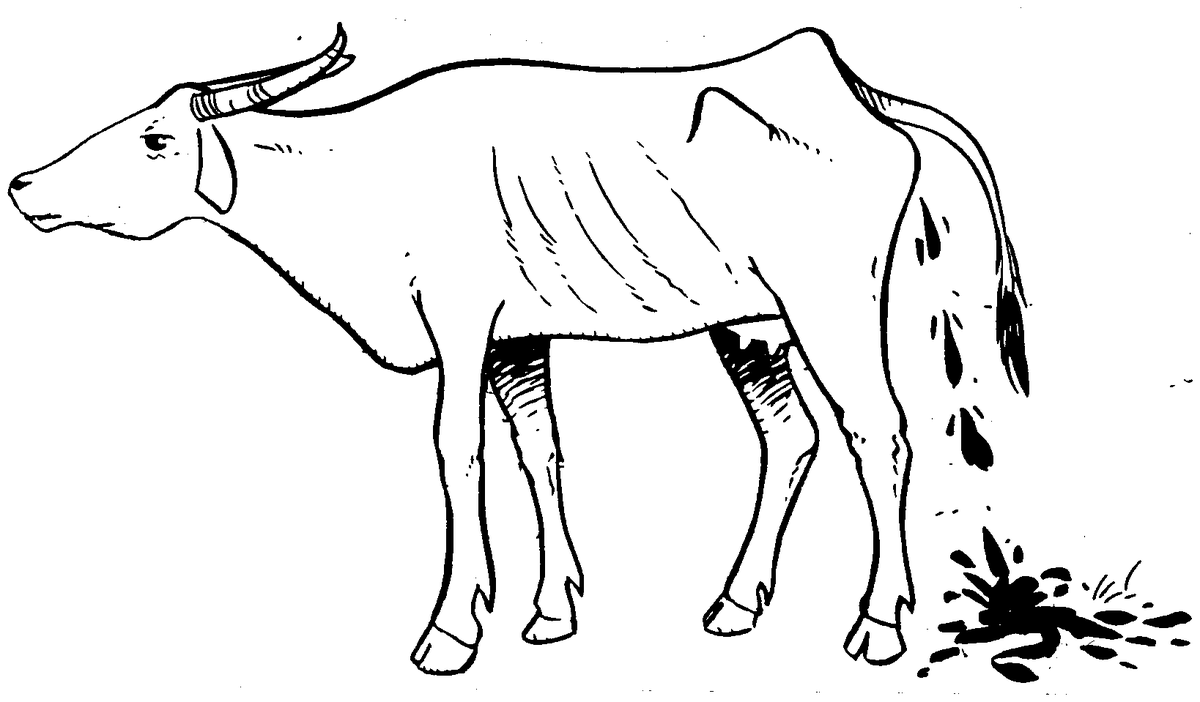
Symptoms: The symptoms depend upon where the organism is in the body. There may be rather vague symptoms or no symptoms at all. Sometimes the animal gradually becomes thin, develops a chronic cough, and if producing milk – has low milk production. If the organism has also affected the intestinal tract, the animal might have diarrhea.
Post Mortem: Wherever these bacteria end up, they begin to form a type of abscess. These abscesses are called “tubercles.” Tubercles may be as tiny as a speck of sand. Or, they may be as large as an egg. Sometimes these tubercles contain thick pus; and sometimes they may be hard like rocks. Eventually these tubercles ruin the tissue so much that the organs don’t function normally.
1. Respiratory TB: Tubercles begin to grow in the lungs. The animal will cough and become thin.
2. Digestive System TB: Tubercles may form around the organs of the digestive system, (such as the intestines), sometimes causing diarrhea.
Diagnosis: Observe the symptoms. During post mortem examination, try to preserve a piece of tubercle and its surrounding tissue in 10% formalin or 50% glycerin. A lymph node near the tubercle is also a good specimen to collect and preserve. The specimens can then be sent to a veterinary laboratory for diagnosis. The government veterinarians may also want to do some special testing of other animals in contact with affected animals to determine how many animals actually have the disease.
Treatment: It is not recommended to treat livestock with TB. They should be killed to keep the disease from spreading.
Control: According to the law in some countries, all animals must be tested with tuberculin. If an animal has a positive test or is confirmed to have tuberculosis, it cannot be sold. Rather it is killed to keep the disease from spreading. By strict testing of all animals and slaughtering those with TB, the disease can be controlled.
In countries where TB is a significant health problem, the World Health Organization (WHO) recommends that all human babies be vaccinated at birth with BCG. Similarly, any person with a chronic cough should have their saliva tested for TB. In addition, all milk should be thoroughly boiled; and all meat should be well cooked to prevent transmission of the disease.