Open method
10.10.3 Open method Using the open method, the scrotum is cut and the testicle is removed. The advantage of this method is that it works well, is easy to perform, and requires no special instruments. The disadvantage is a risk that the wound may get infected with maggots or bacteria. The animal may also bleed a lot after the cord is cut, causing weakness and even death. Important note: Be sure to make a large incision and, after castration, to exercise the animal to ensure good drainage and to minimize swelling. Be as clean as possible by washing your hands and the area of castration with soap, clean water and disinfectant. Use a clean, sharp cutting instrument.
Open method procedure for bulls 6 months or younger Obtain a clean, sharp knife.
Secure the animal with ropes.
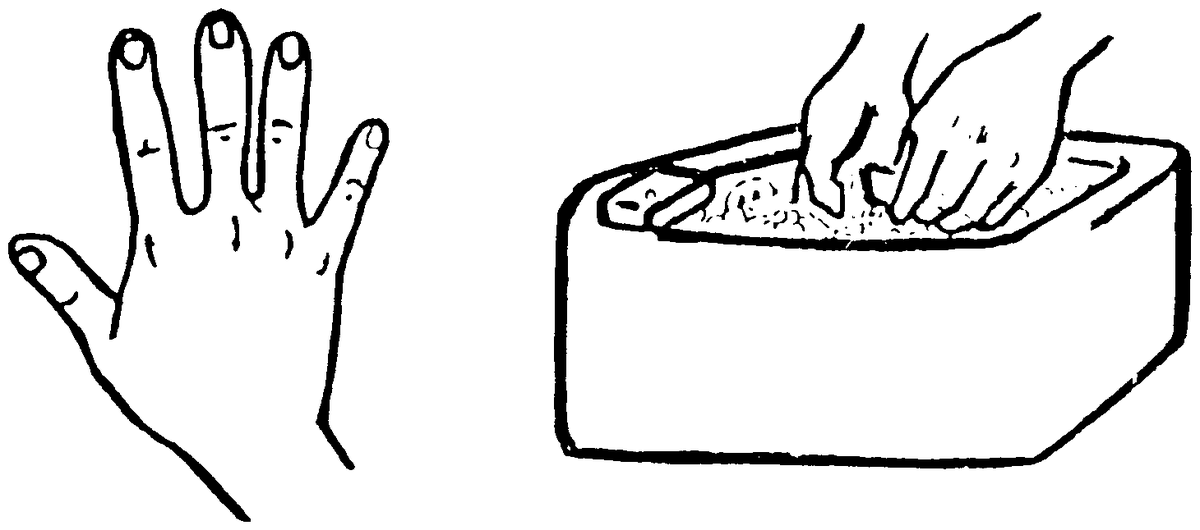
Wash your hands and the animal's scrotum with soap, clean water and disinfectant.
Use disinfectant and water to clean the scrotum. If possible, use local anesthetic.
Grasp the end of the scrotum, pull it tightly, and cut off the lower 1/3 of the scrotum.
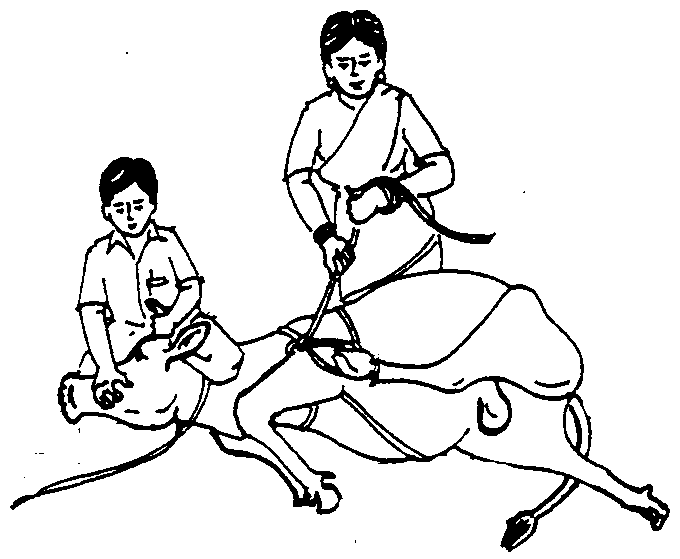
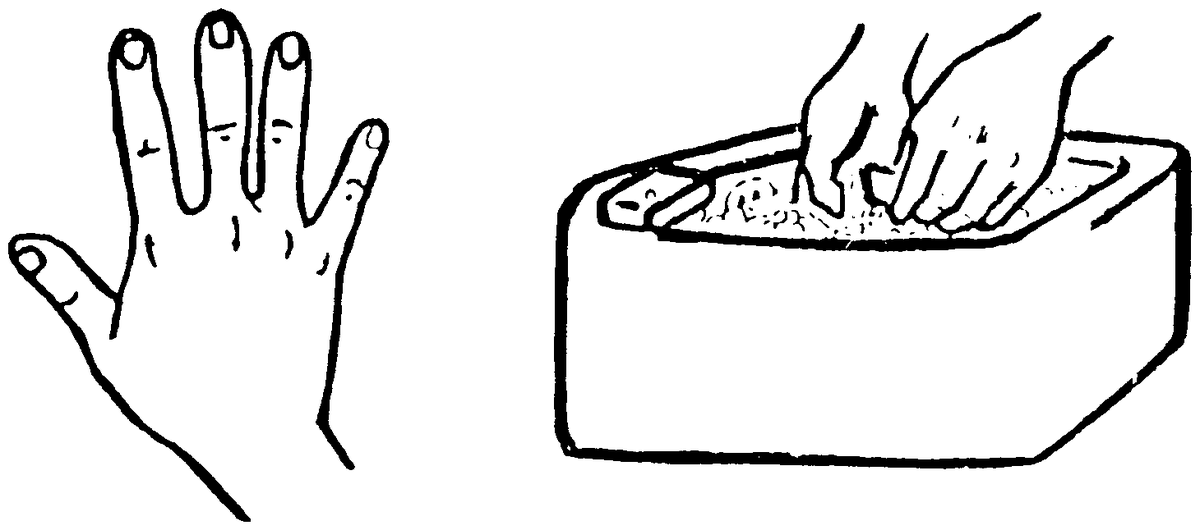
1. Restrain the animal 2. Wash your hands and the area of the animal to castrate
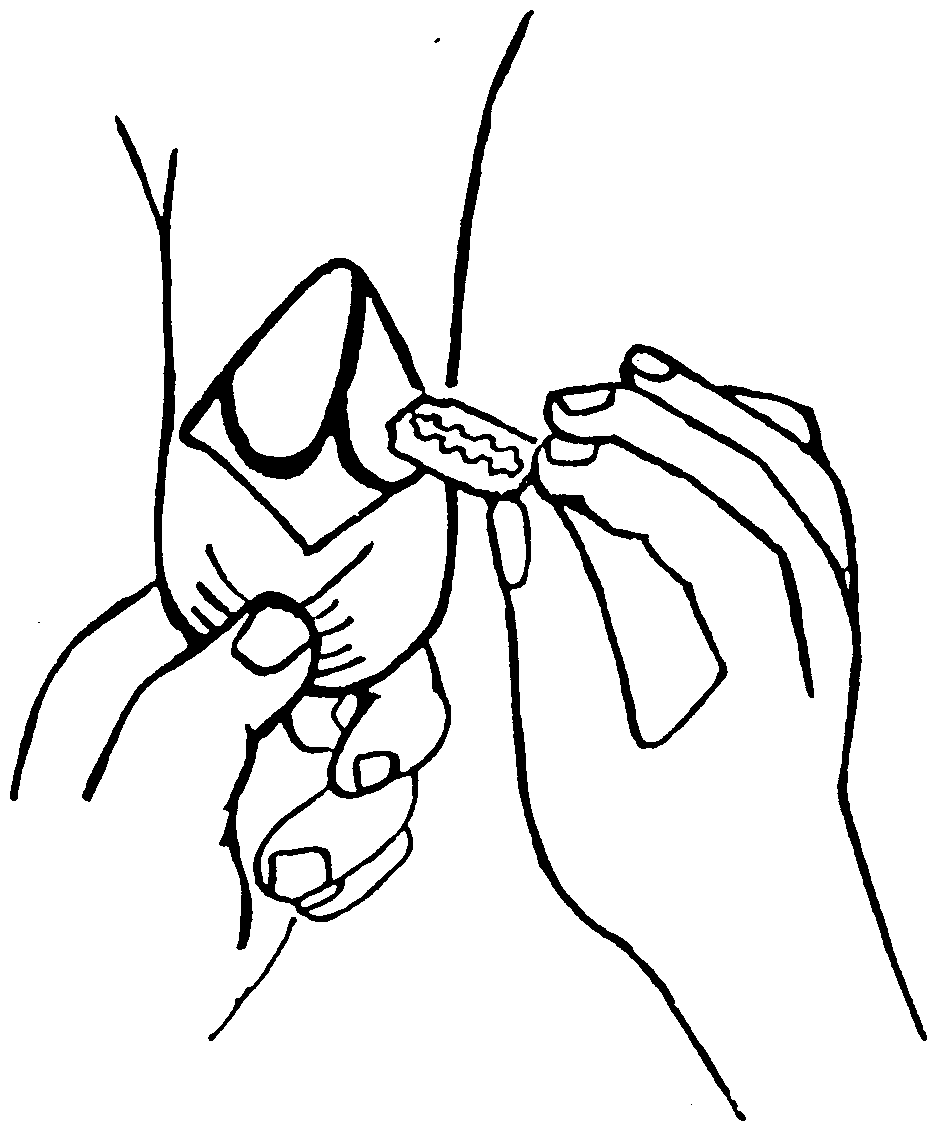
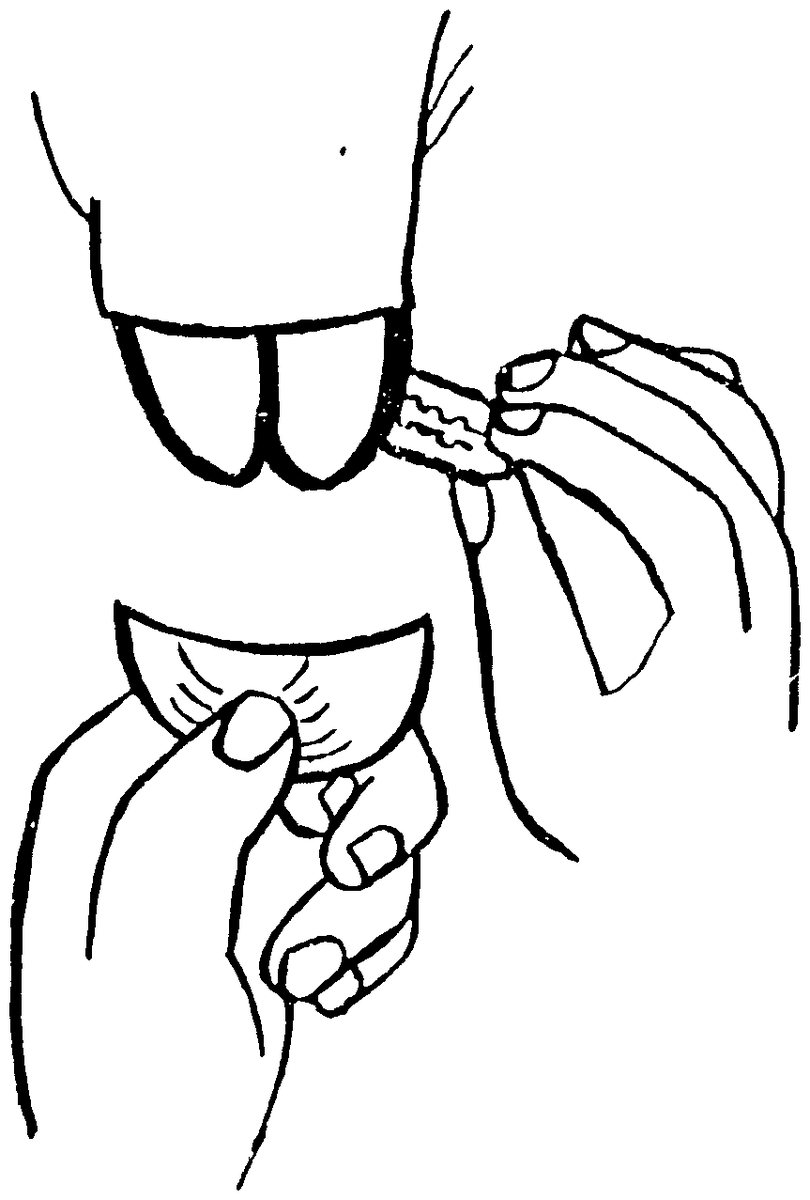
3. Make an incision…. 4...and remove the lower 1/3 of the scrotum
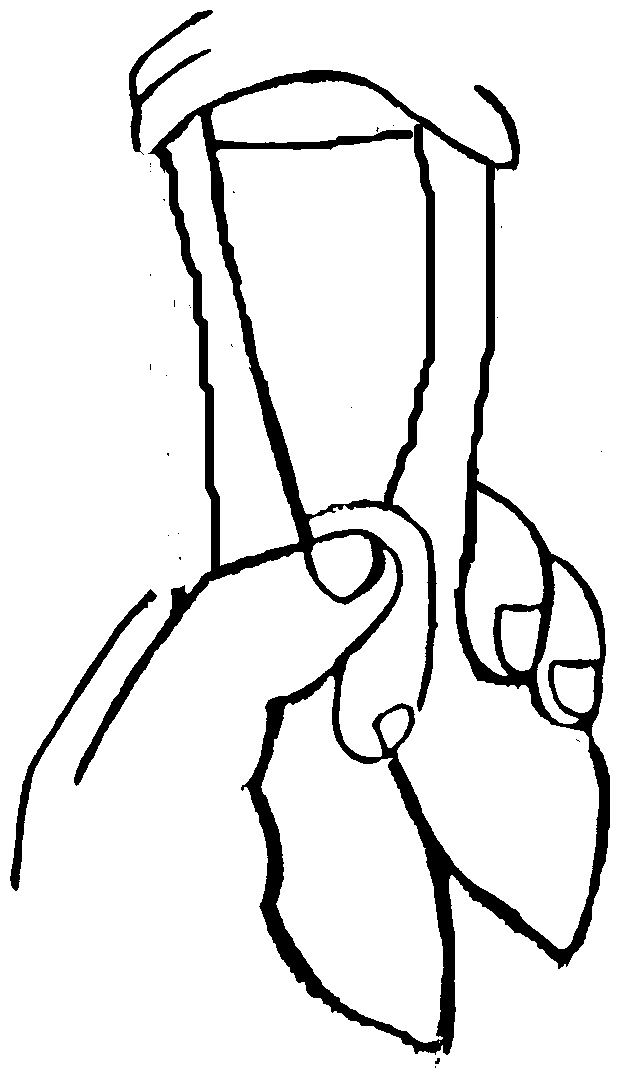
Grasp the testicle and pull on it steadily until the cord breaks.
If any fatty tissue is hanging out of the scrotum, cut it away.
Use anti-fly ointment to prevent maggot infestation.
Exercise the animal for 1-2 weeks to decrease the swelling and help the wound to drain properly.
Open method procedure for young sheep and goats (6 months or younger):
Hold the animal tightly on its side.
Wash your hands and the animal's scrotum with soap, clean water and disinfectant. Use local anesthetic if possible.
Grasp the scrotum and make two incisions parallel to the middle line of the skin (make them low enough on the scrotum so that they can drain properly).
Cut deep enough to expose the shiny white covering (tunic), but do not cut it.
Grasp the testicle and pull it steadily until the cord breaks.
If any fatty tissue is hanging out of the scrotum, cut it away with a knife or scissors.
Use anti-fly ointment to prevent maggot infestation. Exercise the animal for 1-2 weeks to help drainage and healing.
Open method for older bulls, sheep and goats (older than 6 months):
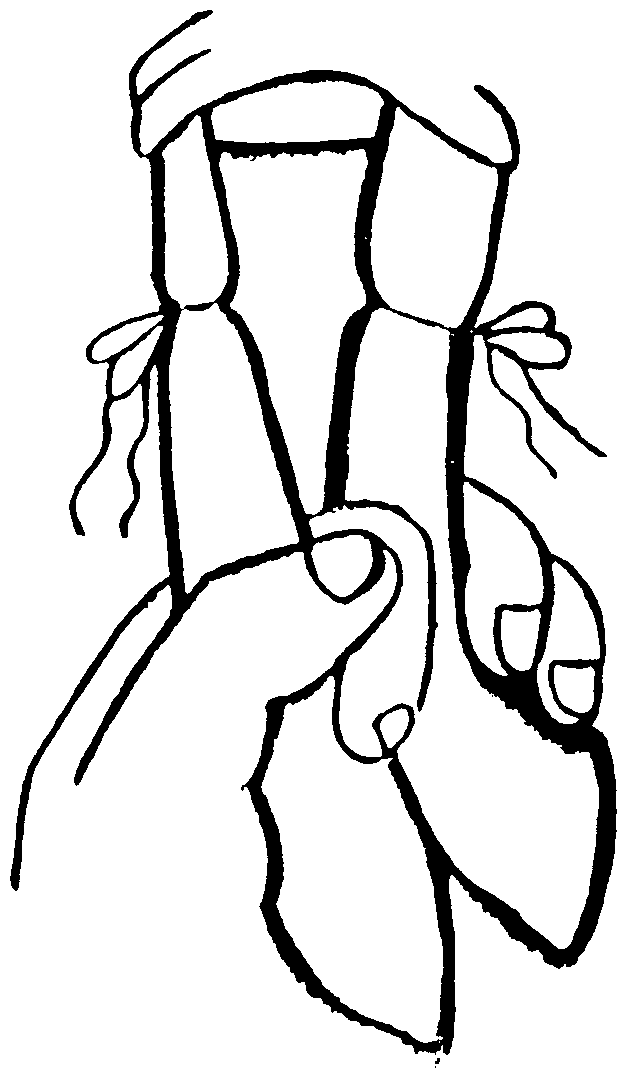
(The open method in older animals carries more risk of bleeding problems)
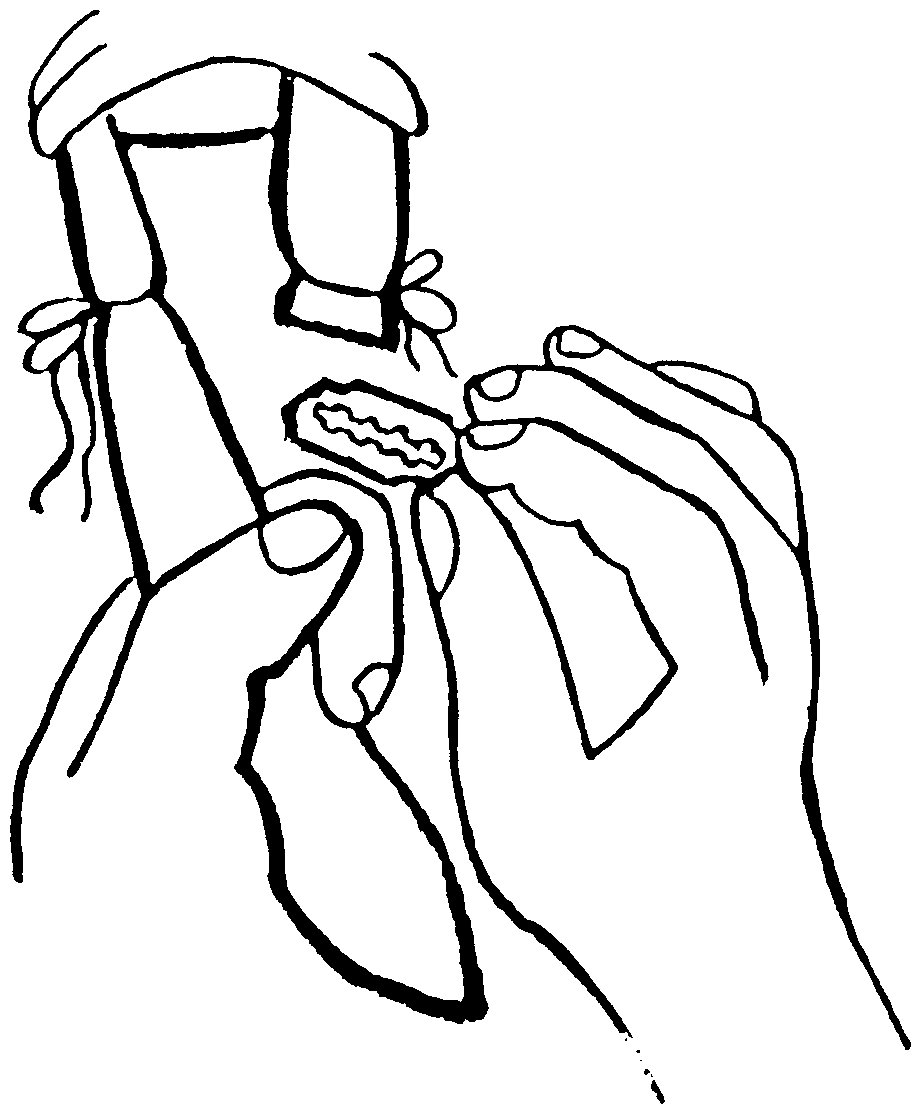
The procedure is the same as the open method in animals six months or younger, except for the following:
Apply a clamp to the cord (if available).
Release the clamp and tie a suture around the cord where it was clamped.
If a clamp is not available, simply tie a suture tightly around the cord twice Cut the cord below the tie.
The rest of the procedure is the same as for young animals.
Elastic band method (not generally recommended)
This method consists of a small rubber band that is applied by a special instrument, around the scrotum of small kids and lambs at about one week of age. The band cuts off the circulation and the whole scrotum falls off eventually, usually without infection. However, infections can occur, particularly in areas at risk for tetanus. This method is less preferable.
Castration of HorsesNote: The change to pitch (12) and font (6) must be converted manually.
Horses should be castrated around 2-3 years of age - after they have had enough time to fully develop, but before they become difficult to handle.
Burdizzos should not be used on horses or mules since their scrotal sacks are shorter, making it difficult to properly locate and crush the cord. Therefore, the open method should always be used.
Horses and mules are prone to tetanus. They should therefore be protected beforehand with tetanus toxoid. They should also be given a long-acting penicillin injection at the time of castration.
The Procedure Give a sedative such as Rompun (if it is available and can be properly given).
Cast the horse and tie its legs securely (see chapter on restraint).
Wash your hands and the animal's scrotum with soap, clean water and disinfectant.
Give local anesthetic (if available) in two different places, as follows:
Inject about ten ml of a two percent solution subcutaneously along the line of the proposed incision for each testicle. The incisions should extend the entire length of the testicle (parallel to the middle line of the scrotum and about 2 cm to either side of this line).
Inject about 10 ml of local anesthetic into the cord itself (inject high up on the cord) of both testicles.
After waiting a few minutes for the anesthetic to begin to work, make two incisions along the line where the local anesthetic was injected subcutaneously. Make the incisions the entire length of the testicle (otherwise it will not drain well afterwards). The incisions should be made deep enough to go through the skin but not into the shiny white coat that surrounds the testicle (called the tunic).
Apply traction to the testicles to free them from the surrounding tissue.
Cut through the tunic so that the testicle pops out.
Expose the cord of the testicle by pulling on it gently (without breaking the cord).
Tie a suture around the cord (including the white coat). This can be repeated 2-3 times, to be sure the cord is well tied so that it doesn't bleed after it is cut.
Cut the cord below the sutures using a hot metal iron (if available). Cutting with a hot metal iron helps control the bleeding If a hot iron is not available, clamp the cord (to crush it) below the sutures. After clamping for 1-3 minutes, cut the cord below the clamp marks.
Repeat the procedure for the other testicle.
Cut away the tunics of both testicles to facilitate good drainage and prevent infection.
Remove any loose tissue that hangs from the incision.
Give the horse an injection of long-lasting penicillin to prevent tetanus.
Release the ropes and carefully help the horse get up without injuring itself.
Observe the horse for several hours to check for bleeding.
Walk the horse daily for the next two weeks to reduce swelling and help drainage.
If the incisions close-up, or get infected, the horse must be cast again, the incisions must be opened and cleaned, and the horse should be given another injection of penicillin.
Note: The key to avoiding infection is cleanliness and good drainage. This is accomplished by good washing and disinfecting, making long incisions, removing extra tissue (such as the tunic), giving penicillin and exercising the animal (to minimize swelling).
Procedure to castrate a horse
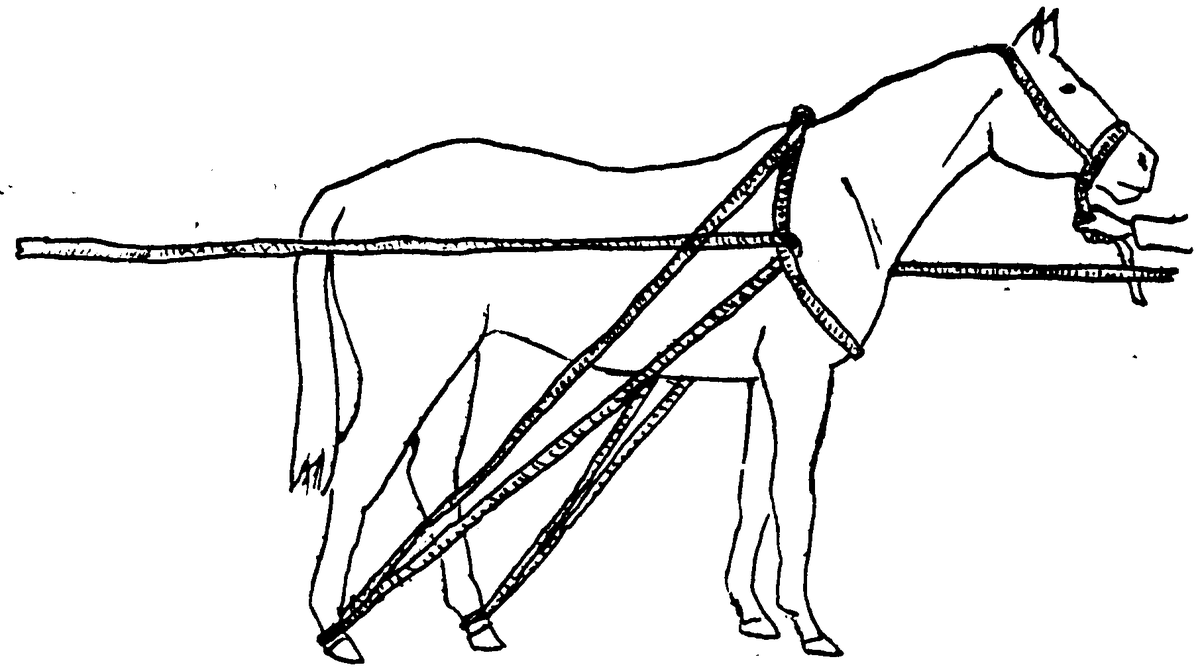
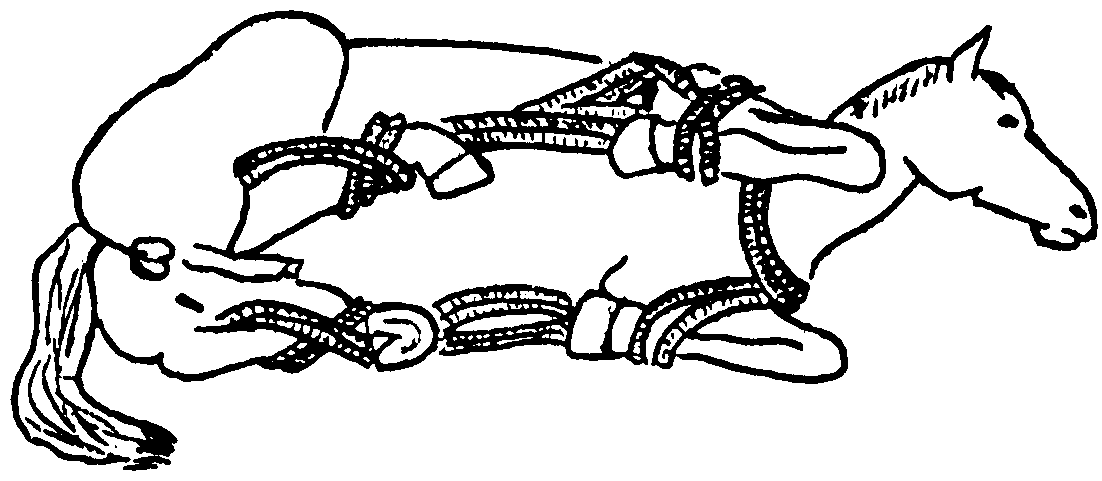
1. Cast the animal properly 2. Tie its legs securely 3. Wash your hands and the area to be castrated
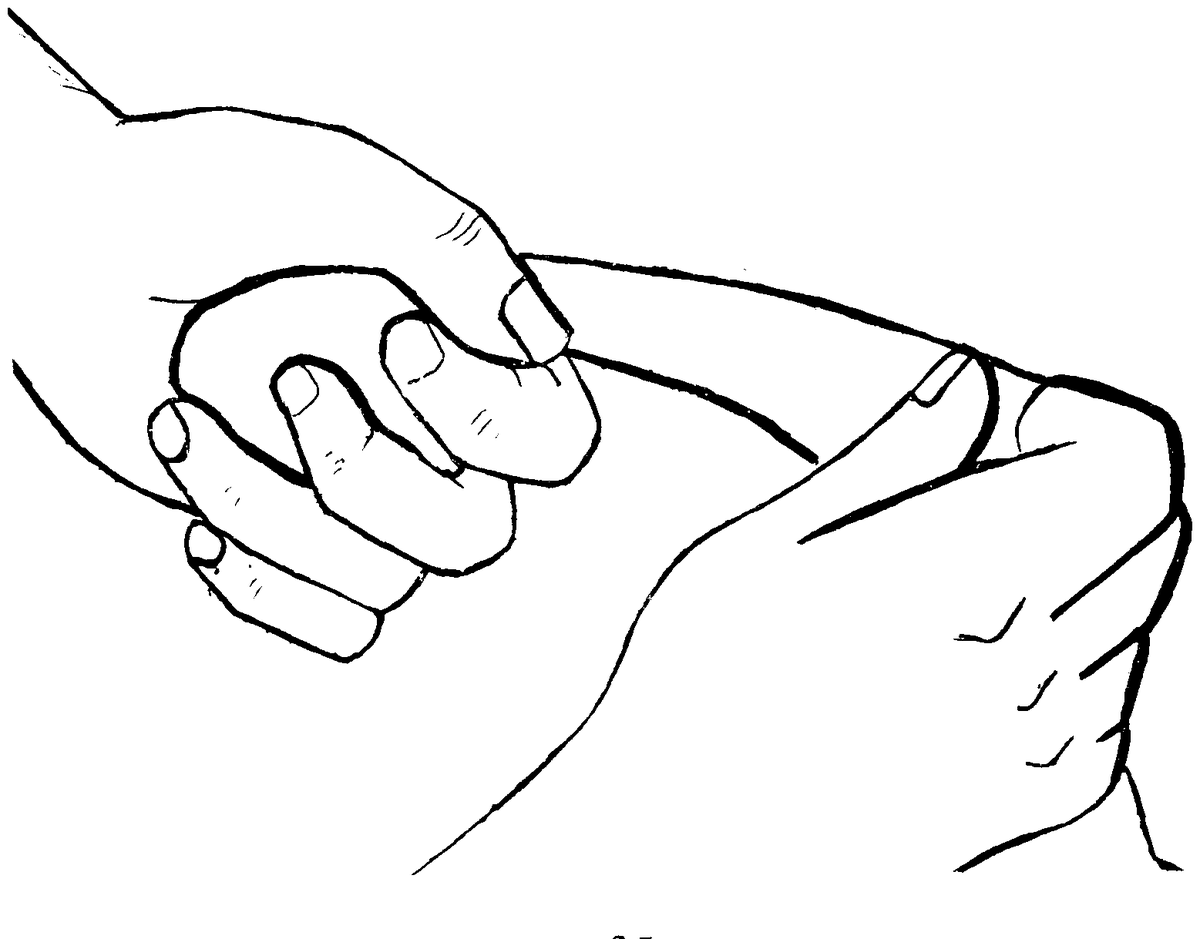
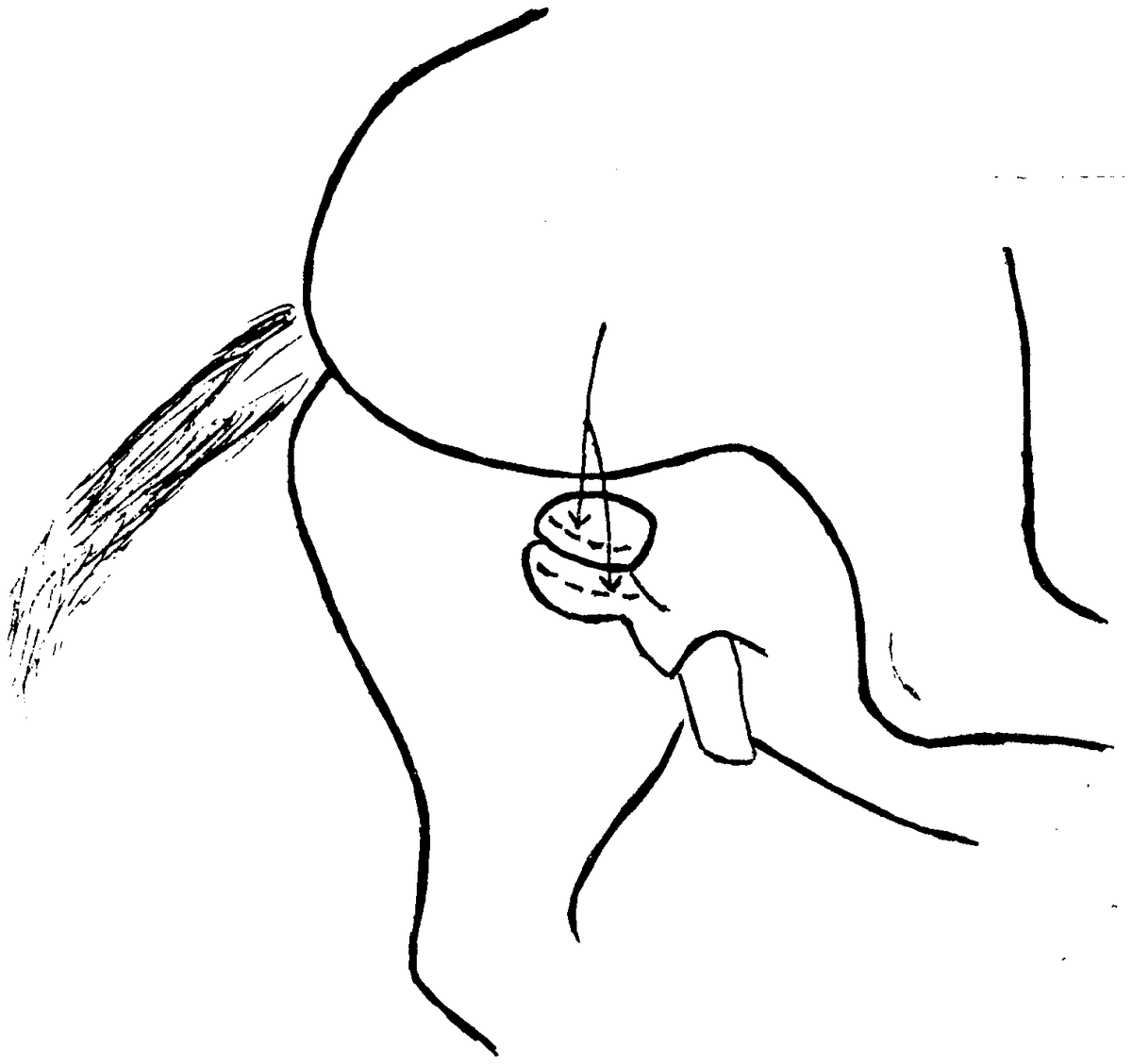
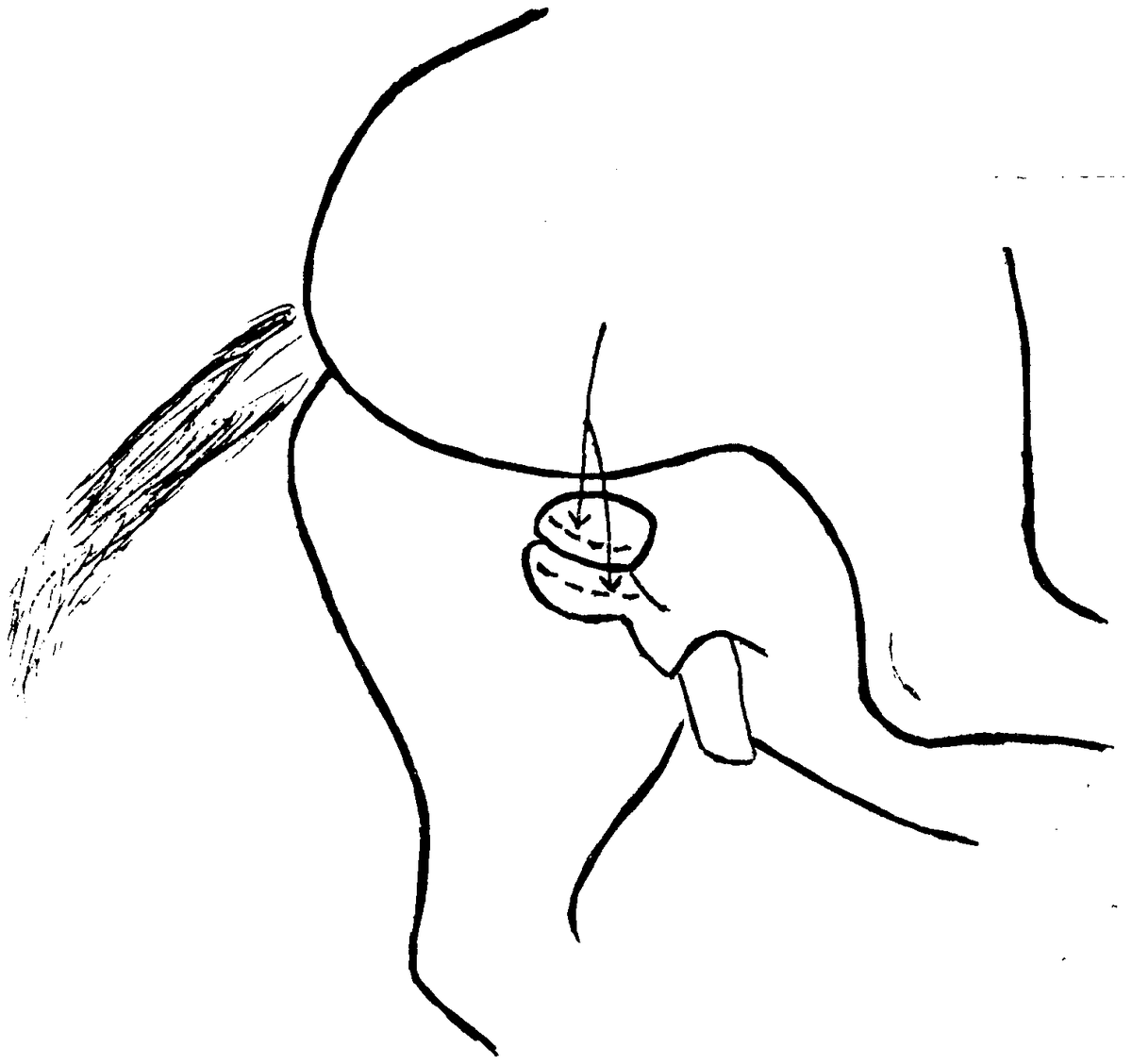
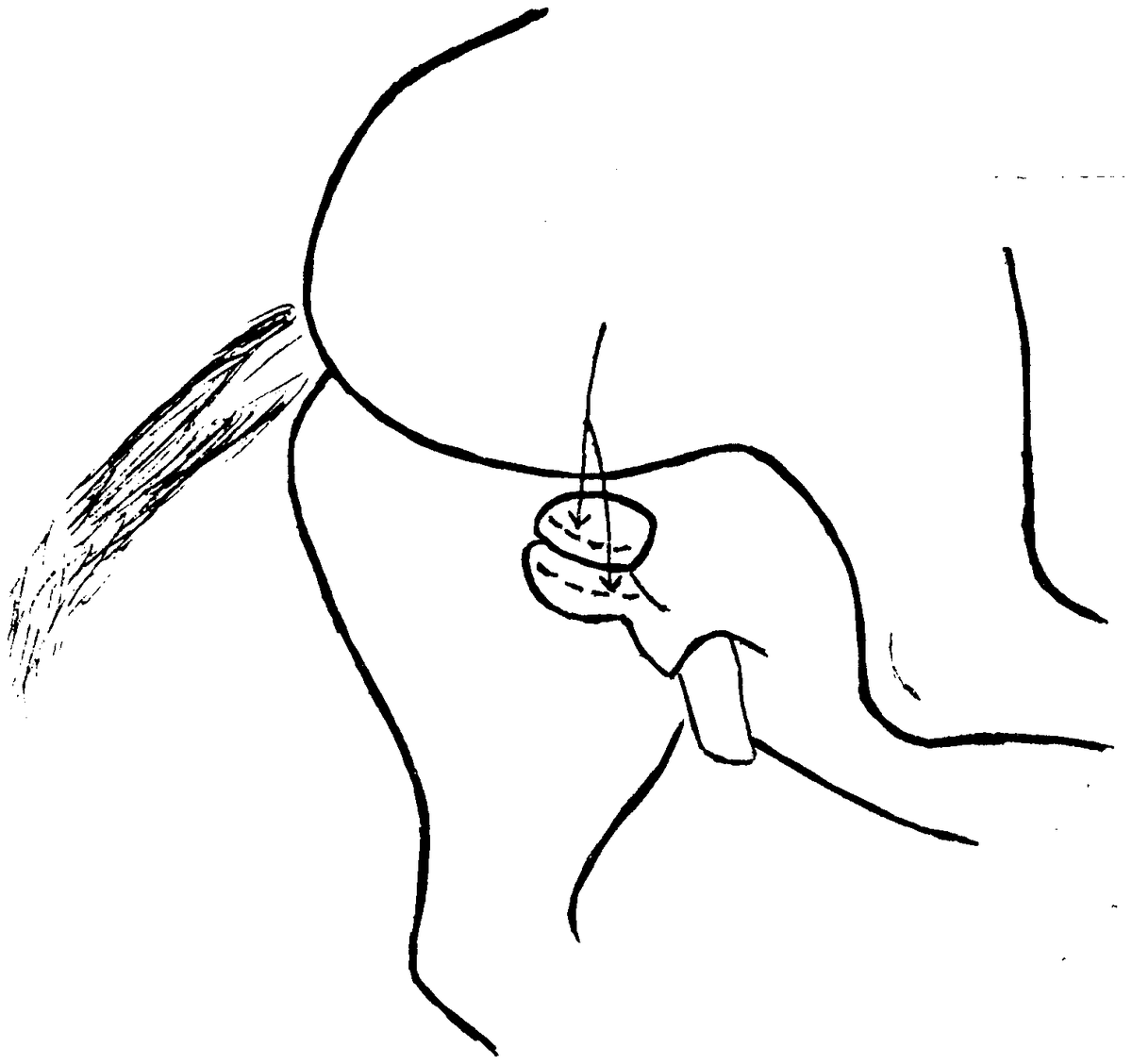
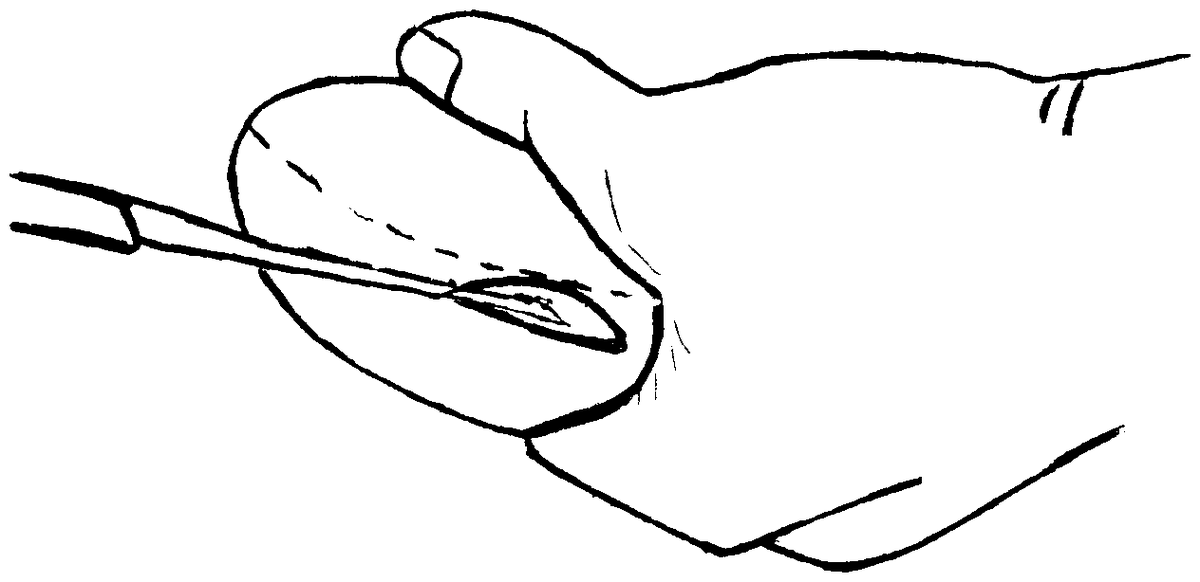
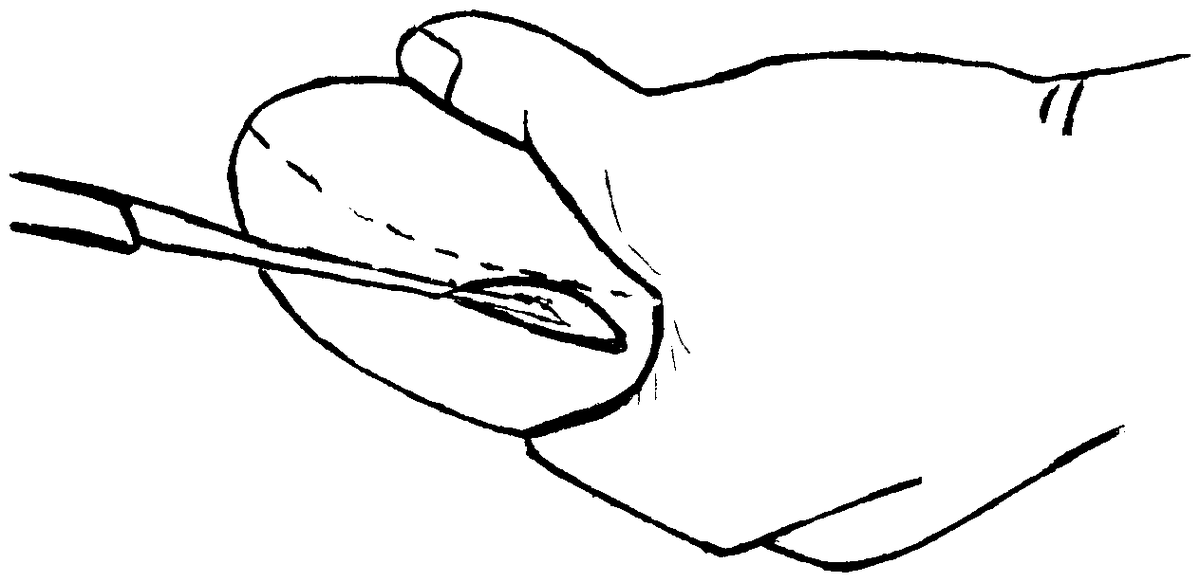
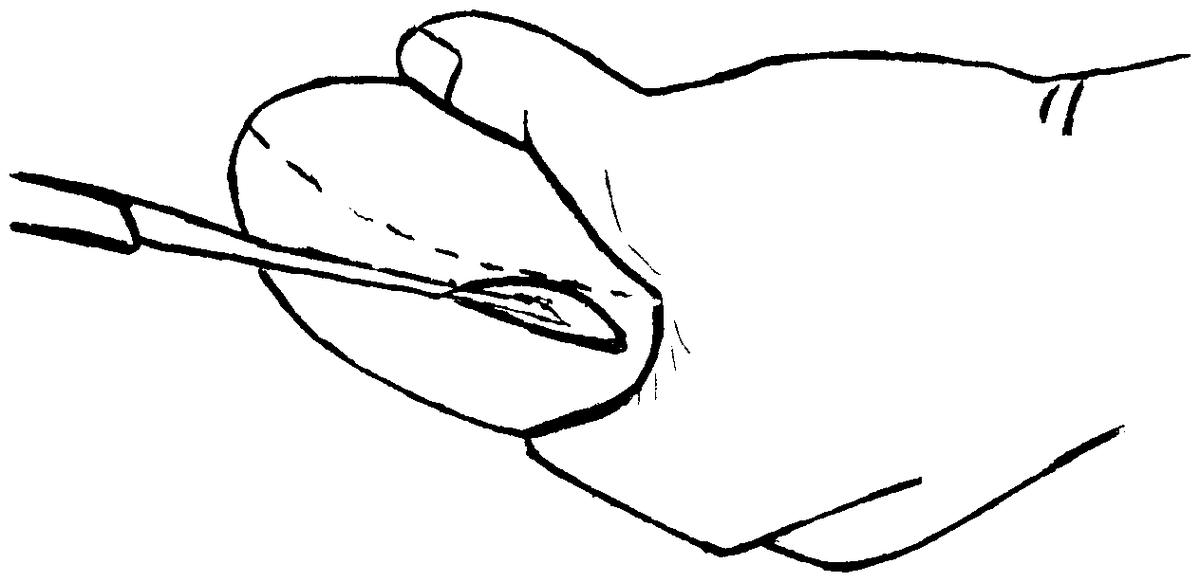
4. Give local anesthetic 5. Cut the scrotum the entire 6. Extract the testicles in two lines. length of the testicle
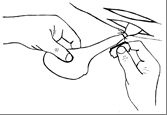
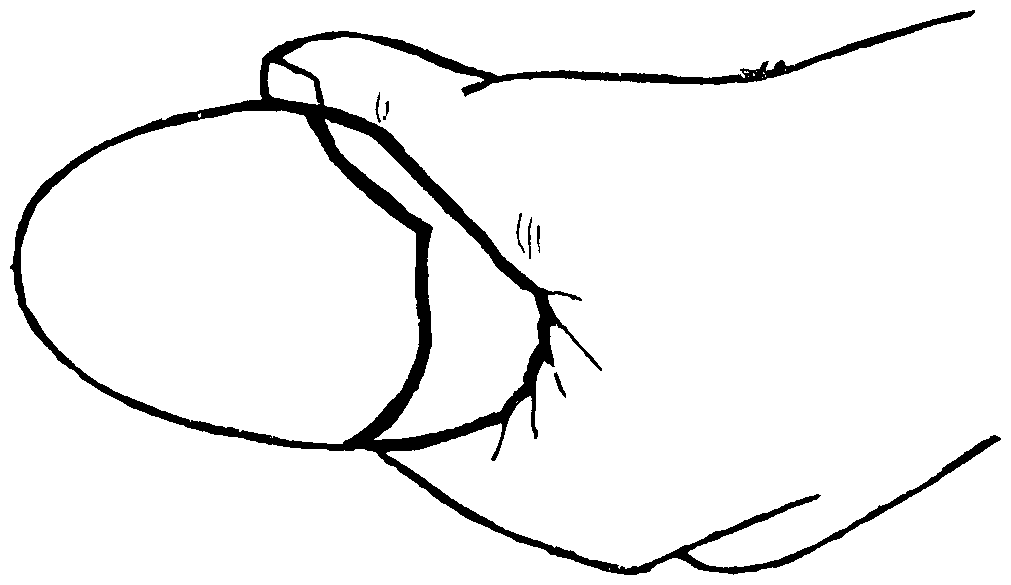
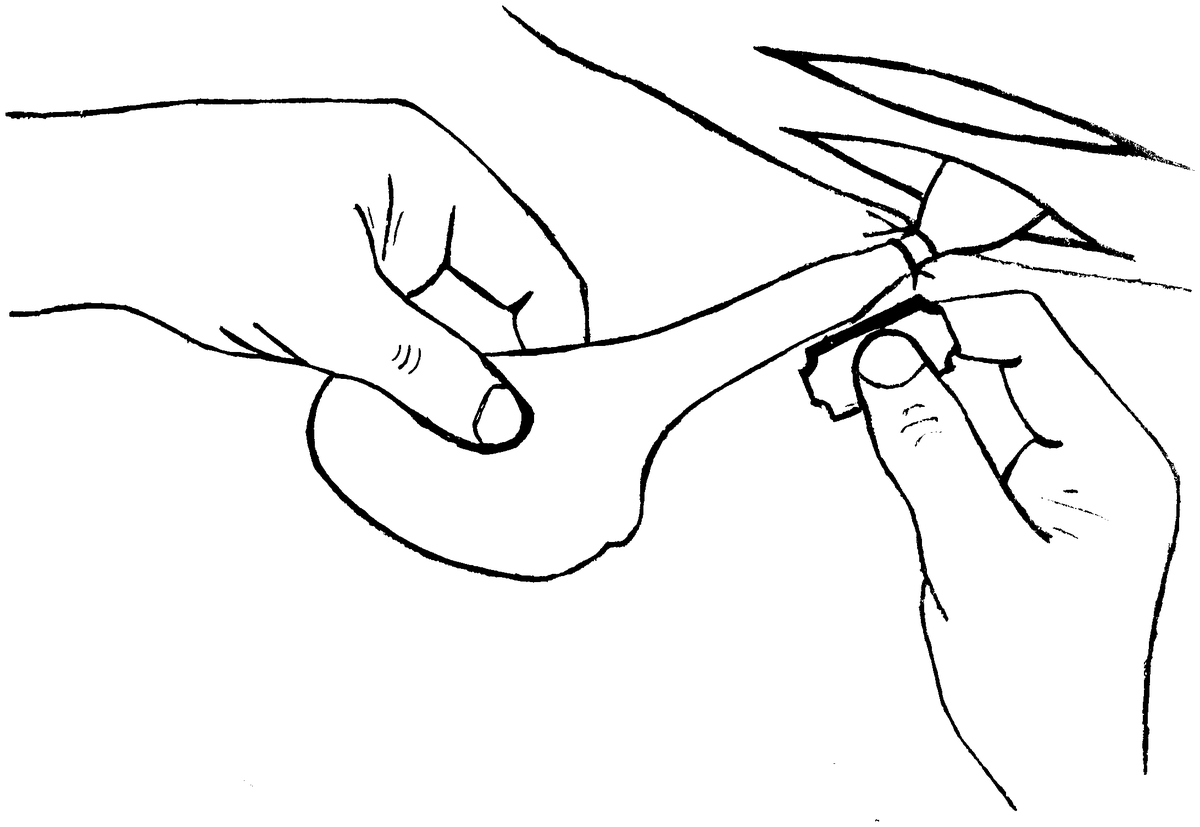
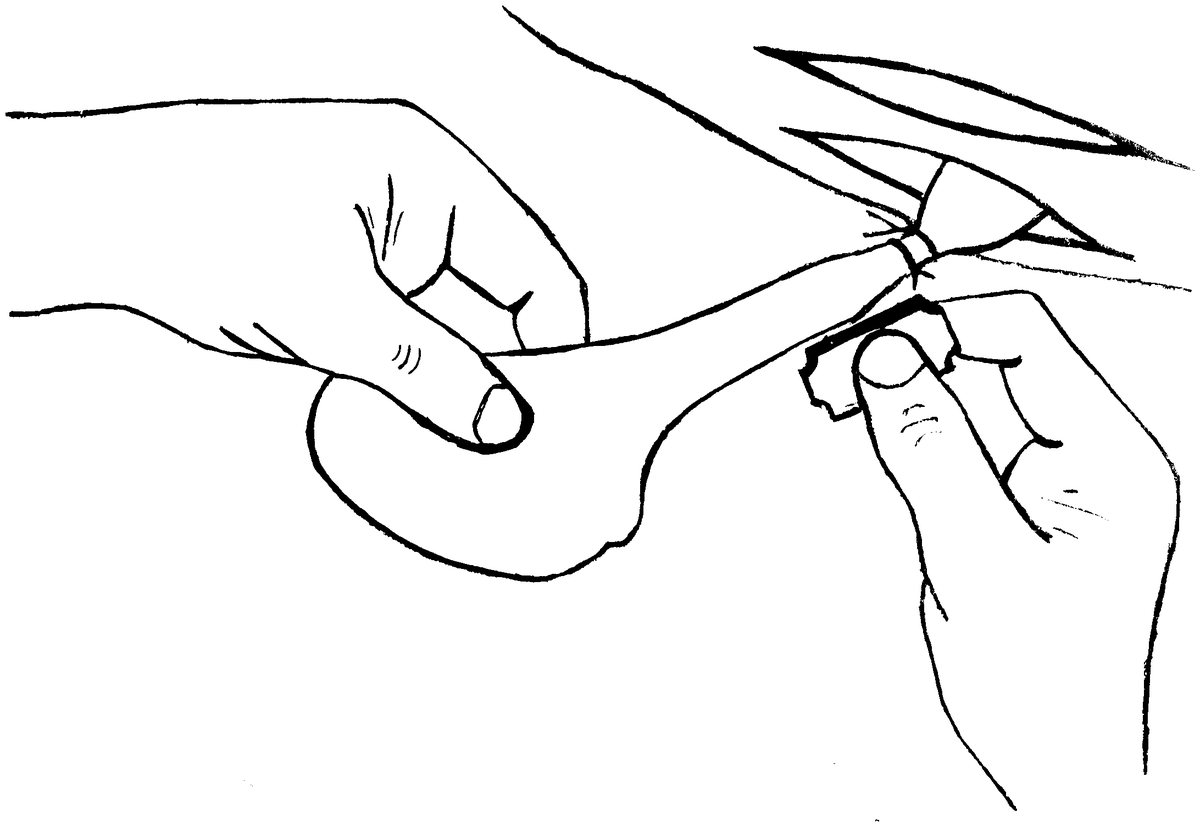
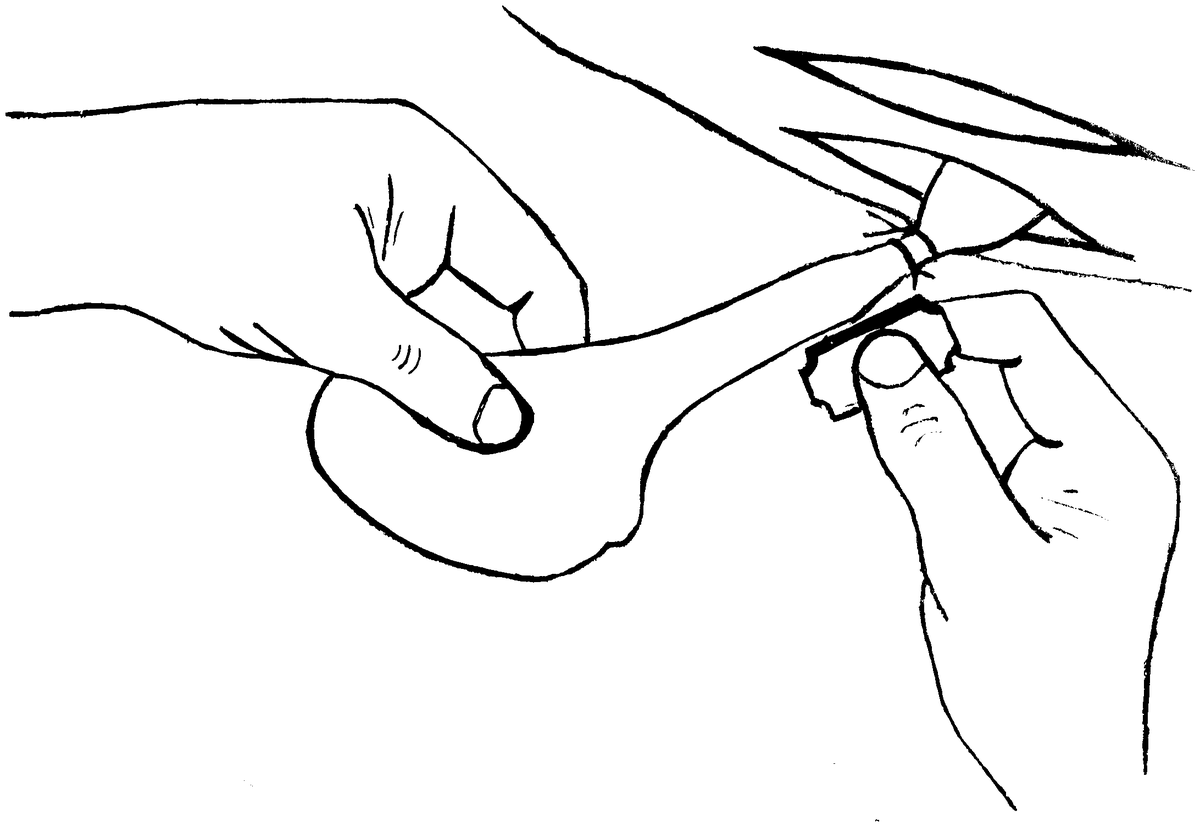
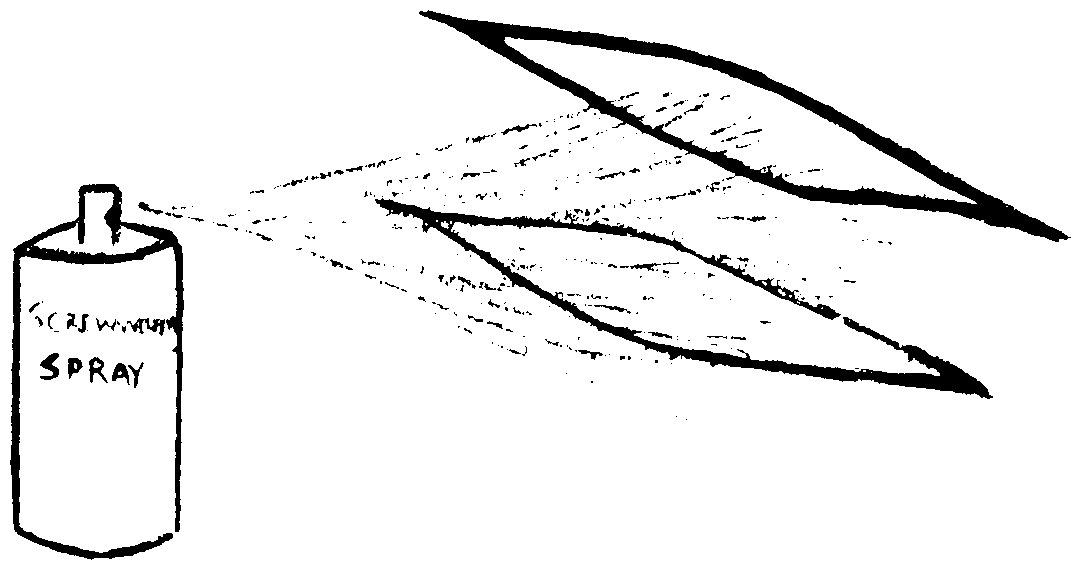
7. Cut the tunics and 8. Crush the cords and cut 9. Treat the area with an “pop” the testicles out below the crushed area anti-fly product to protect against screwworms
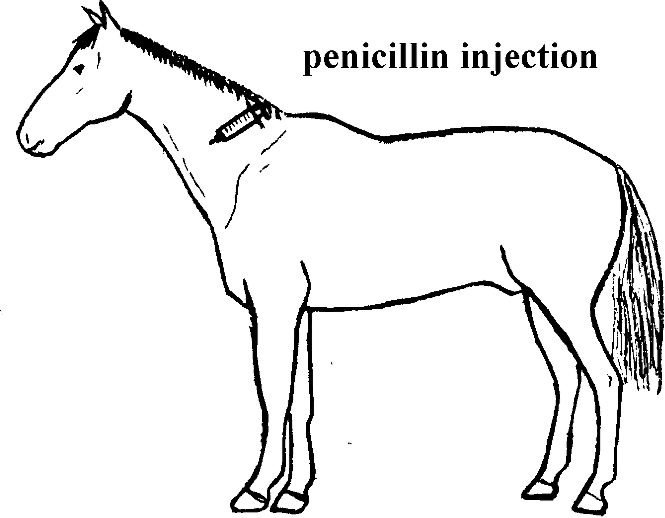
11. Exercise the horse 10. Give the horse an for five days after injection of antibiotics. castration to minimize swelling.Castration of Pigs - Introduction Most people prefer to castrate male piglets for several reasons:
To prevent the risk of having boars around that are not needed for breeding (they can injure other animals or people).
To prevent boars from breeding their sisters, mothers and daughters, which would result in in-breeding.
To encourage fast growth.
To prevent unpleasant taste and odor in the meat (boars should be castrated at least one month before slaughter).
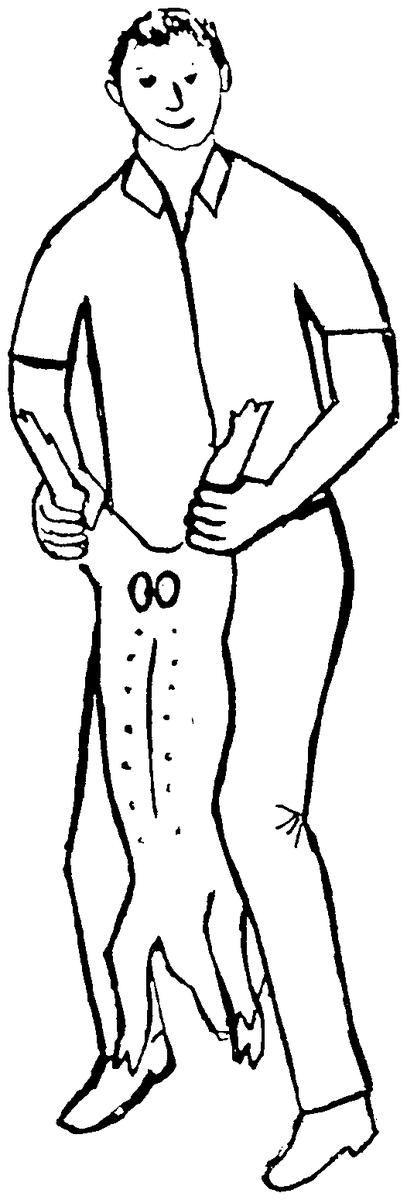
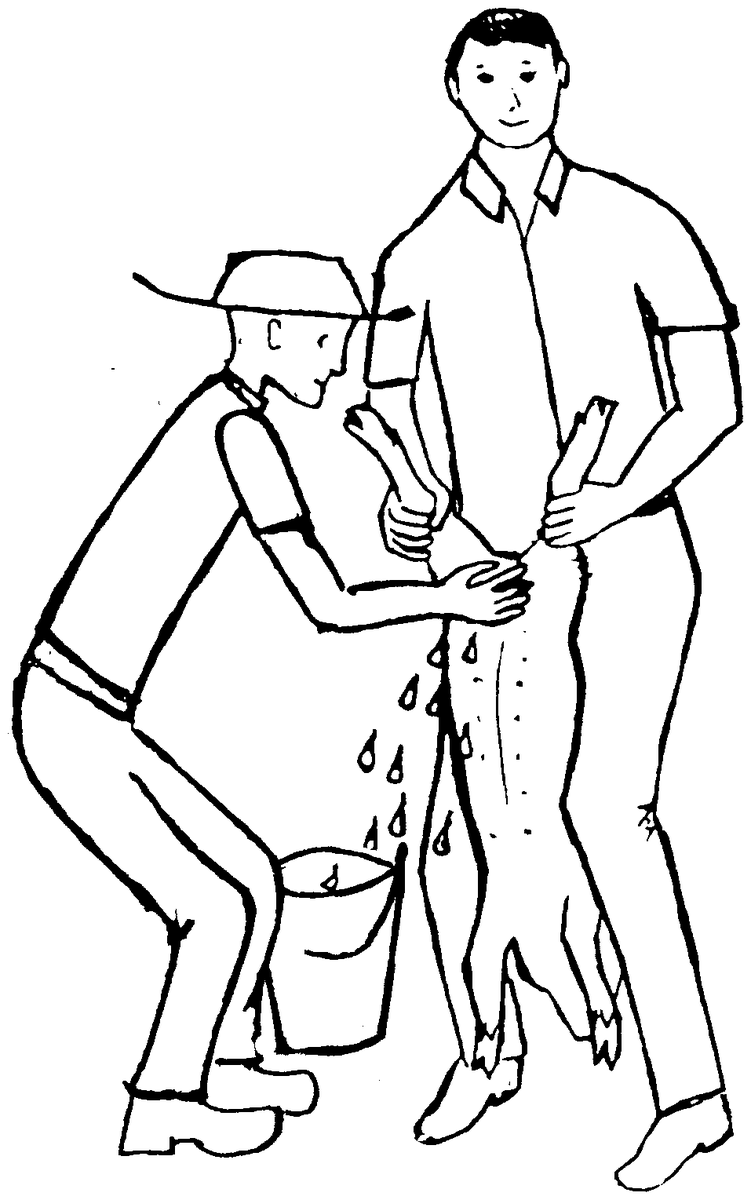
It is best to castrate male piglets around two weeks to two months of age, since castration is less traumatic in younger pigs.
Castration Procedure for Young Piglets Have one person hold the piglet firmly by the hind legs above the hock. If necessary, the piglet can be squeezed firmly between the holder's legs.
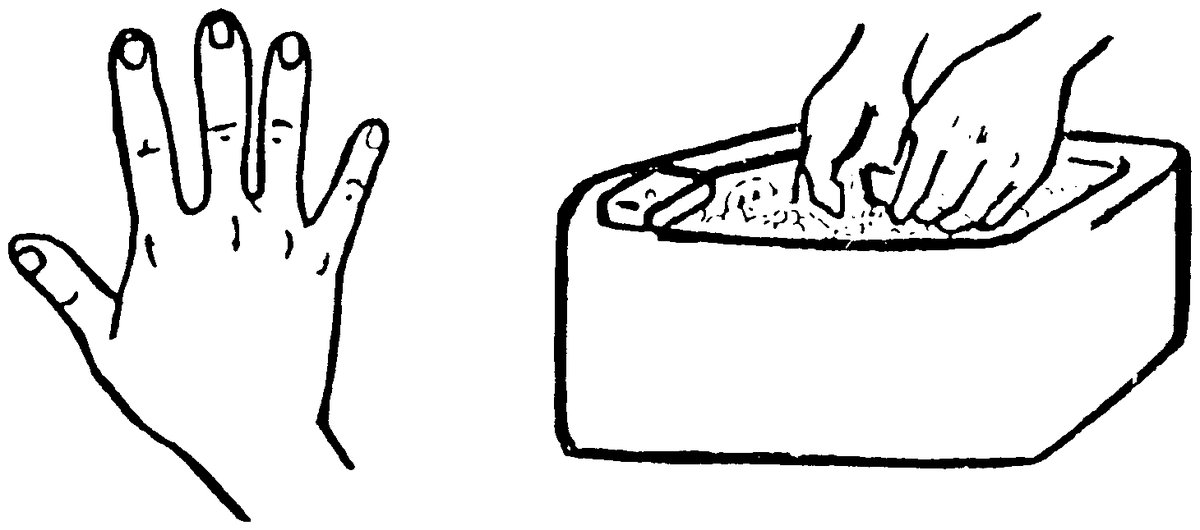
Feel the scrotum to check whether it may contain intestines (i.e. a hernia). If a hernia is present, do not castrate the pig, but find someone who knows how to treat hernias.
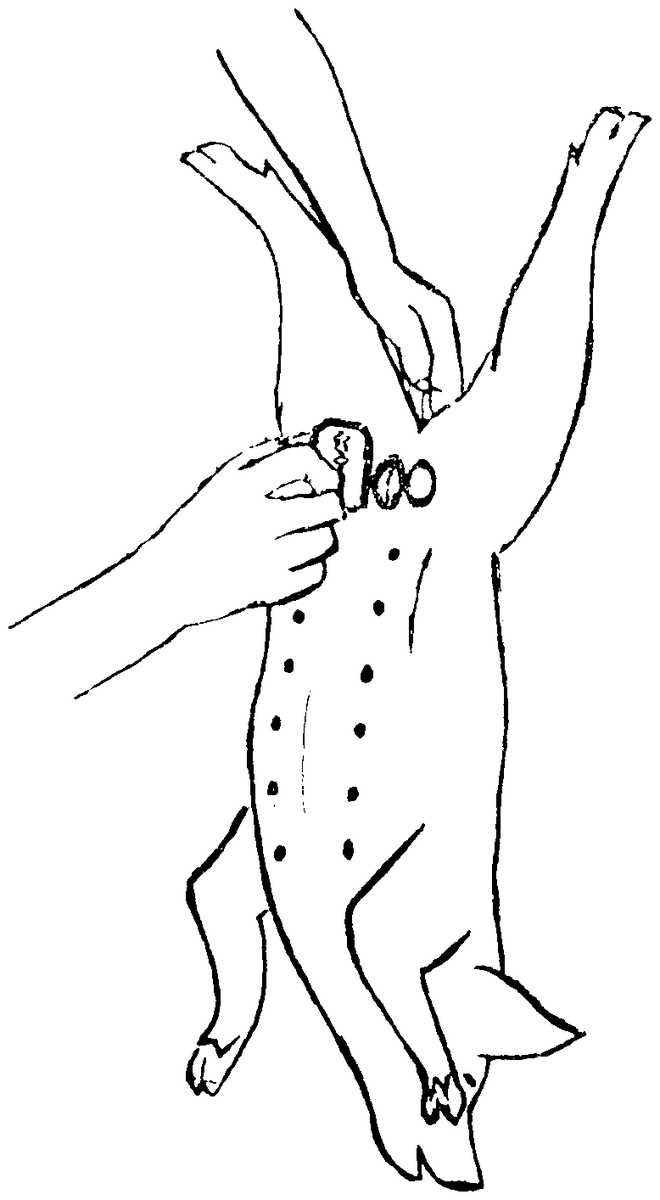
Wash your hands and the animal's scrotum with soap, clean water and disinfectant.
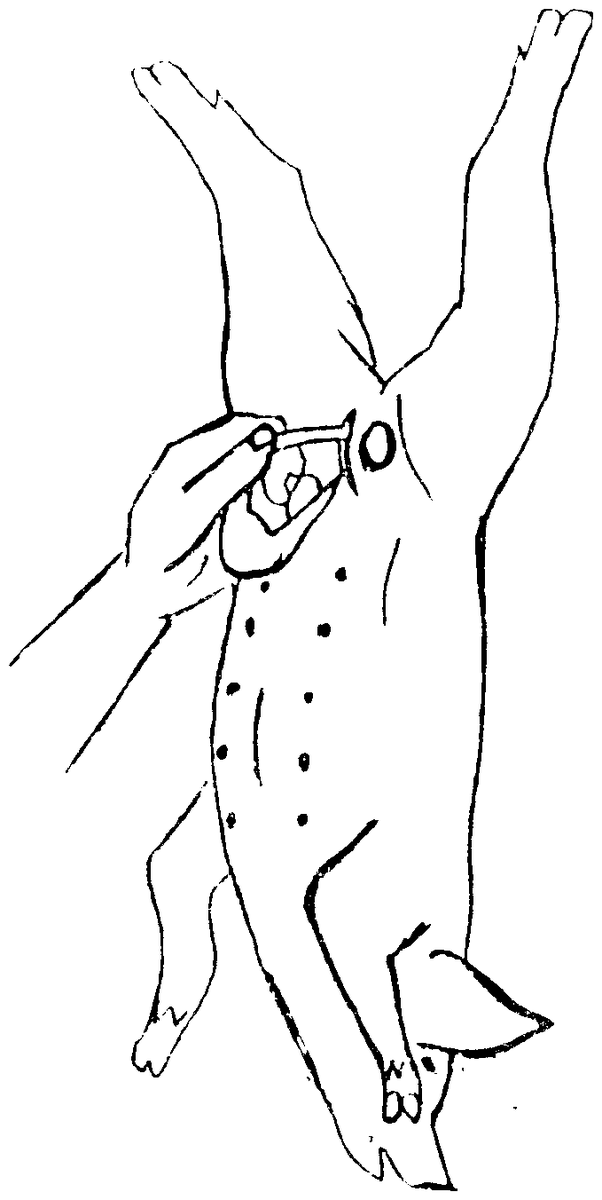
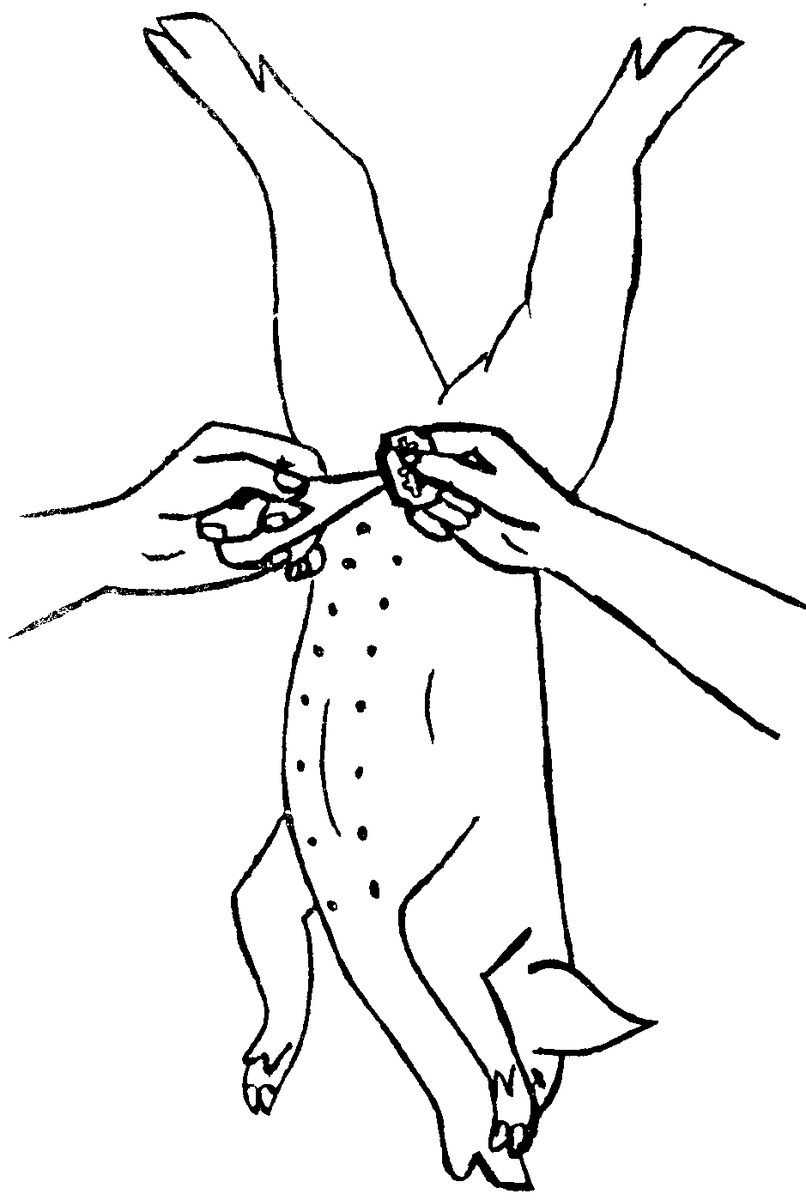
Draw the testicle into a pocket of scrotal skin by grasping it between the thumb and fingers. Make an incision through the skin of the scrotum and into the testicle itself. The incision should be parallel to the midline of the scrotum, and it should be about 1/2 to one centimeter away from the midline. This incision should be long enough to press the testicle out through the cut.
Pull the testicle out and cut the cord near the body (or the cord may simply break as it is pulled). The other testicle can be removed in the same manner by making another incision on the opposite side of the midline. Make sure that the incisions are low enough for good drainage when the pig is standing; this will help the wound to heal more quickly.
After the operation, all blood from around the incision should be washed away. If not, the blood will attract flies and later the wound will be filled with maggots. Put Himax ointment, Lorexane Cream, or another pesticide around the wound in order to keep the flies away. The piglet should also be kept away from dirty, wet areas until the wounds heal.
Castration of Older Pigs Castrating older boars carries a greater risk of bleeding and infection. As with older cattle, it is best to use local anesthetic. The blood vessels should be tied with cat gut (some people use fishing line or similar material). Be sure to make long incisions to encourage drainage. Make the pig walk during the week following castration to reduce swelling and to encourage drainage. Give the pig an injection of long-acting penicillin to prevent infection, including tetanus. Apply medicine to the wound daily to prevent maggot infestation.