The Heat Cycle (Or Estrus Cycle)
10.3 THE HEAT CYCLE (OR ESTRUS CYCLE)
After ovulation, the empty follicle on the ovary then develops some new tissue, called the corpus luteum, or “CL.” The CL produces progesterone, which is used to maintain the pregnancy if fertilization occurs. If fertilization does not occur, the ovum in the oviduct and the CL on the ovary dissolve, and a new ovum forms on the ovary, to continue the cycle. The following table reviews this process using a cow's heat cycle as an example.
HEAT (ESTRUS) CYCLE OF A COW
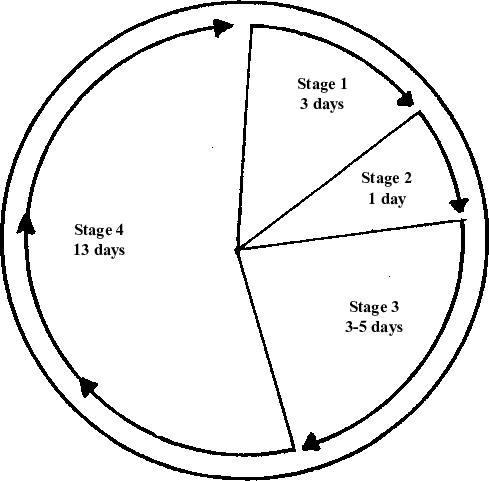
The average heat cycle length of a cow is 21 days, consisting of the following four stages:
Stage I: 3-days in length
Follicle develops.
Ovum matures.
Estrogen prepares the uterus for pregnancy.
Stage II: 1-day in length Female comes into “heat” (stands for the male).
Follicle ruptures at the end of heat and the egg is released (ovulation).
Stage III: 3 - 5 days in length Corpus luteum or “CL” develops on the ovary.
CL begins producing progesterone Sperm and egg meet in the oviduct (fertilization).
Stage IV: 13 days in length Uterus is ready to receive fertilized egg.
If uterus does not receive the fertilized egg (if cow is not pregnant) then the CL dissolves and a new follicle develops to repeat the cycle.
If the animal becomes pregnant, the CL continues producing progesterone to maintain the pregnancy, and the cycle stops. If the animal does not become pregnant, the cycle continues.
Animals may vary in regards to their breeding cycles. For example, horses, sheep and goats come into heat during certain seasons of the year. They are called “seasonal breeders.” The rabbit, llama, and camel only ovulate after mating. That is, the act of mating makes ovulation occur. This is called “induced ovulation.” See Breeding Table for more information.
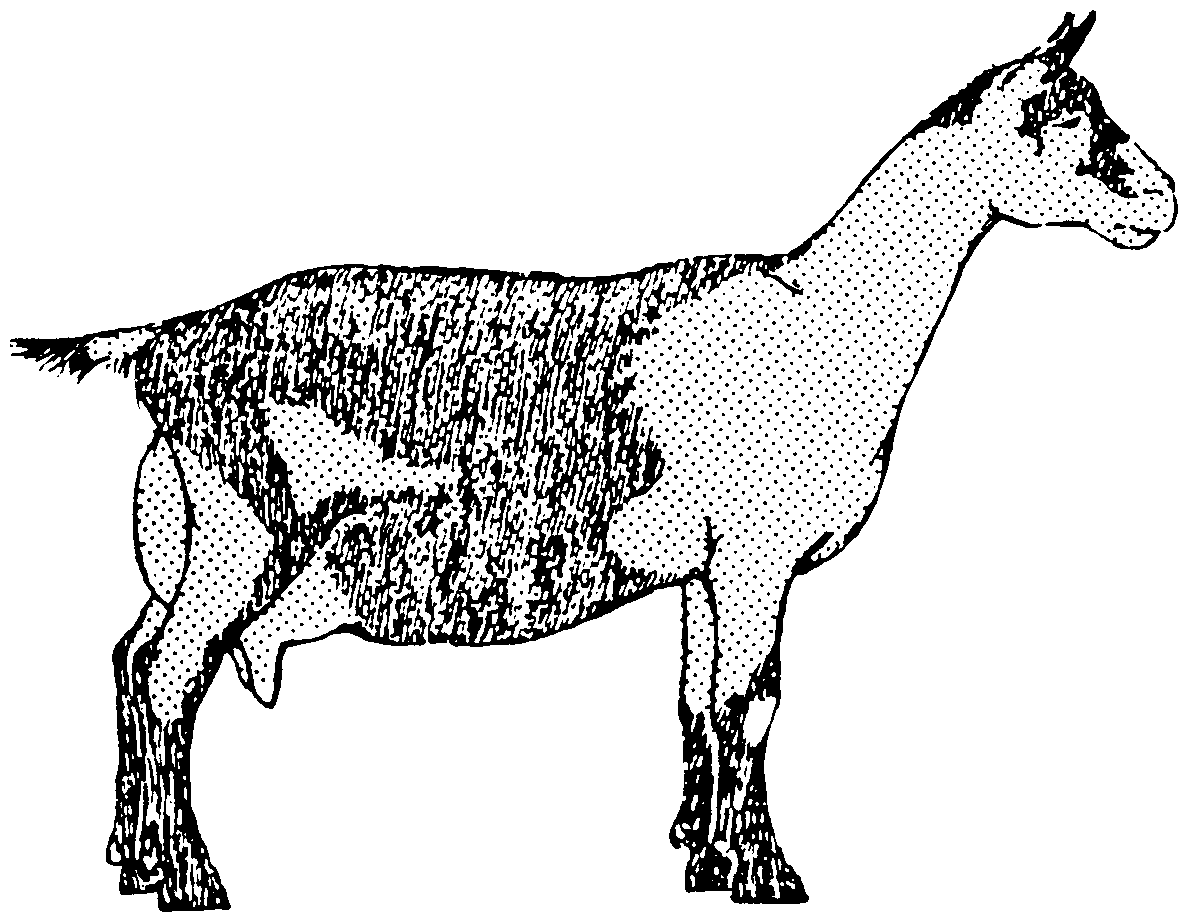
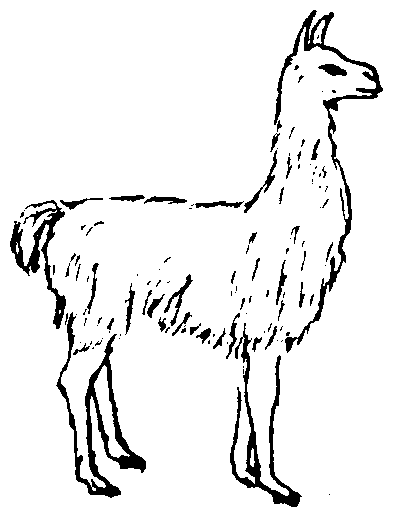

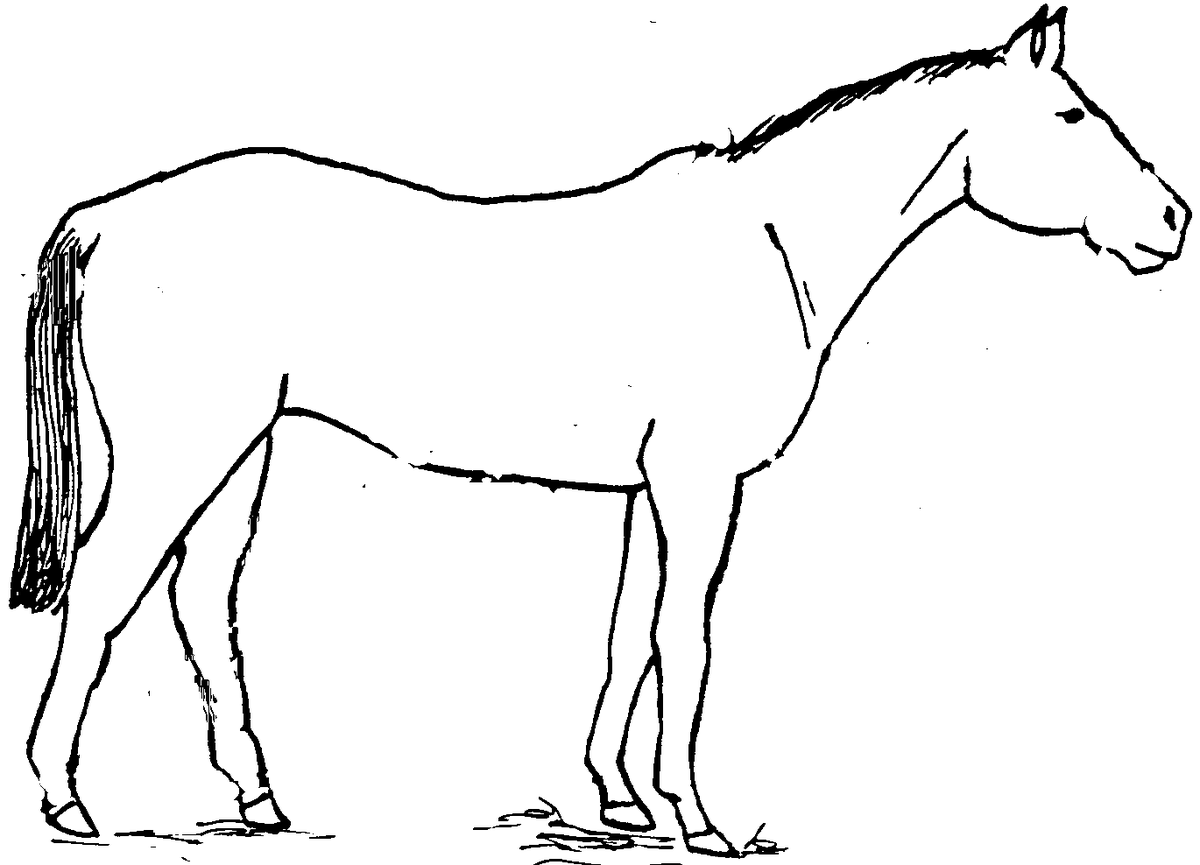
Seasonal breeders Induced ovulators Breeding Table for Common Animals
| Animal | Minimum Age to Breed - Puberty (Months) | Type of Heat Cycle Length of Heat Cycle | Signs of Heat | Length of Heat Period | Best breeding time | Gestation Time (length of pregnancy) | First Heat After Giving Birth |
|---|---|---|---|---|---|---|---|
| Buffalo | 18 - 24 months | Somewhat Seasonal | Swollen vulva. Crying out. Clear discharge. | 1-2 days | ---- | 300-325 days | Varies. Seasonal breeders. |
| (20 average). | 18-24 days (22 average). | (1 day average). | (310 ave.). | ||||
| Cow | 10-24 months (18 average). | All year | Mounting by other females, Clear discharge. | 4-24 hrs. | From mid heat until 6 hrs. after end of heat. | 280 days. | Varies |
| 18-24 days (21average). | (18 hrs. average). | Breed after 60 days. | |||||
| Sheep | 7 - 12 months | Somewhat Seasonal | Change in behavior. | 1-2 days. | Not too important. | 145-150 days. | Next season. |
| (9 average). | 14-20 days (17 average). | ||||||
| Goat | 4 - 8 months | Somewhat Seasonal | Change in behavior. | 2-3 days. | Daily when in heat. | 145-155 days. | Next season. |
| (6 average). | 18-21 days (20 average). | ||||||
| Horse | 10 - 24 months | Seasonal | Frequent urination. Vulva opens and shuts. | 3-8 days. | Last 2 days of heat. Or, breed every 2 days. | 330-345 days. | 4 - 14 days |
| (18 average). | Length of cycle varies | after giving birth. | |||||
| (21 days average). | |||||||
| Pig | 4 - 9 months | All year | Swollen vulva. Stands with pressure on back. | 2-3 days. | After first day of heat. | 114 days. | 4 - 10 days |
| (7 average). | 16-24 days (21 average). | after weaning. | |||||
| Rabbit | 4 - 12 months | All year. | No real heat period. | No real heat period. | Breed when vulva is pink and swollen. | 30 days. | Almost immediately. |
| (7 average). | |||||||
| Dog | 5 - 24 months. | 2 times / year average. | Change in behavior. | 1 week. | After day 2 of heat. | 58-70 days. | A few months. |
| Cat | 4 - 12 months | Somewhat Seasonal | Change in behavior. | 4 days | After day 2. | 58-70 days. | 4-6 weeks. |
| (10 average). | 14 – 21 days. | (if mated). | |||||
| Llama | 24-36 months. | All year | Female is receptive to male during certain days of heat cycle, but no outward signs of heat. | Can be receptive to male during 10-12 days of heat cycle. | 1-2 times daily when receptive. | 330-360 | ----- |
| 18-21 days | (342 ave.). | ||||||
| induced ovulators. |
Note: The minimum age at breeding varies, depending on the breed and quality of nutrition.
The length of pregnancy may also vary according to breed.