Poisons and Toxicity
5.3.2 Poisons and Toxicity When poisonous plants or other toxic feeds may have been eaten:
a. Take a thorough history. Determine whether the owner or caretaker is sure that the animal(s) ate something poisonous and the amount of time elapsed since the poison was eaten.
b. Examine the environment to try to identify the source of the poison. Be sure to check all feed and water sources, pastures, and any shelters where the affected animals stay. Collect samples of suspect plants or other substances.
If animals with symptoms were grazing in an area with poisonous substances, assume the animal ate the poison and treat it. Most poisonous plants do not taste good. However, when animals are hungry, such as during the dry season, they may eat poisonous plants.
c. Examine both sick and healthy animals. Verify how many are sick with the same or similar symptoms and compare these animals to the healthy ones. Try to determine what the sick animals were exposed to that the healthy ones were not.
| General symptoms of poisoning: | |
|---|---|
| Although the symptoms usually depend on the type of poisonous plant that was eaten, many poisonous plants cause the following symptoms. | |
| - Suddenly dull or with odd behavior. | |
| 2. - No appetite. | |
| 3. - Bloating. This may also be accompanied by difficult breathing. | |
| 4. - Diarrhea & excess salivation (i.e. drooling or frothing at the mouth). | |
| 5. - Off-colored gums or conjunctiva (the tissue around the eyes). If the gums or conjunctiva are brownish, suspect nitrate toxicity. If they are bright red, suspect cyanide toxicity. | |
| 6. - Sudden death. | |
| Note: A high temperature is usually NOT a sign of plant poisoning. |
General Treatment of Toxicity Empty the stomach. Since it is difficult to make ruminants vomit and since horses cannot vomit, empty the stomach and intestines by feeding one of the following medicines that cause diarrhea. Mix these medicines in water and give it orally.
- Magnesium sulfate: This is most commonly available (dose: 250 mg/kg or one teaspoon per five kg of bodyweight). 200-300 gm for large animals; 20-40 gm for small animals.
- Sodium sulfate (Glauber's salt): If available, this is preferred over magnesium sulfate. The dose is the same as magnesium sulfate.
- Sorbital: The dose is two grams/kg of body weight.
Give activated charcoal: If available, activated charcoal can be given with the medicines above. Activated charcoal helps to absorb the poison. A dose of two gm/kg body weight diluted 1:10 in water can be given by mouth. Do not confuse activated charcoal with ordinary charcoal!
Note: In general, activated charcoal should not be mixed with mineral oil or other oils.
Note: In small animals (dogs and cats), the stomach may be emptied by making them vomit. This is usually only effective if no more than two hours have passed since the poison was eaten. Soapy water and certain local plants (those recognized as traditional medicines) often work to make a small animal vomit.
Treat for bloat: If the animal is bloated and cannot breathe properly, pass a stomach tube or use a trochar, cannula, or knife. Once the bloat is relieved, give magnesium sulfate. See section on bloat. See pages 186-187.
Plants that can produce cyanide:
Hoecius lunatus velvet grass Hydrangea spp. hydrangea Linium spp. flax Lotus corniculatus birdsfoot trefoil Phaseolus lunatus lima bean Prunus spp. cherry apricot peach Pyrus malus apple Sambucus canadensis elderberry Sorghum spp. sudan & johnson grass Suckleya suckleyena poison suckleya Trifolium repens white clover Triglochin maritima arrow grass Vicia sativa vetch seed Zea mays maize 11 Some common plant poisonings Cyanide or Prussic Acid Poisoning Cyanide is found in the seeds or leaves of certain plants. Young, rapidly growing plants or those wilting due to frost or drought are more likely to have cyanide. Toxic levels of cyanide are also found in some rat poisons.
Symptoms: The symptoms occur rapidly and include bright red gums and rapid, difficult breathing. Sometimes animals are simply found dead.
Treatment:
1. Give magnesium sulfate in the mouth to cause diarrhea and get rid of the toxin.
2. In mild cases, give oral sodium thiosulfate: 30 gm for large animals; and five gm for small animals. Repeat it every hour until the animal is better.
3. In serious cases, mix 66 grams of sodium thiosulfate in 500 ml of sterile water and give in the vein at a dose of 500 ml per 100 kg body weight.
Prevention of Cyanide Poisoning:
Avoid grazing pastures where cyanide-producing plants are known to grow. Especially avoid these pastures when the plants are growing rapidly and when they have been recently wilted by frost or drought.
Plants most commonly known to cause nitrate poisoning:
Weeds Amaranthus spp. pigweed Chenopodium spp. lamb's quarters Cirsium arvense Canada thistle Datura spp. jimsonweed Helianthus anuus wild sunflower Kochia scoparia fireweed Malva parviflora cheeseweed Melilotus officinalis sweet clover Polygonum spp. smartweed Rumex spp. dock Salsola pestifer Russian thistle Solanum spp. nightshades Sorghum halepense Johnson grass Crop plants Avena sativa oats Beta vulgaris beet Brassica napus rape Glycine max soybean Linum usitatissimum flax Medicago sativa alfalfa Secale cereale rye Sorghum vulgare sudan grass Triticum aestivum wheat Zea mays maize Nitrate Poisoning Nitrate poisoning can occur when animals eat plants following a period of drought, or when they drink water contaminated with nitrates. Soils high in nitrates or ammonia, particularly acid soils, are more likely to cause nitrate toxicity. Similarly, soils low in the minerals molybdenum, sulfur, or phosphorous are more likely to cause nitrate poisoning. Finally, low temperatures also increase the risk of toxicity.
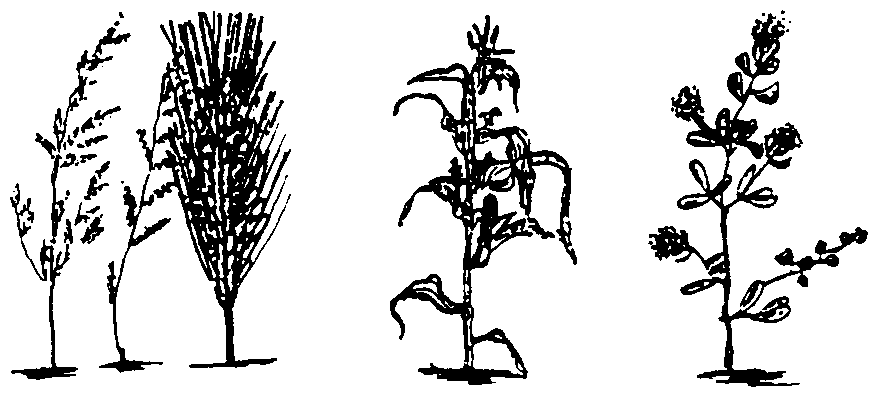
Symptoms: The symptoms occur rapidly and include rapid, difficult breathing, rapid pulse, and sometimes sudden collapse when forced to move. In addition, the animal has brown-colored gums, conjunctiva, and blood.
Treatment: Mix ten grams of new methylene blue with 500 ml (1/2 liter) of boiled, cooled water. This is given IV at a rate of two ml per five kg body weight. It may be repeated at 6-8 hour intervals if a large amount of toxic material was ingested.
Poisoning from Snake & Insect Bites:
Symptoms: Sharp pain and local swelling at site of the bite wound, difficult breathing, shock (weak pulse), and salivation. Horses and cattle often experience snake bites on the muzzle. See page 255. This can lead to swelling of head and nose.
| Treatment: 1. Try to stop the poison from spreading by: cleaning the wound with soapy water. keeping the animal quiet. applying suction to the wound (useful only if done within 15 minutes). applying a tourniquet to reduce the spread of venom. 2. Give steroids to reduce swelling and epinephrine to counteract shock. 3. Give painkillers if needed to control pain. 4. Administer antibiotics to prevent infection. | Treatment: 1. Try to stop the poison from spreading by: cleaning the wound with soapy water. keeping the animal quiet. applying suction to the wound (useful only if done within 15 minutes). applying a tourniquet to reduce the spread of venom. 2. Give steroids to reduce swelling and epinephrine to counteract shock. 3. Give painkillers if needed to control pain. 4. Administer antibiotics to prevent infection. | |
|---|---|---|
| Pesticide Poisoning or Toxicity | ||
| Livestock may be accidentally exposed to toxic amounts of pesticides in their feed or by improper mixing of sprays or dips for external parasites. Cats and most baby animals are more sensitive to pesticides. Symptoms vary with different pesticides. If the pesticide container is available, read the label for signs and treatment of toxicity. |
Chlorinated Hydrocarbon toxicity (i.e. BHC, Chlordane, Lindane, Aldrin, Dieldrin)
Symptoms:
1. First the animal acts overly nervous, crazy or excited. This can resemble rabies.
2. Then the animal shivers, trembles and convulses until it dies.
Treatment: There is no good treatment. If the exposure was to the skin, try to rinse off the pesticide with soap and water. If exposure was by mouth, give magnesium sulfate and activated charcoal by mouth. Continue to feed activated charcoal daily in the feed for two weeks to absorb any remaining toxin from the gut.
Organophosphate (OP) toxicity:
(i.e. Dichlorvos, Fenthion, Malathion, Parathion, Ronnel, Ruelene, Levamisole)
| Symptoms: | |
|---|---|
| 1. Difficult breathing. | |
| 1. The signs of: "SLUD": salivation, lacrimation (tears coming from eyes), urination, and diarrhea. | |
| 1. Possible convulsions. |
Treatment of OP toxicity:
1. Animals that were overdosed by skin exposure (during dipping or spraying) should be bathed with mild, soapy water.
2. Give atropine sulfate (IM) at the following doses:
Cattle: 30 mg/45 kg BW Sheep: 50 mg/45 kg BW Horses: 6.5 mg/45 kg BW Dogs: 2-4 mg total BW (These injections may have to be repeated every 4 or 5 hours if symptoms return.)
Rat Poison Sometimes livestock accidentally eat seed grains treated with rat poison. The treatment or antidote will vary depending on the type of rat poison. Therefore, read the container of the rat poison for information on toxicity and treatment. Sometimes livestock do not eat enough of the poison to have serious symptoms. Nevertheless, remove the source of poison and provide supportive care until the animal recovers.