Methods of Dehorning:
14.12 Methods of Dehorning:
Some people prefer that their animals do not have horns to avoid injuries to people or other animals, and to provide more space (e.g. at a feeding trough). The growth of horns can be prevented by destroying the cells that produce the hard, horny tissue. These cells are found in the skin surrounding the horn. The process of removing the horns is called dehorning. It is usually easiest and least traumatic to dehorn animals when they are young. If dehorned properly, the horns will not re-grow. It is advisable that someone experienced in dehorning show you how to do it the first time.
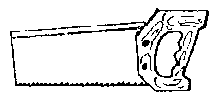
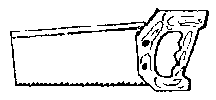
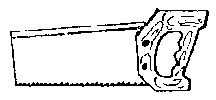
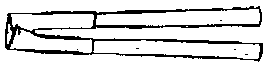
Larger animals: For animals older than 6 months, the above method described for cutting off broken horns with embryotomy wire can be used to cut off the entire horn - whether it is broken or not. A “dehorner” can also be used (if available), or a saw.
dehorner saw for dehorning For younger animals: Either cutting, or burning with a hot iron, or a combination of the two can be used. In very young animals (less than 1 week), caustic soda can be applied to prevent the horn from developing.
Use of a Hot Iron This can be used in some places on animals under two months of age. It must be done very carefully with goats because it is easy to apply the hot iron for too long and cause permanent brain damage. If left on for too short of a period, the horn may grow back or develop a “scur” (i.e. a deformed, stunted horn). With experience, one learns how long to leave the hot iron in contact with the skin.
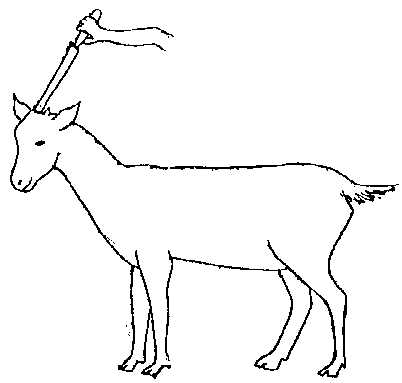
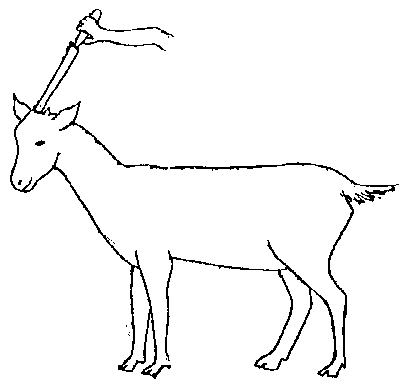
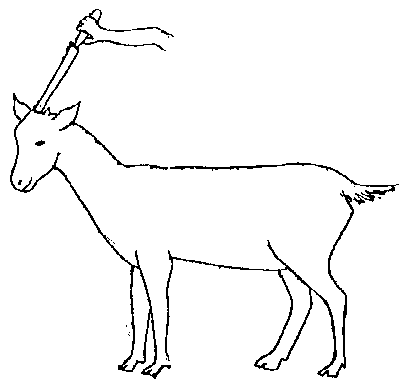
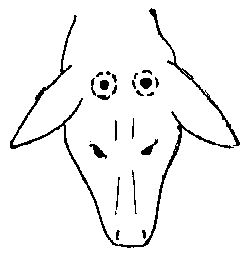
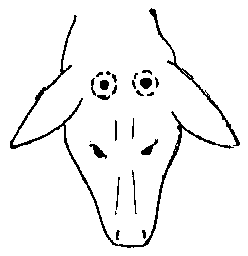
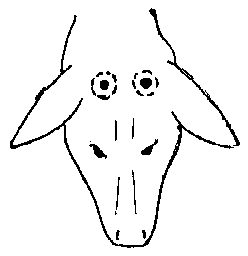
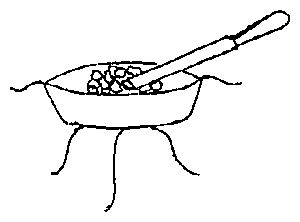
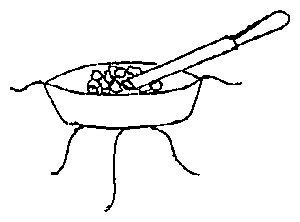
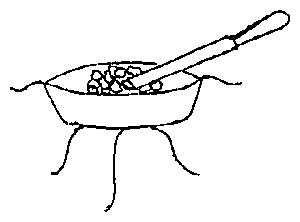
There are rods that heat up with electricity, made especially for dehorning. An AHA can make one of these by attaching a wooden handle to an iron cylinder. The end of the cylinder is heated until red hot and then placed around the emerging horn bud to burn the skin (i.e. the skin cells around the base of the horn which cause the horn to grow). The hot iron should be left in place for only a few seconds; and should be rotated slightly.
Heating the metal burning the tissue burned tissue cylinder over coals around the horns around the horns After burning, the animal should be observed closely for several days to ensure that it does not bump its head and cause bleeding.
Cutting
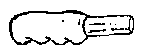
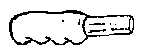
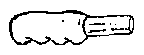
This method is also used on young animals.
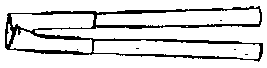
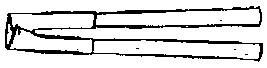
The emerging horn, often called a “horn bud”, is cut off using a sharp knife or a small, cylinder-shaped knife called a “debudder.” If one carefully removes both the horn and about 1/2 cm of tissue around the horn, then the horn should not grow back. debudder The bleeding can be stopped by burning the skin with hot metal, by clamping the bleeding vessels with forceps, or by using potassium permanganate crystals.
Use of caustic soda Caustic soda is a chemical that causes tissue to die. It comes as a paste or in a solid form that looks like a pencil. By applying it around the emerging horn, the cells that produce the horn die, and the horn stops growing and falls off.
The calf should be young (about one week).
The hair around the newly-growing horn should be clipped. (This allows it to be seen easily.)
The tip of a caustic soda pencil is then applied to this area with firm pressure and moved in a circular direction around the emerging horn. Or, the gel can be applied according to instructions.
Continue to apply caustic soda until a shallow hole has been produced and all bleeding stops.
Avoid using an excessive amount of caustic soda, since it may get wet and run down the face and cause damage to the skin or eyes.
Do not press too hard with the pencil. If you do, the skin will break and the tissue will be damaged more than necessary.