Distinguishing Diseases Based Upon Their Cause
1.3.3 Distinguishing Diseases Based Upon Their Cause Based upon the cause diseases can be divided into two main categories, infectious and non-infectious. Infectious diseases can be divided further into contagious and non-contagious diseases.
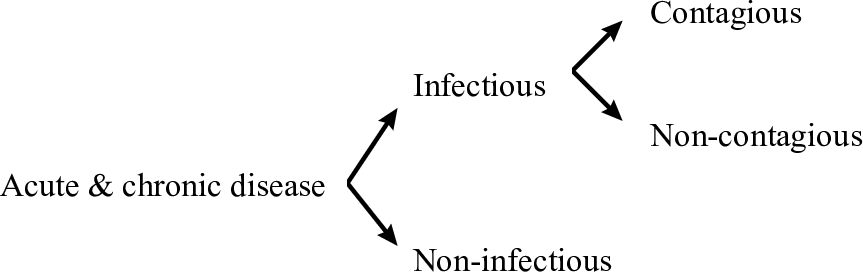
Infectious Diseases Infectious diseases are caused by living organisms such as bacteria, viruses, and parasites. The living organisms enter the body through the skin or a body opening and cause damage. An animal with an infectious disease is said to have an infection.
Some infectious diseases are spread directly from animal to animal. These are called "contagious" diseases. Other infectious diseases are not spread directly from animal to animal, and are therefore "non-contagious" infectious diseases.
Examples of contagious diseases:
Rinderpest spreads directly from one animal to another through the saliva.
Hemorrhagic Septicemia is spread through the saliva and nasal discharge.
Mange Mites are often spread directly by physical contact.
Examples of non-contagious diseases:
The tetanus organism is found in the soil and animal manure. If soil or manure containing this organism gets into a wound, then tetanus may result.
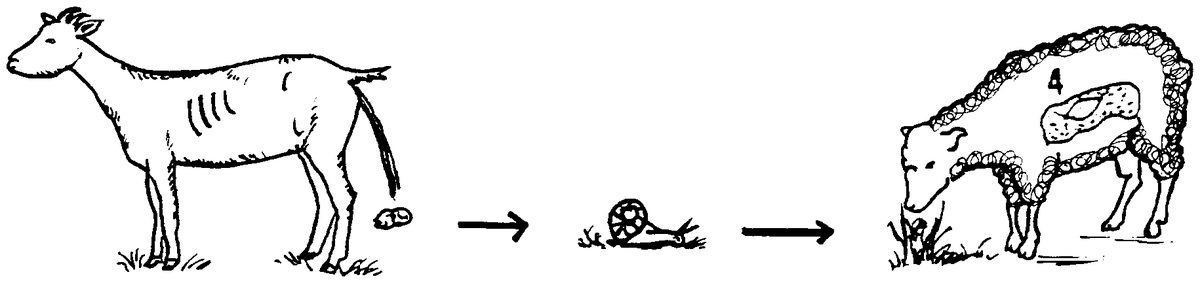
A liver fluke must first pass through a snail before it can infect a new animal.
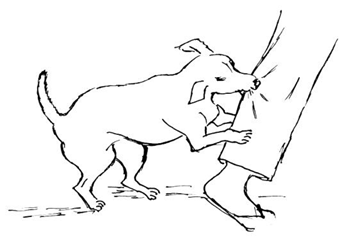
Zoonotic Diseases are infectious diseases (contagious or non-contagious) that infect both man and animals (e.g. rabies)
Non-infectious Diseases Non-infectious diseases are not caused by living organisms and do not spread from one animal to another.
Examples of non-infectious diseases:
Malnutrition Malfunction of body parts (such as heart problems, cancer, ulcers, arthritis)
Injuries or inflammation (broken bones, wounds, ulcers, arthritis)
Allergies Toxins (poisons)
Why is it important to distinguish between infectious and non-infectious?
An AHA must know the difference between infectious and non-infectious diseases to properly treat sick animals!!
6 Many villagers demand an injection for their sick animal, regardless of the cause. However, it is useless to treat a non-infectious disease like poor nutrition with an expensive injection that is made for infectious diseases. An AHA must gently explain and persuade villagers that it is a waste of money and medicine, both of which may be in short supply!
Summary of this chapter Classification of Diseases Decide if a disease is chronic or acute Remember:
Chronic diseases last a long time and often require a long time for recovery.
Acute diseases begin rapidly and result in rapid recovery, death or chronic disease.
Decide which body system is affected Remember:
More than one body system can be affected simultaneously, so do a thorough examination!
Determine whether the disease is infectious or non-infectious.
Remember:
Acute and chronic disease can be either infectious or non-infectious.
Infectious diseases can be contagious or non-contagious.
A zoonotic disease is an infectious disease (contagious or non-contagious) which people and animals share.