Distinguishing Diseases Based Upon Their Duration
1.3.1 Distinguishing Diseases Based Upon Their Duration Duration refers to how quickly the animal became sick, and how long the illness lasts.
Acute Diseases An acute disease is one that begins rapidly and generally does not last for a long time. Animals with acute diseases should be restored rapidly to health whenever possible; otherwise, the disease may become chronic.
Examples of acute diseases are Hemorrhagic Septicemia (HS), Erysipelas, Anthrax, and Foot and Mouth Disease (FMD). FMD can also become a chronic disease if the animal is not treated properly and if the feet become infected. The feet may take more than one year to heal.
Chronic Diseases
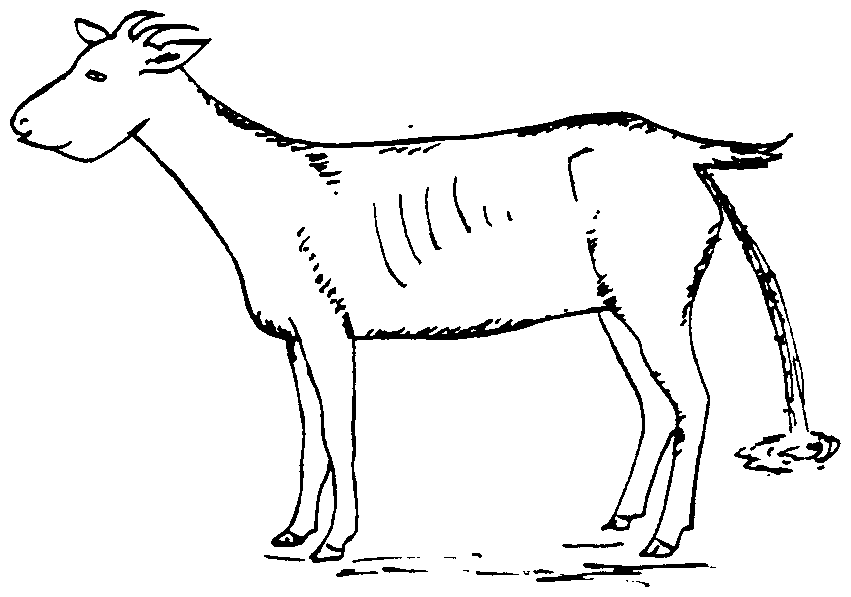
Chronic diseases last a long time. An animal with a chronic disease fails to produce or grow as it should. Instead it slowly deteriorates until it either dies or slowly recovers, sometimes due to treatment and sometimes on its own. Animals with a chronic disease are weakened and more prone to getting other diseases. Examples of chronic diseases are malnutrition and internal parasites.
| Both acute and chronic diseases can cause livestock owners to lose a lot of money! |
Acute diseases cause financial losses through death of animals, abortions and loss of meat and milk production.
Chronic diseases cause financial loss through a slow, more hidden process of reduced productivity. Less milk is given, the animals grow more slowly and produce less meat, many animals are unable to reproduce, working animals are too weak to work properly, and animals don’t live as long as healthy animals do.
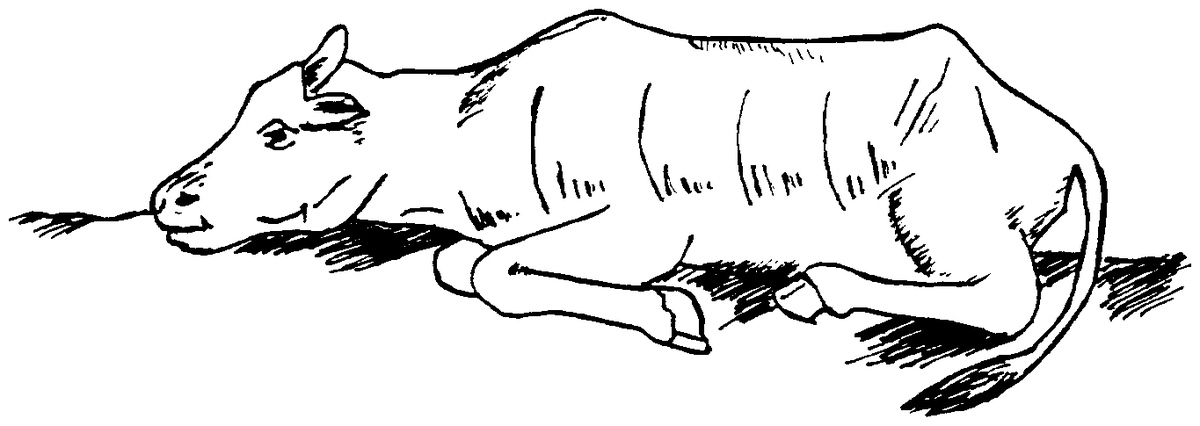
In general, recovery from a chronic disease takes longer than recovery from an acute disease once treatment is begun.